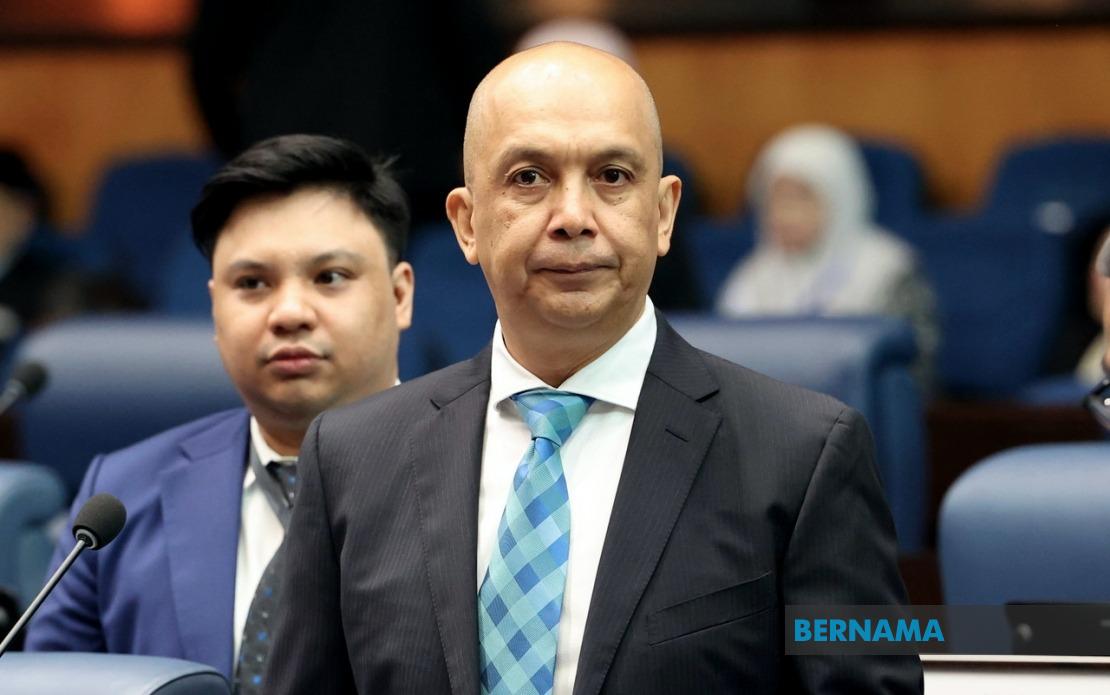
Sabah has secured RM600 million from the Federal Government's RM1.5 billion interim special grant allocation, with state officials now pressing Putrajaya to release the remaining RM900 million within the current calendar year. The first tranche arrived on June 12, following Prime Minister Datuk Seri Anwar Ibrahim's announcement of the increased interim payment during the Kaamatan Festival celebration on May 30. The move reflects ongoing negotiations between the state and federal governments over Sabah's long-standing financial entitlements under the Malaysian constitution.
Sabah Assistant Finance Minister II Datuk Mohd Ishak Ayub emphasised that the RM1.5 billion interim settlement should not be interpreted as the Federal Government's acceptance of any particular final quantum owed to the state. His clarification carries significant weight, as it preserves Sabah's negotiating position and prevents the interim payment from being construed as a full resolution of the matter. This careful positioning reflects the complexity of Sabah's relationship with the federal fiscal framework and the sensitivity surrounding historical revenue-sharing arrangements dating back to the state's entry into Malaysia in 1963.
The assistant minister stressed that Sabah's acceptance of the interim payment came without any waiver of the state's constitutional protections under Articles 112C and 112D of the Federal Constitution. These articles establish the framework through which resource-rich states like Sabah and Sarawak are entitled to specified percentages of royalties and revenues derived from natural resources within their territories. By accepting the interim grant with explicit reservations, Sabah's leadership has signalled its intention to pursue further claims based on these constitutional guarantees.
At the heart of Sabah's position lies its insistence on full implementation of the 40 per cent formula enshrined in the Federal Constitution. This constitutional provision, which grants Sabah 40 per cent of certain federal revenues, has long been a point of contention in federal-state relations. The state government's firm stance on this matter underscores its belief that previous interim or partial payments have fallen short of what is rightfully due, and that any settlement must ultimately reflect the complete constitutional entitlement.
The back-and-forth between Sabah and the federal government has been documented through official correspondence dated June 9, 19, and 26, indicating active negotiations over the grant's disbursement schedule and conditions. This exchange of letters demonstrates the bureaucratic machinery at work, with both governments seeking to advance their respective positions while maintaining the appearance of collaborative problem-solving. The timing of these communications, closely following the Prime Minister's public announcement, suggests that the announcement itself may have been designed to signal federal commitment to addressing Sabah's long-standing grievances.
For Malaysian and Southeast Asian observers, the Sabah revenue question carries implications beyond the state's borders. How the federal government resolves this matter sets a precedent for resource-sharing arrangements with other states, particularly Sarawak, which has its own significant natural resource revenues and constitutional protections. The outcome could also influence how Malaysia manages federalism more broadly and whether constituent states view the federal arrangement as sufficiently fair and transparent.
Separately, state authorities provided updates on welfare assistance programmes, with Sabah Assistant Minister of Women, Health and People's Wellbeing Datuk Rina Jainal confirming that welfare payments would remain pitched between RM200 and RM350 per household. Any expansion of the state's welfare budget would depend on improved fiscal conditions, a dependency that links directly to the broader question of how much federal revenue flows to Sabah. The minister indicated that future increases to welfare rates would primarily hinge on decisions made at the federal level during the annual Budget presentation in Parliament.
Eligibility criteria for welfare assistance have been widened to reflect updated poverty benchmarks. The household income ceiling for qualification has risen from RM1,198 in 2025 to RM1,236 this year, reflecting inflation and cost-of-living adjustments. This calibration ensures that the welfare net captures residents whose circumstances have deteriorated due to economic pressures while maintaining the programme's targeting of those most in need. The expansion demonstrates the state's responsiveness to changing economic conditions, though its scope remains constrained by available funding.
The interconnection between Sabah's federal revenue entitlements and its capacity to fund social programmes illustrates how resource distribution affects ordinary Malaysians' quality of life. States that receive robust federal allocations, whether through constitutionally guaranteed mechanisms or discretionary grants, have greater flexibility to expand welfare, healthcare, and education services. Conversely, states operating under tighter fiscal constraints must make difficult trade-offs between competing priorities. Sabah's pursuit of its full constitutional entitlement therefore carries implications not merely for state finances but for the welfare of its residents.
The political dimensions of this negotiation extend to representation in Parliament and state assembly. Multiple lawmakers across different parties, including Datuk Seri Wilfred Madius Tangau of UPKO, Datuk Seri Mohd Shafie Apdal of Warisan, and Alias Sani, also of Warisan, have raised questions about the special grant and revenue entitlements. This cross-party attention reflects broad consensus that Sabah's financial grievances deserve redress, even as individual parties may differ on other policy matters. The oral questions in the state assembly provided a public forum for accountability and demonstrated the legislature's oversight function.
Moving forward, the test of federal commitment will be whether the remaining RM900 million is actually disbursed by year-end. Meeting this target would signal serious intent to resolve outstanding fiscal issues, whereas delays would reinforce Sabah's scepticism about the federal government's willingness to honour its constitutional obligations. The eventual resolution of this interim grant and the broader 40 per cent entitlement question will serve as a barometer of how Malaysia's federal system balances competing regional interests and whether constituent states believe they receive fair treatment.

