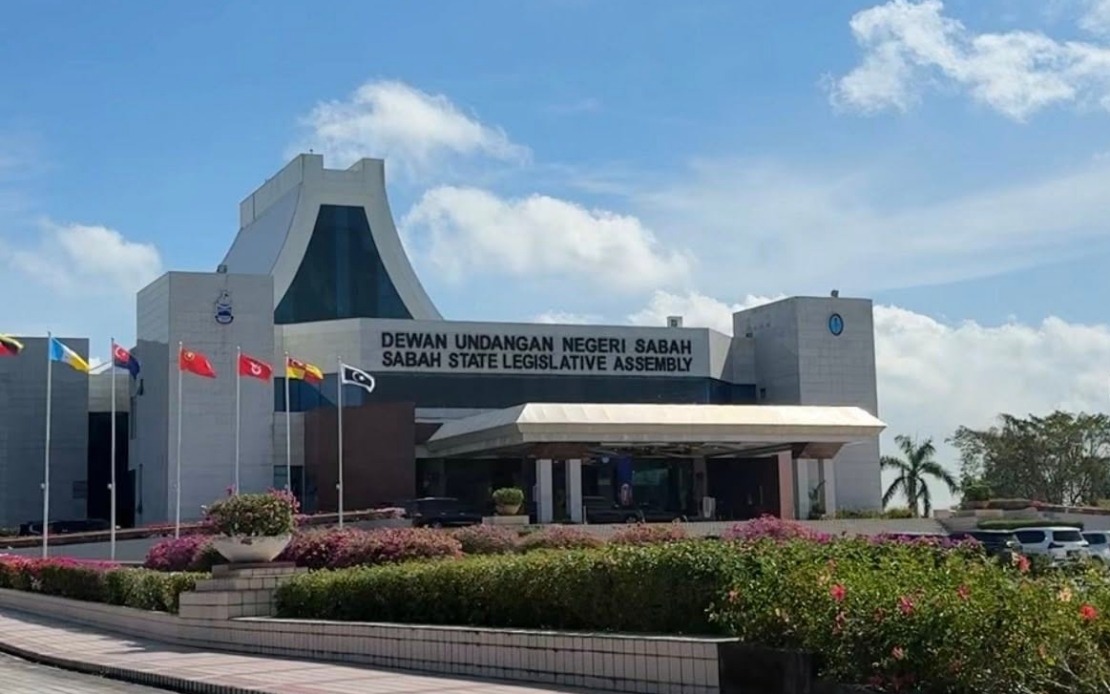
The Sabah Legislative Assembly has cleared two significant legislative proposals that will reshape how the state manages Muslim estates and administers customary justice for indigenous communities. Passed on July 22 in separate sessions, the Muslim Succession Bill 2026 and Native Courts Bill 2026 represent the most comprehensive overhaul of these legal systems in years and signal the state government's commitment to modernising frameworks that have remained largely unchanged for decades.
Datak Dr Mohd Arifin Arif, the state minister overseeing local government, housing, and Islamic affairs, spearheaded both measures through the assembly. The Muslim Succession Bill underwent scrutiny from five elected representatives before receiving approval, while the Native Courts Bill faced more extensive deliberation involving twelve assemblymen. This varying level of parliamentary engagement reflects the technical complexity embedded within each proposal and their distinct implications across Sabah's diverse population.
The Muslim Succession Bill 2026 introduces Malaysia's first comprehensive state-level legislation designed specifically to govern how Islamic law applies to the distribution of assets following a Muslim's death. The minister emphasised that the framework aims to establish systematic procedures with four underlying objectives. The law seeks to create clarity and consistency in how inheritance cases proceed under Islamic principles, replacing what has previously been a patchwork of general estate administration rules adapted for religious contexts. This standardisation should reduce disputes arising from ambiguous or competing interpretations of syariah requirements.
Crucially, the new Bill prioritises protecting the legitimate interests of all potential heirs and creditors with claims against an estate. Under the reformed system, assets cannot be concealed, misappropriated, or distributed without proper legal authorisation—a safeguard addressing historical concerns about mismanagement or fraud in estate administration. The measure also mandates that the Syariah Courts, rather than secular authorities, will hold jurisdiction over these matters, consolidating religious and civil oversight into a single coherent structure. This clarification of jurisdiction should eliminate confusion about which court system has authority to resolve inheritance disputes.
Administrative efficiency represents another cornerstone of the legislation. The Bill requires that deceased estates be handled in ways that strictly conform to syariah principles whilst maintaining rigorous accountability mechanisms. By formalising these requirements in statute, the new framework removes discretionary flexibility that might previously have permitted shortcuts or informal arrangements, ensuring consistent application across all cases statewide.
The Native Courts Bill 2026 pursues parallel modernisation objectives for Sabah's customary justice system. The existing Native Courts enactment has governed these institutions since 1992, and after more than thirty years of operation, the minister argued that comprehensive revision has become essential. The original framework, whilst respecting indigenous legal traditions, no longer adequately addresses contemporary judicial needs or reflects current understandings of institutional best practice.
Under the reformed structure, the Bill establishes a clearer hierarchical arrangement comprising the Native District Court, Native High Court, and Native Court of Appeal. This vertical integration creates pathways for litigants to seek appellate review, addressing concerns that earlier systems may have lacked adequate recourse against potentially erroneous lower court decisions. The tiered approach also allows different categories of cases to be routed to courts of appropriate seniority and expertise.
A particularly significant innovation involves the creation of a Native Judicial Appointments Advisory Committee tasked with assessing candidates for judicial appointment. The committee's mandate emphasises transparency, technical qualifications, knowledge of customary law, relevant experience, and personal integrity as criteria for selection. This represents a deliberate shift away from earlier practises wherein administrative position or seniority automatically translated into judicial responsibility. Under the new system, individuals without administrative backgrounds but possessing genuine expertise in customary jurisprudence may now access judicial roles, potentially drawing upon community leaders and respected legal scholars previously excluded from consideration.
For Malaysian readers and policymakers across Southeast Asia, these bills carry several implications. First, they demonstrate how common-law jurisdictions like Malaysia can adapt inherited institutional frameworks to serve demographically diverse populations with distinct legal traditions. Rather than imposing uniformity, Sabah's approach recognises that effective governance requires tailored institutions reflecting community needs and values.
Second, the emphasis on procedural transparency and merit-based appointment in judicial selection offers a model potentially applicable beyond Sabah. Many jurisdictions struggle with balancing respect for traditional authority structures against contemporary demands for accountability and technical competence. The Native Judicial Appointments Advisory Committee attempts this balance by maintaining customary law expertise as a central criterion whilst introducing external assessment mechanisms.
Third, the Muslim Succession Bill reflects broader conversations within Malaysia about clarifying the interaction between Islamic law and state administration. With similar issues generating debate in other Malaysian states, Sabah's comprehensive approach may serve as a template for jurisdictions seeking to modernise their syariah court systems. The explicit integration of asset-protection mechanisms and standardised procedures could address longstanding concerns about inheritance dispute resolution in Muslim communities throughout the region.
The passage of these bills also underscores evolving attitudes within Sabah's government toward institutional modernisation. Both measures preserve the substantive principles underlying existing systems—Islamic inheritance rules and indigenous customary justice—whilst fundamentally restructuring how these principles are administered and enforced. This conservative-progressive synthesis may offer useful lessons for other postcolonial states navigating the tension between respecting established legal traditions and responding to contemporary governance expectations.

