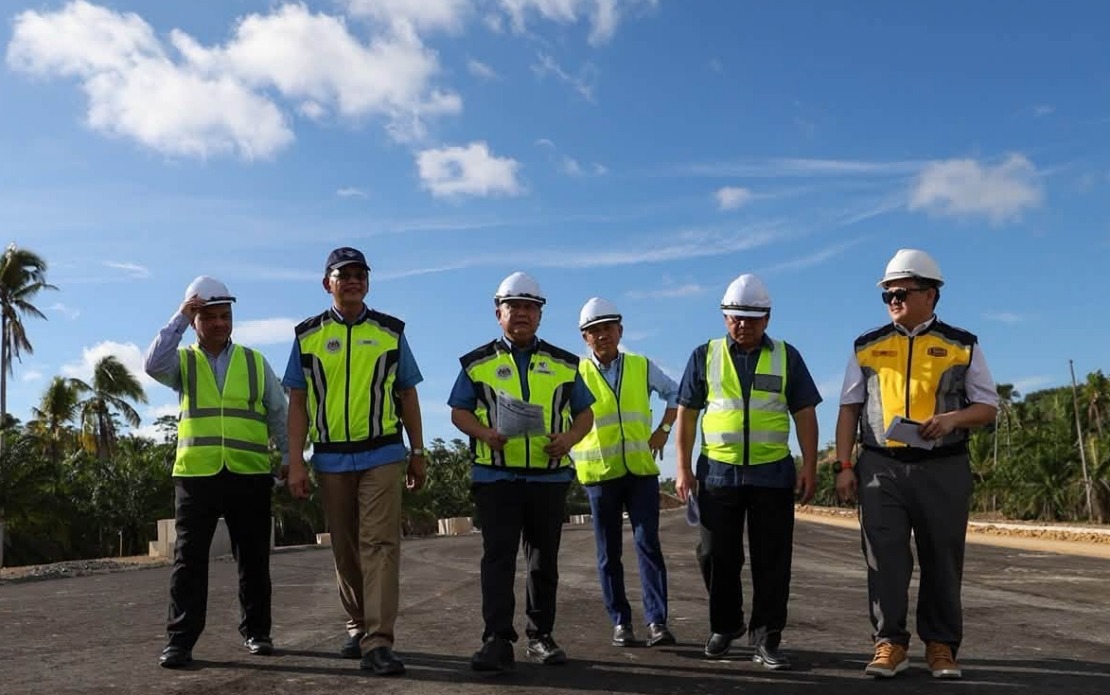
The contractor responsible for the Sabah Pan Borneo Highway Work Package 11 has formally submitted a recovery plan aimed at addressing accumulated construction delays on the critical infrastructure project. Works Minister Datuk Seri Alexander Nanta Linggi confirmed the submission, underscoring the government's commitment to keeping this major transport corridor on track for its contractual completion deadline of September 29, 2026.
The WP11 project, encompassing the Phase 1B alignment from Rampayan Laut to Sarang, represents a significant investment at RM167.48 million. As of late June, the 7.3-kilometre stretch had achieved 61.76 per cent physical progress, yet remained 4.35 per cent behind the planned schedule. The 32-day delay recorded to date prompted the recovery plan submission, which the ministry and relevant stakeholders are now examining in detail to chart a pathway back to on-schedule delivery.
The recovery plan carries ambitious targets, with authorities pledging to reduce the accumulated delay to just 14 days by August 2026. This represents a significant compression of the schedule gap, requiring focused execution over the coming months. The Works Ministry, alongside the Sabah Public Works Department, project consultants, and the contractor, will maintain close monitoring of implementation progress to ensure the recovery measures prove effective and sustainable.
Behind the current delays lie several interconnected operational challenges that have impacted the project's momentum. Utility relocation has emerged as a particularly complex obstacle, involving coordination among multiple service providers including Sabah Electricity Sdn Bhd, the Sabah State Water Department, and Celcom Timur Sabah Sdn Bhd. Simultaneously, land acquisition issues have created additional bottlenecks that have slowed the contractor's ability to mobilise fully across the work alignment. These difficulties highlight the administrative and logistical complexity inherent in major highway construction through populated areas.
The minister stressed that overcoming these impediments requires enhanced coordination among all stakeholders. The fragmented nature of utility management in Malaysia often creates bureaucratic friction during infrastructure projects, and this case appears no exception. Nanta emphasised the need for proactive problem-solving and integrated approaches to utility relocation and land access, suggesting that siloed working among agencies has contributed to timeline pressures. His public acknowledgment of these coordination challenges signals recognition that resolving them is essential to project success.
Beyond the completion date, the strategic importance of this highway alignment extends to Sabah's broader economic and tourism development agenda. The 7.3-kilometre segment will form part of an alternative route that dramatically reduces travel distances to key destinations including Simpang Mengayau and Kudat, with savings of up to 30 kilometres on current journeys. This geometric efficiency translates into tangible time savings, with travel times expected to decrease by 30 to 60 minutes depending on origin and destination points.
The improved connectivity carries particular significance for Sabah's tourism sector, a cornerstone of the state's economic diversification efforts. The alignment directly supports implementation of the Northern Sabah Coastal Tourism Master Plan, opening fresh accessibility to the Tourism Belt. Enhanced transport infrastructure is widely recognised as a prerequisite for tourism development, and this highway upgrade removes a significant barrier to visitor flows and commercial activity in these regions. For local communities, the improved connectivity promises expanded economic opportunities through increased business activity and employment linked to tourism operations.
The minister framed the project within a broader quality and integrity framework, pledging that completion dates represent only one dimension of success. He emphasised the importance of construction standards, workplace safety protocols, and governance integrity throughout project execution. This positioning reflects growing emphasis within Malaysian public infrastructure on delivering not merely on time but with appropriate rigour in design, construction, and safety standards, particularly relevant given Sabah's remote geography and vulnerability to environmental factors.
The Pan Borneo Highway initiative remains among Malaysia's most ambitious regional infrastructure undertakings, designed to unlock economic potential across Sabah and Sarawak. Delays in individual work packages therefore carry implications beyond the immediate project corridor, potentially affecting broader timelines and cost structures across the overall programme. The recovery plan submission represents the contractor's acknowledgment of these wider pressures and commitment to restoring momentum.
Moving forward, the success of this recovery trajectory will depend heavily on how effectively utility providers and land authorities accelerate their coordination. The Works Ministry's public commitment to monitoring progress creates accountability pressure on all parties, a lever often necessary in Malaysian infrastructure delivery where competing priorities among agencies can otherwise defer resolution. If the recovery measures prove effective in reducing delays from 32 to 14 days by August 2026, the project would retain reasonable confidence in meeting its September completion target, subject to unforeseen complications during final execution phases.
The broader lesson from WP11's experience reinforces longstanding challenges in Malaysian infrastructure delivery: utility coordination and land acquisition remain persistent friction points that impact project timelines across multiple sectors. As Malaysia pursues increasingly ambitious regional infrastructure programmes, addressing these systemic coordination challenges at the policy and institutional level may prove as important as project-specific recovery plans in accelerating national development objectives.

