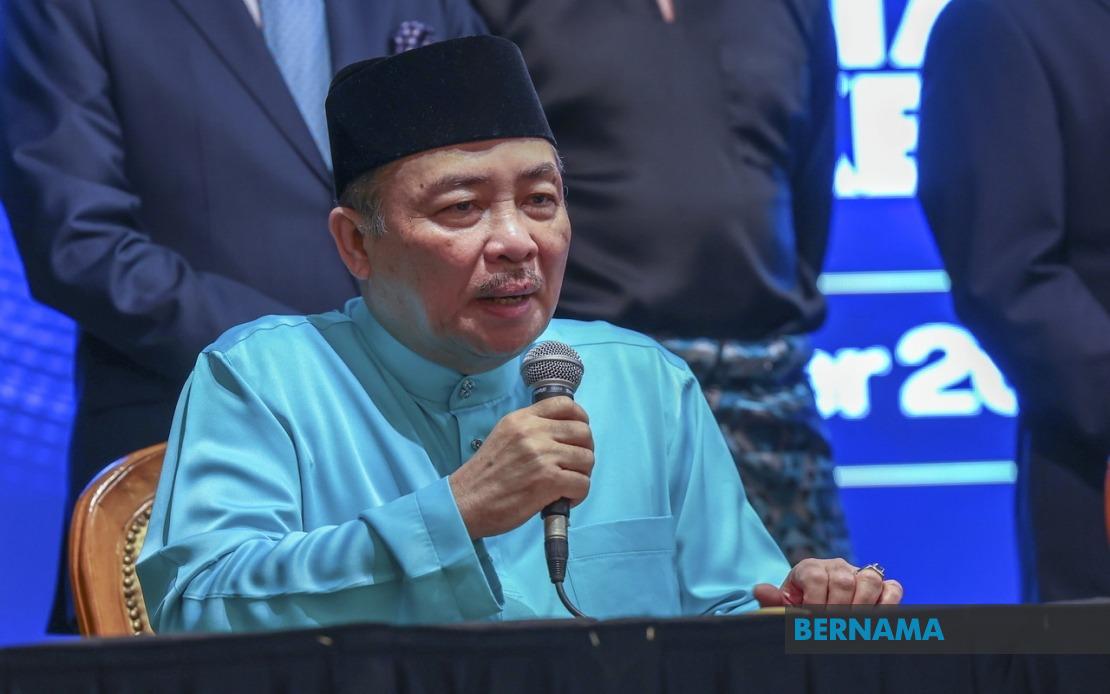
The Sabah government has committed more than RM100 million this financial year to sustain and expand its State Government Scholarship (BKNS) programme, reflecting a significant investment in the educational future of the state's youth. The allocation will serve the existing cohort of scholarship recipients while simultaneously opening doors for 2,182 newly selected students to pursue higher education across Malaysia and internationally. This fresh intake brings the total number of active BKNS beneficiaries to 13,389, demonstrating the programme's scale and the substantial public resources dedicated to reducing financial barriers to educational advancement in the state.
Chief Minister Datuk Seri Hajiji Noor announced the scholarship expansion against a backdrop of intensifying global competition for skilled talent and Malaysia's broader ambitions to develop a knowledge-driven economy. The initiative prioritises Science, Technology, Engineering and Mathematics (STEM) disciplines, aligning Sabah's educational strategy with economic imperatives that demand graduates capable of driving innovation and technological advancement. By channelling resources toward these fields, the state government signals recognition that sustainable economic development depends fundamentally on producing a workforce equipped with specialised technical capabilities and scientific literacy.
The scholarship programme sits within a broader constellation of education support initiatives that the Sabah government has introduced since 2021, reflecting a multi-layered approach to addressing financial constraints that obstruct educational access. Beyond the core BKNS programme, the state offers fourteen distinct assistance schemes designed to cushion students and families against escalating living and education costs. These range from the Higher Education Institution Registration Cash Assistance (BUDI) to the Sabah Student Flight Ticket Assistance (GRS-SUBFLY), which specifically targets the mobility challenges faced by students in a geographically dispersed state where many must travel substantial distances to reach educational institutions.
Among the complementary programmes are the Special Examination Cash Assistance (BAKTI), which provides targeted support during critical academic milestones, the Ihsan Computer Assistance (BAIK) initiative addressing digital access gaps, and the State Higher Education Student Contribution (SENTOSA) scheme. This ecosystem of financial support mechanisms acknowledges that scholarship allocation alone cannot fully dismantle the economic obstacles facing lower-income families. The diversified approach recognises that students face cascading expenses throughout their educational journey, from examination fees and technology costs to transportation and accommodation, each potentially derailing promising academic trajectories if left unaddressed.
The timing of this announcement carries particular significance for Southeast Asia's economic positioning. Sabah, as a resource-rich state with substantial petroleum and natural gas reserves, faces a critical juncture in transitioning toward more diversified and sustainable economic foundations. The emphasis on STEM education and emerging sectors reflects strategic foresight about industries that will define prosperity in the coming decades. By investing in scholarships targeting oil, gas and energy sectors alongside Technical and Vocational Education and Training (TVET) and Artificial Intelligence (AI), the Sabah government attempts to align its educational pipeline directly with anticipated labour market demands.
The focus on artificial intelligence merits particular attention, as it indicates recognition that AI will fundamentally reshape employment landscapes across sectors and skill levels. Malaysian regions that fail to develop AI literacy among their student populations risk widening competitiveness gaps relative to more technologically advanced economies and regions. Sabah's explicit commitment to fostering AI capabilities among scholarship recipients positions the state to participate more actively in what increasingly represents a critical frontier for economic development and technological sovereignty in the region.
Vocational education receives parallel emphasis, addressing a persistent skills gap that plagues many Southeast Asian labour markets. While universities attract considerable prestige and political attention, technical and vocational pathways remain critically undervalued despite offering viable routes to stable, well-compensated employment. By dedicating scholarship resources to TVET alongside traditional academic higher education, Sabah acknowledges that national development requires diverse skill sets and that classroom-based theoretical training alone cannot satisfy workplace demands. This balanced approach potentially offers templates for other Malaysian states and regional governments struggling to match educational outputs with labour market realities.
The scholarship expansion must be contextualised within Malaysia's broader educational equity challenges. Rural and lower-income students in states like Sabah often face compounded barriers to educational access, including geographic isolation, limited local institutional options, and family financial constraints that force talented young people to abandon studies. Scholarship programmes directly address financial barriers, yet systemic obstacles remain. The investment therefore represents essential but incomplete progress toward ensuring that educational opportunity depends on merit and aspiration rather than family wealth or geographic circumstance.
Chief Minister Hajiji's statement emphasising human capital development as foundational to state progress reflects a philosophical orientation increasingly common among Malaysian political leaders. This framing positions education and workforce development not as social welfare expenditures but as strategic investments generating returns through enhanced productivity, innovation capacity, and economic competitiveness. Whether this rhetorical commitment translates into sustained funding and policy coherence across electoral cycles and government transitions remains an ongoing question for Sabah and neighbouring states pursuing similar aspirations.
The broader regional significance of Sabah's scholarship initiative extends beyond the state's immediate borders. Malaysian states compete within the federation for talent and investment, and educational investment signals institutional commitment to youth development. For prospective students and their families throughout East Malaysia, robust scholarship programmes offer alternatives to relocating to Peninsular Malaysia for higher education, potentially retaining talent and resources within the region. Conversely, if scholarship recipients increasingly migrate elsewhere following graduation, the state fails to capture returns on its educational investments through brain drain dynamics familiar throughout the developing world.
The specific numerical target of 2,182 new scholarship recipients and the cumulative figure of 13,389 active beneficiaries provide measurable benchmarks against which the government's performance can be evaluated. These figures enable tracking of whether the commitment translates into sustainable expansion or stagnates relative to population growth and educational demand. For Malaysian researchers and policymakers examining regional educational equity, Sabah's programme offers empirical data regarding scholarship programme scale and reach in a state with distinct geographic, demographic and economic characteristics compared to Peninsular Malaysia.
Financial sustainability presents an underlying challenge barely addressed in government announcements. Education budgets face perpetual pressures as student populations grow and educational costs inflate. The commitment to allocate "over RM100 million" this year leaves unclear whether similar commitments will materialise in future fiscal years, particularly if state revenues fluctuate or political priorities shift. Scholarship programmes, once established and generating cohorts of beneficiaries with legitimate expectations of support, become politically difficult to curtail, potentially creating long-term fiscal obligations that constrain flexibility in responding to emerging priorities or economic downturns.
Ultimately, Sabah's expanded scholarship commitment reflects evolving recognition among Malaysian political leadership that education investment constitutes essential competitive positioning for regions aspiring to participate meaningfully in knowledge economies and innovation-driven sectors. Whether these commitments achieve stated objectives of developing competitive human capital in STEM, AI and technical fields while genuinely expanding access for disadvantaged students will require years of longitudinal evaluation. The announcement signals intention, but outcomes depend on implementation quality, sustained funding, institutional capacity, and whether scholarship recipients actually pursue and complete studies in priority sectors or redirect efforts toward careers elsewhere.

