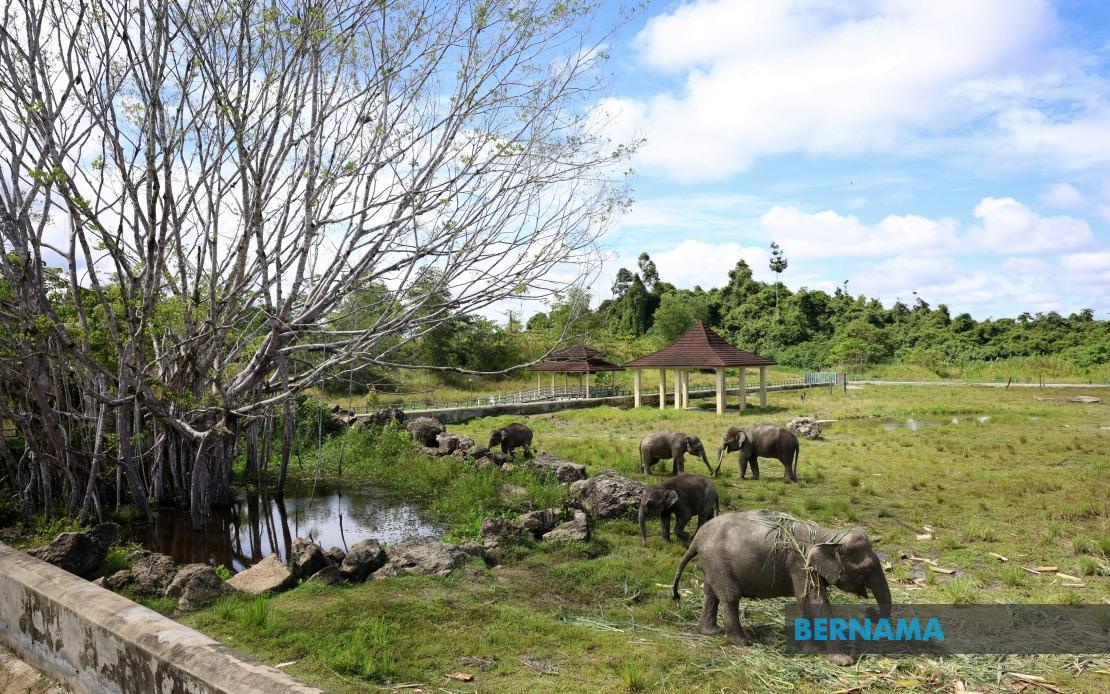
Sabah is exploring a pilot sanctuary concept centred on Tawau that could fundamentally reshape how the state manages its escalating wildlife encroachment problems, officials confirmed this week in the State Legislative Assembly. The initiative, still under evaluation by the Sabah Wildlife Department and allied agencies, represents a significant policy shift away from reactive culling and translocation toward landscape-level coexistence strategies. If the model demonstrates tangible success in curtailing destructive encounters between animals and farming communities, the government intends to replicate the approach across other regions of the state where human-wildlife friction has become a persistent challenge.
Datuk Dr Andi Md Shamsureezal, the Assistant Minister of Tourism, Culture and Environment, framed the Tawau sanctuary as a monitored experiment rather than an established solution. His cautious optimism reflects the complexity of the problem: Sabah's wildlife populations—particularly Bornean elephants, wild boars, and primates—have increasingly ventured into cultivated areas as their natural habitats shrink, inflicting mounting economic damage on smallholder farmers and undermining rural livelihoods. The sanctuary model addresses this tension by creating designated zones where animals can roam under managed conditions, potentially absorbing population pressures that would otherwise drive conflicts.
The genesis of this approach traces to mounting frustration with traditional mitigation tactics. Sabah's reliance on capturing and relocating problem animals has proven ineffective at resolving underlying drivers of conflict. As officials acknowledge, such measures merely displace the problem to fresh locations without tackling the ecological factors—habitat loss, fragmented migration corridors, food scarcity in protected areas—that push wildlife toward human settlements in the first place. This recognition marks a departure from the short-term thinking that has characterised much of Southeast Asia's wildlife management over recent decades.
The proposal emerged during legislative debate prompted by Datuk Seri Mohd Shafie Apdal, who advocated for designating dedicated wildlife areas with dual functionality as both conservation zones and tourist destinations. This dual-use concept holds particular appeal for Sabah, which depends significantly on ecotourism revenue. A well-managed sanctuary could theoretically generate income from visitors while simultaneously reducing conflict through direct conservation benefits. However, the economic viability of such operations depends heavily on infrastructure investment, professional management standards, and visitor safety protocols—elements that require sustained commitment beyond initial establishment.
Robust wildlife monitoring underpins the proposed strategy. The government has already begun fitting satellite collars on selected elephants to track movements in real time and furnish early warning systems to vulnerable communities. This technological approach enables preemptive action—farmers can protect crops or evacuate livestock before animals arrive—rather than responding after damage occurs. Such systems, when coupled with community-based ranger teams, create a network of observation and response that transforms local residents from passive victims into active stakeholders in wildlife management.
Community engagement emerges as central to the model's architecture. Rather than positioning conservation as something imposed from above, the strategy explicitly incorporates local people who bear the costs of wildlife presence into ranger teams and decision-making structures. This approach recognises that sustainable wildlife management requires buy-in from those who absorb its economic burdens. Farmers and villagers with direct investment in protecting wildlife populations become allies rather than adversaries to conservation objectives.
The elephant sanctuary pilot also implicitly addresses the broader Southeast Asian challenge of shrinking habitat. Across Malaysia, Thailand, and Indonesia, forest conversion to agriculture and development has compressed wildlife into smaller territories, intensifying competition for space and resources. Designated sanctuaries function as pressure valves, providing animals sufficient room to satisfy ecological requirements without colliding constantly with human activities. For Sabah, where deforestation remains a contentious issue, the sanctuary model offers a pragmatic acknowledgment that some protected areas must be actively managed rather than simply left untouched.
Wild boar and monkey management within the proposed framework involves controlled population reduction in designated zones, a strategy grounded in risk assessment rather than blanket culling. This graduated response reflects evolving understanding that wildlife populations vary in their conflict propensity depending on local ecology and demographic structure. Young boar males, for instance, exhibit greater destructiveness than established family groups, enabling targeted intervention. Similarly, monkey management prioritises zoonotic disease control alongside livelihood protection, adding public health dimensions to conservation objectives.
The timeline for evaluating the Tawau model remains undefined, creating uncertainty for affected farming communities. Officials have committed to observing outcomes before scaling upward, but without explicit metrics or deadlines, the initiative risks languishing without generating decisive information. Clear benchmarks—measurable reductions in crop damage, documented shifts in wildlife distribution, sustainable funding mechanisms—would sharpen evaluation criteria and accelerate policy decisions.
Expanding the Tawau model across Sabah would represent a significant financial undertaking. Sanctuary operations, ranger salaries, monitoring technology, and community compensation programs demand sustained budgeting commitment. The government's willingness to invest at scale will ultimately determine whether this represents genuine policy evolution or merely a well-intentioned pilot that fades when initial enthusiasm wanes. Similar initiatives elsewhere in Southeast Asia have struggled with implementation gaps between conception and delivery.
The sanctuary approach also requires robust legal frameworks to function effectively. Protections must encompass designated wildlife areas against encroachment by agricultural expansion, ensuring that sanctuaries remain genuine refugia rather than temporary placeholders. Simultaneously, laws governing wildlife capture, translocation, and culling require clarity to prevent opportunistic exploitation disguised as conservation management. Sabah's legislative framework will shape whether the model fulfills its potential.
International conservation experience suggests that landscape-level approaches combining protected areas, community zones, and managed use produce better outcomes than fortress conservation models that exclude human activity entirely. The Tawau sanctuary concept aligns with this evidence, positioning Sabah potentially as a regional leader in pragmatic human-wildlife coexistence. Success would offer template value for other Malaysian states and Southeast Asian neighbours grappling with identical pressures on their wildlife populations and rural economies.

