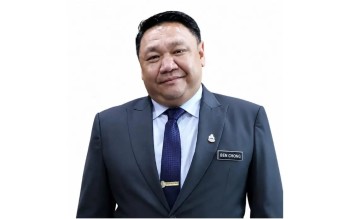
Sabah's state government has accumulated RM1.38 billion in sales tax revenues from major revenue-generating sectors in the first six months of this year, according to figures presented to the State Legislative Assembly in Kota Kinabalu on July 21. The collection represents a significant contribution to state coffers during a period when Sabah, like other Malaysian states, faces competing demands for public expenditure and infrastructure development. Assistant Finance Minister Datuk Chong Chen Bin @ Ben Chong outlined the composition of these revenues, revealing a heavy reliance on two traditional pillars of the state's resource-based economy.
Crude palm oil production, including palm biomass derivatives, emerged as the largest single revenue contributor to the state sales tax base, generating RM703.55 million in collections through the end of June. This figure underscores the continued centrality of the palm oil industry to Sabah's fiscal position, despite growing scrutiny of the sector's environmental impact and sustainability practices. The petroleum products sector contributed the second-largest share at RM679.45 million, reinforcing Sabah's dependency on hydrocarbon extraction and processing for state revenues. Together, these two sectors account for over 99 per cent of the recorded sales tax intake, illustrating the narrow revenue base upon which Sabah relies and the vulnerability of state finances to commodity price fluctuations.
The fisheries sector, which represents another significant economic activity in the coastal state, contributed a comparatively modest RM4.22 million to state sales tax collections. This stark disparity between fishery revenues and those generated by crude palm oil and petroleum points to a structural imbalance in how state tax revenue is distributed across sectors. The fisheries industry, which employs considerable numbers of workers and supports coastal communities, appears considerably underrepresented in the state's tax architecture compared to extractive industries. The forestry sector, notably, remains exempt from state sales tax imposition, a policy choice that shields the timber industry from this particular fiscal burden.
Datuk Chong's statement was delivered in response to parliamentary questions raised by Datuk Donald Peter Mojuntin of the Gabungan Rakyat Sabah party representing the Moyog constituency, who sought detailed breakdowns of sales and service tax collections across Sabah's major economic sectors. The question reflected broader interest among state assemblymen in understanding how Sabah's tax system functions and distributes the burden of taxation across different industries. Such parliamentary scrutiny serves an important oversight function, ensuring that revenue collection mechanisms remain transparent and responsive to evolving economic circumstances.
The Sabah state government has signalled intentions to undertake a comprehensive review of its sales tax rate structure for selected sectors, a move designed to enhance the competitiveness of local industries while strengthening their position in regional and international markets. This review initiative suggests recognition that current tax rates may be constraining economic development in certain areas or potentially driving investment and business activity to neighbouring jurisdictions. By adjusting tax incentives and rates strategically, policymakers hope to attract investment, encourage value-added processing, and create employment opportunities across the state economy.
Finance Minister Datuk Seri Masidi Manjun provided clarification regarding the distinction between sales and service tax imposed at the federal level and state sales tax levied by the Sabah government. This delineation is important for understanding Malaysia's federal structure and how tax revenue is divided between central government and state authorities. The state government's current review of its own sales tax rates sits within this dual system, addressing only those taxes over which Sabah exercises direct control rather than federal levies that flow to Kuala Lumpur. The clarification helps stakeholders understand which taxation matters fall within state jurisdiction and which require federal coordination.
Beyond revenue collection, the State Legislative Assembly hearing also addressed education policy preparations for a significant structural change in Sabah's schooling system. Education, Science, Technology and Innovation Minister Datuk James Ratib provided an update on readiness to admit six-year-old students into Year One beginning in the 2027 school session, responding to parliamentary questions from Justin Wong Yung Bin of the Warisan party representing Sri Tanjong. This age reduction represents a substantial shift in primary education entry points and necessitates comprehensive preparation across multiple dimensions of the education system.
The education ministry has undertaken extensive planning to accommodate younger entrants to formal primary schooling, beginning with the strategic deployment of newly qualified teachers from both the Bachelor of Teaching Degree Programme and the Postgraduate Diploma in Education Programme. Management of teacher placement has been prioritised to ensure systematic distribution of educators across schools based on identified needs and capacity. Additionally, the ministry has authorised the appointment of contract teachers to supplement permanent staff and address immediate classroom staffing requirements in schools across the state. This multi-faceted approach to human resource management reflects recognition that absorbing a new cohort of six-year-old students requires adequate pedagogical support.
To alleviate what education authorities acknowledge as excessive workload pressures on classroom teachers, the Sabah State Education Department has partnered with the federal Ministry of Education to explore expanding the student management assistant programme. These support personnel would assume responsibility for non-academic administrative tasks and student welfare matters, theoretically liberating teachers to concentrate their efforts on curriculum delivery and learning facilitation. This initiative responds to long-standing concerns that teachers in Malaysian schools shoulder administrative burdens that detract from their core teaching function.
Physical infrastructure enhancements form another critical component of preparations for admitting younger pupils into Year One. Sabah is implementing a building programme that includes construction of additional classrooms to accommodate increased student numbers, alongside renovation and modernisation of existing facilities to meet current educational standards. Several schools across the state will transition to two-session schooling arrangements, whereby morning and afternoon cohorts utilise the same facilities sequentially, a strategy that maximises existing infrastructure capacity while reducing the need for extensive new construction expenditure.
The assembly hearing demonstrates how Malaysia's state governments simultaneously manage fiscal policy decisions affecting resource-based industries while navigating significant structural changes in public service delivery, particularly education. Sabah's reliance on commodity-based taxation creates both opportunities and vulnerabilities as global markets for palm oil and petroleum fluctuate. Meanwhile, the education system stands on the cusp of substantial transformation, requiring careful coordination of teacher training, infrastructure investment, and operational logistics to ensure the transition proceeds smoothly without compromising educational quality for students across the state.

