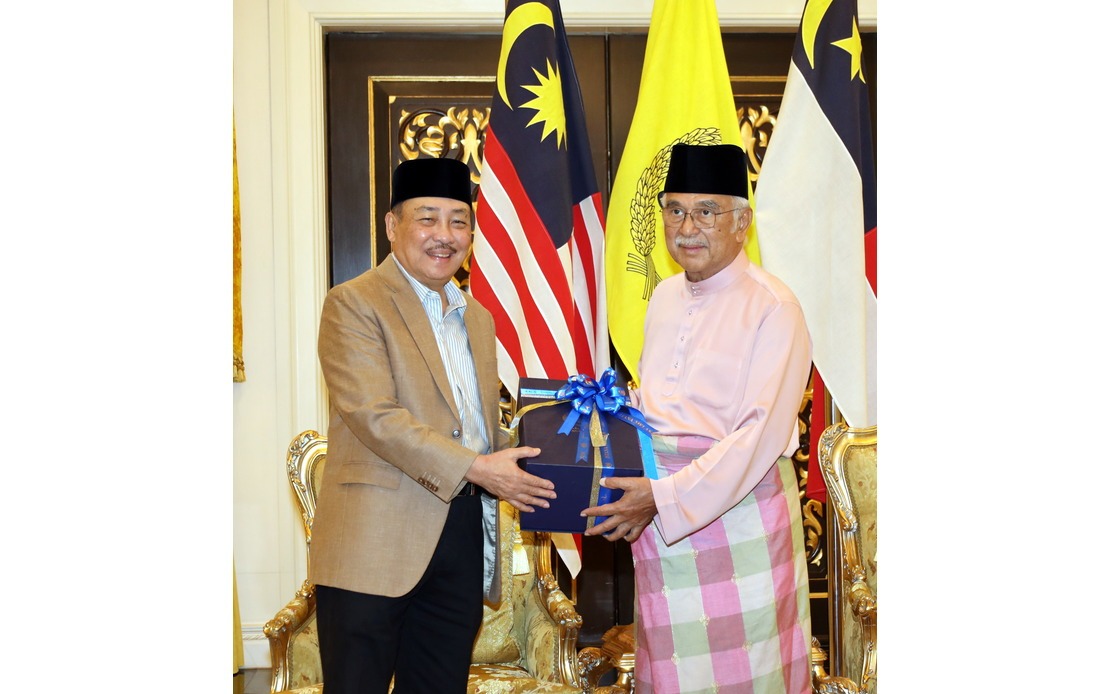
Sabah Chief Minister Datuk Seri Hajiji Noor travelled to Melaka on Wednesday to pay a courtesy visit to the state's Yang Dipertua Negeri Tun Dr Mohd Ali Mohd Rustam, marking another step in consolidating ties between the two Malaysian states. The engagement took place at Istana Melaka in Bukit Beruang, where Hajiji and his delegation were formally received by Tun Mohd Ali, underscoring the protocol and mutual respect characteristic of high-level state visits within Malaysia's federal framework.
The Sabah Chief Minister's Office confirmed that the delegation arrived at approximately 3.35 pm, bringing with them several senior figures from the state administration. This composition of the visiting party reflected the multi-sectoral nature of the discussions, signalling that the talks encompassed diverse policy areas affecting both states. By including ministers responsible for rural development, agriculture, fisheries, and food industry portfolios, Sabah's leadership demonstrated a commitment to exploring collaborative opportunities across economic and social domains that span the breadth of state governance.
Accompanying Hajiji were Sabah Rural Development Minister Datuk Rubin Balang, Agriculture, Fisheries and Food Industry Minister Datuk Jamawi Jaafar, and Nominated Member of the Sabah State Legislative Assembly Datuk Mohd Razali Mohd Razi. The inclusion of these officials suggests that discussions likely ventured beyond ceremonial pleasantries, touching on substantive matters where the two states might identify synergies or coordinate policy responses. Rural development and agricultural cooperation are particularly relevant for Malaysian states keen on addressing regional economic disparities and enhancing food security in an era of climate volatility.
While official statements remain characteristically sparse on the precise content of exchanges, the acknowledged discussion of "various matters of mutual interest" hints at a broad agenda. For a peninsular state like Melaka and an East Malaysian state like Sabah, such consultations often encompass trade linkages, labour mobility, tourism promotion, and infrastructure investment—issues that matter to both regional economies and the broader Malaysian economic narrative. The formal setting and structured nature of the meeting suggest these were not passing pleasantries but substantive policy conversations.
Interstate courtesy visits serve multiple diplomatic functions within Malaysia's political landscape. They reinforce the bonds of the federal union by fostering direct relationships between state leadership, thereby reducing reliance on federal intermediaries for resolving bilateral concerns. For Sabah, a state with distinct political dynamics and historical experience, such engagement with peninsular counterparts helps ensure that East Malaysian interests receive consideration in broader national discourse. Conversely, Melaka benefits from exposure to Sabah's perspectives and development priorities, enriching the collective understanding of Malaysia's diverse regional challenges.
The timing of the visit also warrants consideration. Regular high-level engagement between states helps normalise cooperation during non-crisis periods, establishing channels and relationships that prove invaluable when urgent coordination becomes necessary. Whether related to economic development, environmental management, or administrative cooperation, these foundational relationships create the trust necessary for seamless interstate interaction. In Malaysia's context, where states retain significant autonomy in matters like land, agriculture, and local administration, maintaining robust political relationships between chief executives becomes essential for smooth governance.
Tun Mohd Ali's hosting of afternoon tea signified the hospitable and collegial tone of the encounter. Such courtesies, though sometimes overlooked in analytical assessments, carry symbolic weight in political culture. They signal respect, openness to dialogue, and commitment to sustained engagement—messages that resonate both within government circles and among constituents observing their leaders' conduct of state affairs. The social dimension of formal visits often facilitates candid conversation that structured agenda items might not permit, allowing leaders to develop personal rapport alongside their official responsibilities.
From a broader Southeast Asian perspective, Malaysia's internal interstate relations deserve attention. While federal systems worldwide sometimes experience centrifugal pressures or competitive dynamics between constituent units, Malaysia's approach emphasises consultation and consensus-building across state lines. Visits like Hajiji's reflect a mature federalism where states view cooperation not as weakness but as essential for achieving shared national objectives while addressing localised concerns.
For Malaysian policymakers and observers, the substantive outcomes of such diplomatic engagements become evident over subsequent months as announced initiatives or coordinated announcements. The track record of how stated intentions to strengthen ties translate into tangible cooperation—whether through joint task forces, collaborative projects, or harmonised policies—indicates the genuine depth of interstate relations. The Sabah-Melaka visit thus represents not an isolated courtesy but a link in an ongoing chain of relationship-building that shapes Malaysia's federal governance architecture.

