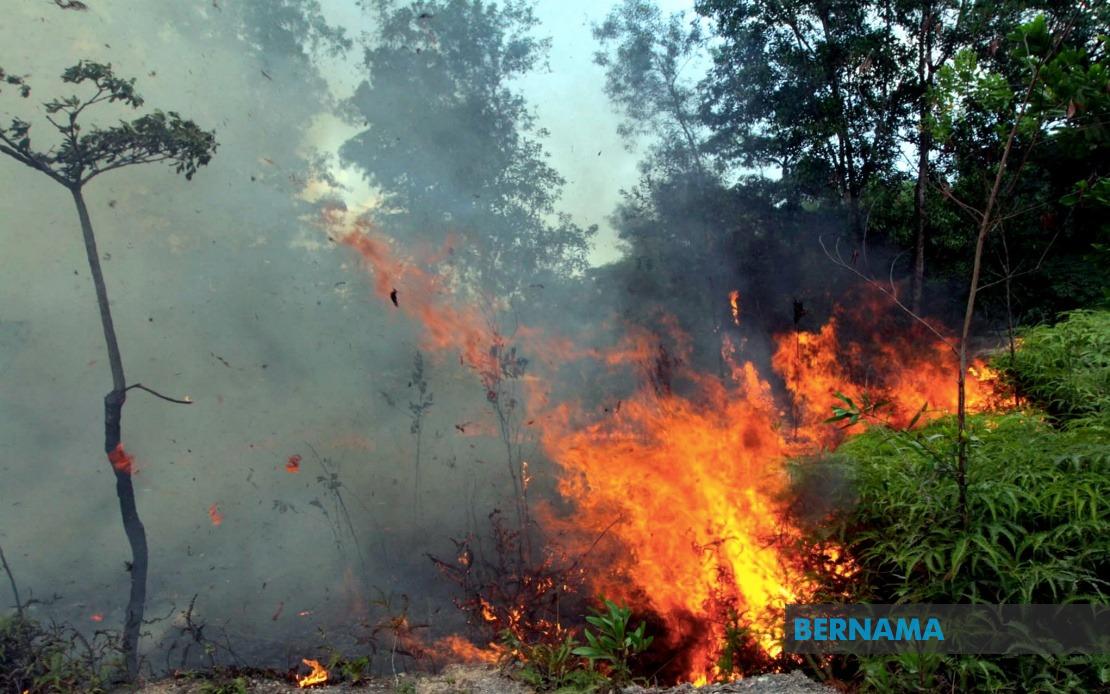
Sabah is bracing for worsening air quality as transboundary haze from forest fires burning across the border in Indonesia's Kalimantan region begins to blanket the state. The Sabah Fire and Rescue Department (JBPM) has responded by launching a comprehensive public awareness campaign urging residents to refrain from open burning activities, citing the compounding effect such practices would have on already deteriorating conditions. The directive comes as prevailing winds from the southern and central regions of Borneo carry thick smoke northward, diminishing visibility and air quality across multiple districts including Kota Kinabalu and Kimanis.
Director Mohd Pisar Aziz emphasised the critical importance of collective action in preventing the situation from deteriorating further. He highlighted that the combination of transboundary haze and localised open burning activities creates a dangerous multiplier effect, particularly given the current meteorological conditions favouring fire spread. The department has stressed that open burning constitutes a serious legal offence under environmental protection legislation, and perpetrators face significant penalties. Mohd Pisar warned that the alignment of climatic factors—including sustained hot and dry weather patterns—substantially elevates fire risk across the state, making proactive prevention measures essential for safeguarding both lives and property.
Air quality measurements recorded on the afternoon of August 11 revealed that Sabah remained within the moderate pollution band according to the Air Pollutant Index Management System (APIMS), though readings showed an upward trajectory. Kota Kinabalu, as the state capital and most populous region, registered the highest index at 83, while Politeknik Kota Kinabalu recorded 81 and Kimanis logged 76. Despite these moderate readings, environmental health experts and fire officials stress that such figures can escalate rapidly when transboundary haze intensity increases, potentially pushing the state into unhealthy territory within days.
The JBPM has specifically flagged vulnerable population segments as requiring heightened vigilance even under current moderate conditions. Asthma sufferers, young children, and elderly residents face compounded health risks during haze episodes, as compromised air quality exacerbates respiratory conditions and triggers acute health episodes. Medical professionals recommend that these groups adopt precautionary measures immediately rather than waiting for air quality indices to reach hazardous levels, as early intervention can prevent serious complications. The department's advisory underscores a principle increasingly recognised across Southeast Asia: haze-related health impacts are not uniform across populations, and targeted protection strategies for at-risk groups deserve priority attention.
The geographic scope of the open-burning restrictions reflects hydrological patterns documented by the fire department. Both Keningau and Pitas have experienced seven consecutive days without rainfall through August 10, a threshold that meets statutory criteria for triggering open-burning bans in those districts. This precipitation-based trigger mechanism, embedded in environmental regulations, represents an evidence-based approach to fire management: areas experiencing extended dry spells face exponentially higher risk of fire spread once ignition sources are introduced. The prohibition encompasses a comprehensive range of activities, including the burning of household refuse, dried vegetation, garden waste, and construction debris—all common practices that significantly contribute to localised air pollution when combined with transboundary haze.
Public health authorities have issued detailed guidance for residents navigating the haze period. The recommendation to restrict outdoor activities between 11 am and 4 pm reflects scientific understanding of diurnal pollution patterns, when atmospheric conditions typically concentrate pollutants at ground level and solar heating intensifies ozone formation. Maintaining adequate hydration helps bodies cope with respiratory irritation, while particulate masks serve as a practical barrier against inhaled particles—though medical-grade masks offer substantially better protection than cloth variants. Regular inspection of domestic electrical systems addresses a less obvious but significant fire risk, as faulty wiring poses particular danger during dry seasons when vegetation and accumulated combustible materials offer abundant fuel.
The JBPM has mobilised multiple communication channels to disseminate fire safety messaging and encourage public vigilance. Residents are urged to report suspicious activities or nascent fires immediately via the emergency number 999, enabling rapid response when incidents occur. Discarding cigarette butts responsibly—a seemingly minor behavioural change—nonetheless prevents numerous fires annually across Southeast Asia, where seemingly extinguished butts occasionally ignite dry vegetation hours or days after disposal. This emphasis on individual accountability reflects recognition that fire prevention depends fundamentally on distributed responsibility across the entire population rather than enforcement efforts alone.
The transboundary dimension of Sabah's current air quality challenge underscores a persistent regional vulnerability affecting multiple Southeast Asian nations annually. Kalimantan's fire season, driven by deliberate land-clearing practices and natural aridity, regularly generates haze that drifts across borders affecting millions of residents in neighbouring territories. While bilateral discussions between Malaysia and Indonesia occasionally address the phenomenon, the lack of coordinated enforcement mechanisms or binding agreements means that individual states like Sabah must manage haze impacts through domestic measures alone. This structural constraint highlights why local prevention efforts, including restrictions on open burning, assume critical importance despite representing only partial solutions.
For Malaysian policymakers and environmental managers, the recurrence of transboundary haze episodes reinforces the urgency of both adaptation and prevention strategies. Building resilience through improved air quality monitoring infrastructure, enhanced public health preparedness, and sustained communication with vulnerable populations represents necessary baseline work. Simultaneously, longer-term diplomatic and technical engagement with Indonesian counterparts remains essential for addressing root causes of cross-border smoke transmission. Sabah's current response demonstrates the practical steps individual states can implement immediately, yet the fundamental challenge of transboundary pollution ultimately requires regional cooperation frameworks that extend beyond individual national responses.

