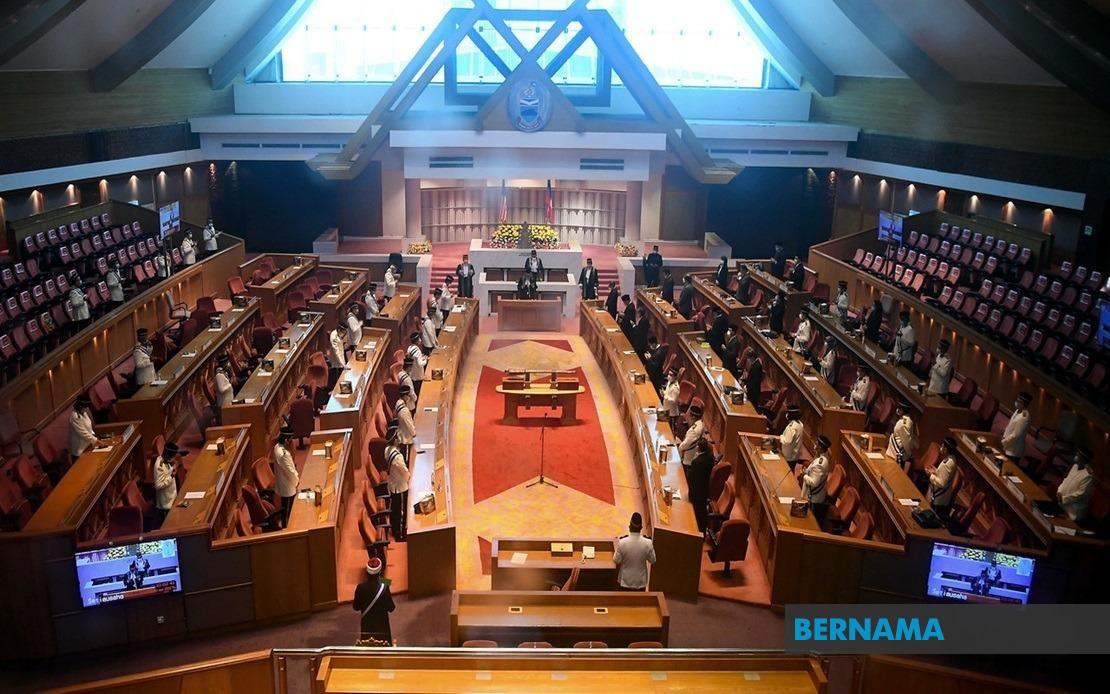
The Sabah State Legislative Assembly has formally approved the Sabah Ports Authority (Amendment) Bill 2026, cementing administrative changes that realign how the state manages its crucial maritime infrastructure. Deputy Chief Minister III Datuk Ewon Benedick, who steers the state's Industrial Development, Entrepreneurship and Transport portfolio, brought the measure before lawmakers on July 22, navigating it through debate with contributions from six assembly members under the supervision of Deputy Speaker Datuk Al Hambra Tun Juhar.
At its foundation, the amendment addresses a bureaucratic gap created by Sabah's December 3, 2025 cabinet reorganisation. When the state government restructured its ministerial architecture, responsibility for port operations shifted away from the Ministry of Public Works and Utilities toward Ewon's newly configured Industrial Development, Entrepreneurship and Transport ministry. However, the governing legislation—the Sabah Ports Authority Enactment 1981—had not been updated to reflect this institutional change, leaving a mismatch between legal authority and actual administrative practice.
The core problem revolved around definitional language within the existing enactment. Section 2 of the 1981 legislation explicitly named the minister responsible for communications and public works as the authority in charge of port affairs. Once cabinet portfolios were reshuffled, this reference became outdated and potentially contradictory, as the named minister no longer held port oversight responsibilities. The amendment corrects this discrepancy by redefining which minister holds statutory authority over the Sabah Ports Authority, thereby restoring legal consistency with the new governmental structure.
For Malaysia's maritime economy and port-dependent states, such amendments are more than procedural formalities. Sabah, with its strategic position along major shipping routes and its role as a gateway for regional trade, depends on clear, efficient port management. Ambiguities in governance structures can create delays in decision-making, complicate contractual arrangements with port operators, and potentially discourage private investment in port infrastructure. By clarifying ministerial authority, the amendment removes a source of administrative friction that could otherwise impede port operations or complicate future policy implementation.
Ewon emphasised that the legislative adjustment carries no financial burden for the state treasury. Ports, once established, typically generate revenue through usage fees and commercial leases, so restructuring ministerial oversight does not require additional budgetary allocation. This distinction matters for fiscally conscious state governments balancing competing developmental priorities across infrastructure, healthcare, education, and social services.
Crucially, the amendment preserves the operational integrity of the Sabah Ports Authority itself. The changes do not alter the authority's core policies, functions, or legal powers—they simply clarify which government minister exercises supervisory authority. This continuity means existing contracts, port tariffs, operational procedures, and governance frameworks remain undisturbed, reducing disruption to port users and operators who depend on stable regulatory environments.
The bill includes a transitional clause designed to prevent legal ambiguity during the handover period. Any decisions, approvals, or administrative actions taken by the previous minister responsible for port affairs are declared valid and binding, even though that minister no longer formally holds the portfolio. This protection ensures that no legitimate action becomes retroactively questionable due to the administrative transition, a safeguard particularly important for long-term port contracts or infrastructure projects initiated under the previous ministerial arrangement.
For Malaysia as a whole, this amendment reflects a broader Southeast Asian challenge: aligning legal frameworks with governmental restructurings that reflect contemporary policy priorities. States increasingly reorganise their cabinets to respond to economic shifts—Sabah's consolidation of industrial development, entrepreneurship, and transport under one minister signals recognition that modern port management intersects with manufacturing, trade facilitation, and logistics. Outdated legislation that clings to old ministerial divisions can impede this kind of strategic integration.
The smooth passage through assembly—following substantive debate involving multiple lawmakers—suggests the amendment was non-controversial and widely understood as necessary housekeeping. In parliamentary systems, such unanimous or near-unanimous passage on technical adjustments reflects consensus that the change serves legitimate administrative purposes rather than shifting power inappropriately or imposing new costs on stakeholders.
Looking forward, this amendment positions Sabah's port governance within a modernised administrative framework as the state pursues economic diversification and expanded maritime trade. The clarity now embedded in legislation should facilitate more agile decision-making when port operators, shipping lines, and investors require ministerial approvals or policy guidance. In competitive regional markets where port efficiency and regulatory predictability influence business location decisions, such administrative streamlining carries tangible economic value.
For other Malaysian states or ASEAN neighbours contemplating cabinet reforms, Sabah's approach offers a useful lesson: structural changes in government should be accompanied by prompt updates to enabling legislation. Delays in legal harmonisation create confusion and potential disputes that undermine the very efficiency gains governments hope to achieve through reorganisation. Sabah has avoided this pitfall through timely legislative action.

