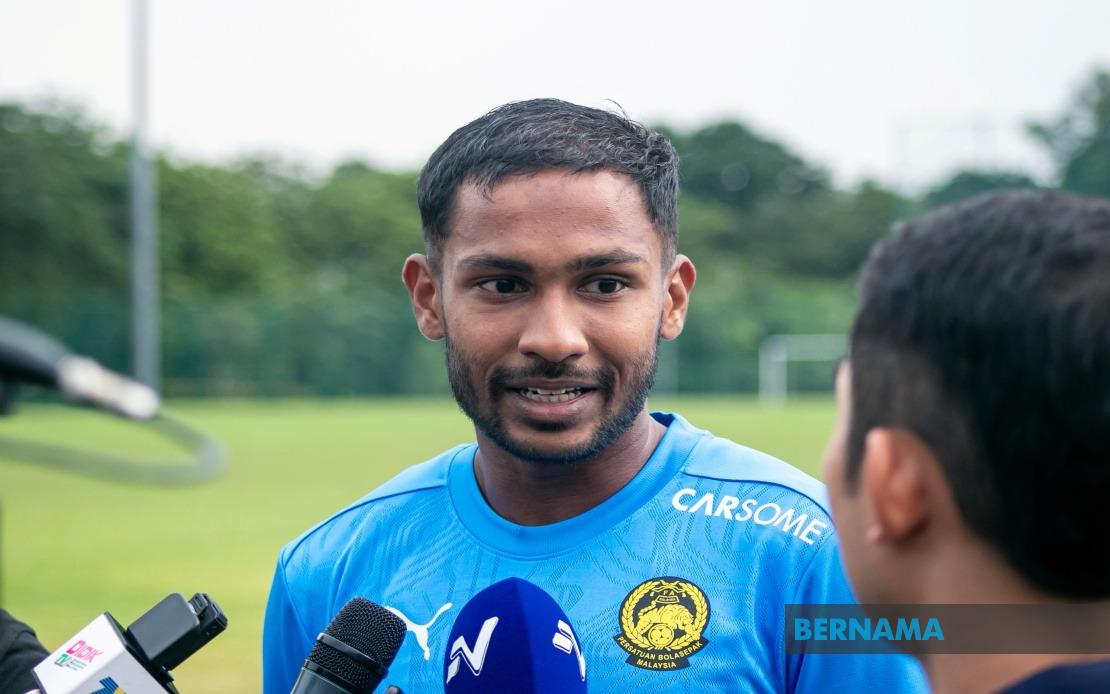
National football team defender V. Ruventhiran has launched an emotional call for Malaysian supporters to reclaim their place in the stands during the upcoming 2026 Hyundai ASEAN Cup, framing the tournament as a moment for the nation to unite behind its representatives on the pitch. Speaking during Harimau Malaya's centralised training sessions in Shah Alam, Ruventhiran articulated a vision of renewed passion, stressing that collective backing transcends tactical considerations or external distractions—it is fundamentally about defending national honour.
The veteran defender's appeal carries particular weight given Malaysia's recent inconsistency in drawing crowds. Beyond the technical quality of play, Ruventhiran emphasises the psychological dimension that a vocal, packed stadium provides, describing supporters as the essential "12th man" whose presence can fundamentally shift momentum during critical moments. He acknowledged that the opening fixture against Myanmar at Thuwunna Stadium on July 25 will be contested away from home, yet his message targets the home fixtures that follow, where domestic support becomes a tangible competitive advantage.
For Malaysian football enthusiasts, the recruitment and performance of home-based players carries particular resonance. The inclusion of Penang FC's Aliff Haiqal Lokman Hakim Lau represents an opportunity for the domestic league to showcase its developing talent on the regional stage. The 2026 ASEAN Cup serves as a proving ground where club-level performers can establish themselves as credible national-team assets, potentially elevating the overall quality of Malaysian football.
Aliff Haiqal's perspective on his selection reveals the personal dimensions underlying tournament football. Having endured a challenging previous season marked by persistent injuries, his call-up represents more than squad numbers—it signifies a fresh beginning. The Penang FC midfielder has framed his participation as a chance to demonstrate that he has overcome his physical setbacks and regained match fitness and competitive edge. His gratitude was evident, recognising that representing the national team remains every footballer's ultimate aspiration.
The player's determination to use this tournament as a springboard for both his national team credentials and his domestic club form illustrates how international competition can catalyse personal rehabilitation. For Penang FC, Aliff Haiqal's successful performances in the ASEAN Cup could enhance the club's profile and potentially attract further investment in player development. This interplay between club football and international duty remains central to Southeast Asian football's competitive dynamics.
Harimau Malaya's Group B schedule presents a structured pathway through the tournament. The team faces Myanmar first, establishing early momentum before hosting Laos at the Kuala Lumpur Football Stadium in Cheras on July 28. Subsequent fixtures against Thailand at Bangkok's Rajamangala Stadium on August 1 and the Philippines in Cheras on August 8 will test Malaysian football's capability against varied competitive styles and home-away conditions. This fixture list demands consistency and mental resilience, qualities that supporter encouragement significantly influences.
The tournament structure itself—with the top two teams from each group advancing to two-legged semi-finals in mid-August and finals scheduled for August 22 and 26—compresses Malaysia's campaign into a demanding calendar. Players and coaching staff must maintain peak physical condition whilst managing accumulated fatigue. The compressed timeline makes home-ground advantage particularly valuable, as travel fatigue and unfamiliar conditions present distinct obstacles for touring sides.
Ruventhiran's call for unified fan engagement addresses a broader concern within Malaysian football culture. Domestic support has fluctuated considerably, influenced by team performance, economic pressures on ticket affordability, and competing entertainment alternatives. Yet international tournaments historically generate heightened emotional investment, offering the national team an opportunity to mobilise the broader public. The 2026 ASEAN Cup could represent a turning point in rebuilding the connection between Malaysian football institutions and their grassroots supporter base.
For regional context, the ASEAN Cup remains one of Southeast Asia's most significant football competitions, showcasing the region's football development and providing valuable competitive experience. Malaysian participation reflects the nation's commitment to regional football excellence, though success requires both on-pitch performance and off-pitch support infrastructure. The tournament offers neighbouring nations—Myanmar, Laos, Thailand, and the Philippines—similar opportunities to develop their football programmes and international standing.
The messaging from both Ruventhiran and Aliff Haiqal demonstrates how player leadership extends beyond match performance to encompassing cultural and motivational dimensions. Ruventhiran's patriotic framing appeals to collective identity, whilst Aliff Haiqal's personal narrative of overcoming adversity resonates with individual supporters facing their own challenges. Together, these narratives construct a compelling case for why Malaysians should invest emotionally and physically in attending matches.
As Harimau Malaya prepares for its opening contest, the team's success will partly depend on factors entirely within its control—technical execution, tactical discipline, and physical preparation. Yet Ruventhiran's intervention acknowledges that football exists within a broader social context where supporter energy, collective optimism, and national pride materially impact outcomes. His plea represents an invitation for Malaysian society to recognise itself within the national team's journey and to understand that attendance at matches constitutes more than passive observation—it represents active participation in the nation's sporting narrative.

