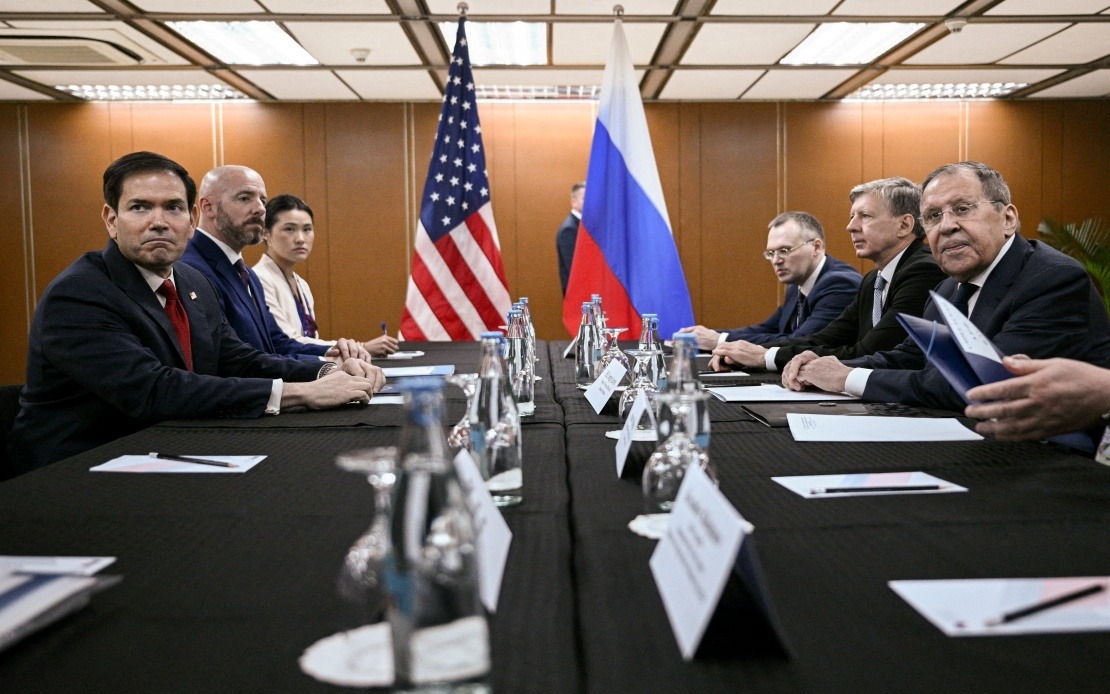
The foreign ministries of Russia and the United States have committed to preserving diplomatic communication channels despite broader geopolitical tensions, according to a statement issued by Moscow following a high-level encounter in the Philippine capital. The agreement between Russian Foreign Minister Sergey Lavrov and US Secretary of State Marco Rubio represents a deliberate effort to maintain operational dialogue through multilateral institutional frameworks, suggesting both nations recognise the necessity of preserving some level of engagement even as they pursue divergent strategic interests globally.
The Manila meeting comes at a particularly delicate juncture in Moscow-Washington relations, with numerous contentious issues dividing the two permanent members of the UN Security Council. By committing to continued ministerial contacts conducted through international organisations, both capitals appear to be establishing guardrails intended to prevent diplomatic rupture, even as fundamental disagreements persist on regional conflicts and global governance questions. This approach reflects a calculated pragmatism—neither side abandoning its core positions, yet both acknowledging that complete severance of channels could escalate risks uncontrollably.
Among the substantive matters addressed during the Lavrov-Rubio conversation was the restoration of fully functional working conditions for diplomatic missions stationed in each other's capitals. This practical dimension of their discussion underscores how bilateral relations have deteriorated to the point where basic operational parameters for embassies and consulates require explicit negotiation and agreement. The normalisation of diplomatic mission conditions, if successfully implemented, would facilitate more routine and fluid communication between officials, reducing the likelihood of misunderstandings born from restricted access or deliberately hindered administrative processes.
Separately, both ministers welcomed the resumption of comprehensive engagement between Russia's state space agency Roscosmos and the United States National Aeronautics and Space Administration (NASA). This development carries profound significance for space exploration and scientific cooperation, fields that historically transcended Cold War-era divisions and have continued to represent areas of potential mutual benefit even during periods of acute geopolitical friction. The restoration of full-fledged collaboration between these agencies suggests both governments recognise that certain domains of human endeavour—particularly space science—benefit from depoliticisation and merit preservation as zones of constructive partnership.
The agreement to revitalise interparliamentary exchanges represents another significant facet of the broader diplomatic initiative. Such exchanges serve multiple functions: they build personal relationships among legislators from different nations, facilitate mutual understanding of respective domestic political contexts, and create informal networks that can prove invaluable during crises. Regular contact between parliamentarians helps humanise foreign counterparts and can generate political constituencies within each country favouring restraint and dialogue.
Cultural ties, similarly identified as a priority for development, constitute a softer but no less important dimension of bilateral relations. Academic exchanges, artistic collaborations, and cultural festivals create people-to-people connections that often prove resilient even when governmental relations encounter severe strain. The explicit commitment to expanding cultural engagement signals both nations' understanding that civilisational connections and shared intellectual heritage can serve as stabilising forces when political relations grow fraught.
For Malaysia and broader Southeast Asia, this Russian-American diplomatic stabilisation carries regional implications. The Association of Southeast Asian Nations operates within an international environment significantly shaped by great power competition, and any escalation of Moscow-Washington tensions risks destabilising global markets, complicating regional security arrangements, and potentially drawing smaller nations into unwanted alignments. Malaysia's own foreign policy traditionally emphasises the maintenance of balanced relations with major powers, so evidence that the world's leading nuclear-armed adversaries continue pursuing dialogue aligns with regional preferences for stability and multipolarity.
The choice of Manila as the venue for this ministerial meeting also merits consideration. The Philippines hosts substantial US military presence and maintains complex historical relationships with both Washington and Moscow, making it symbolically appropriate for such diplomatic engagement. The setting underscores how Southeast Asian capitals increasingly serve as stages for great power diplomacy, reflecting the region's growing centrality in global affairs and its capacity to facilitate dialogues that might prove more difficult in either Moscow or Washington.
The success of these agreements ultimately depends on implementation. Maintaining contacts within international organisations requires consistent participation and goodwill, normalising diplomatic mission conditions necessitates bureaucratic coordination, and expanding space, parliamentary, and cultural cooperation demands sustained resource allocation and political commitment from both governments. The statement's careful wording—emphasising agreement on frameworks rather than breakthrough resolutions of substantive disputes—reflects realistic acknowledgment that fundamental disagreements remain unresolved.
Moving forward, these commitments serve primarily as stabilising mechanisms rather than pathways toward comprehensive reconciliation. Yet in a world where miscalculation between nuclear powers carries existential stakes, the maintenance of functioning diplomatic channels and the preservation of non-political cooperation domains constitute achievements worthy of recognition. Both the Kremlin and the State Department appear to have concluded that controlled engagement, despite profound differences, serves both nations' interests more effectively than complete isolation.

