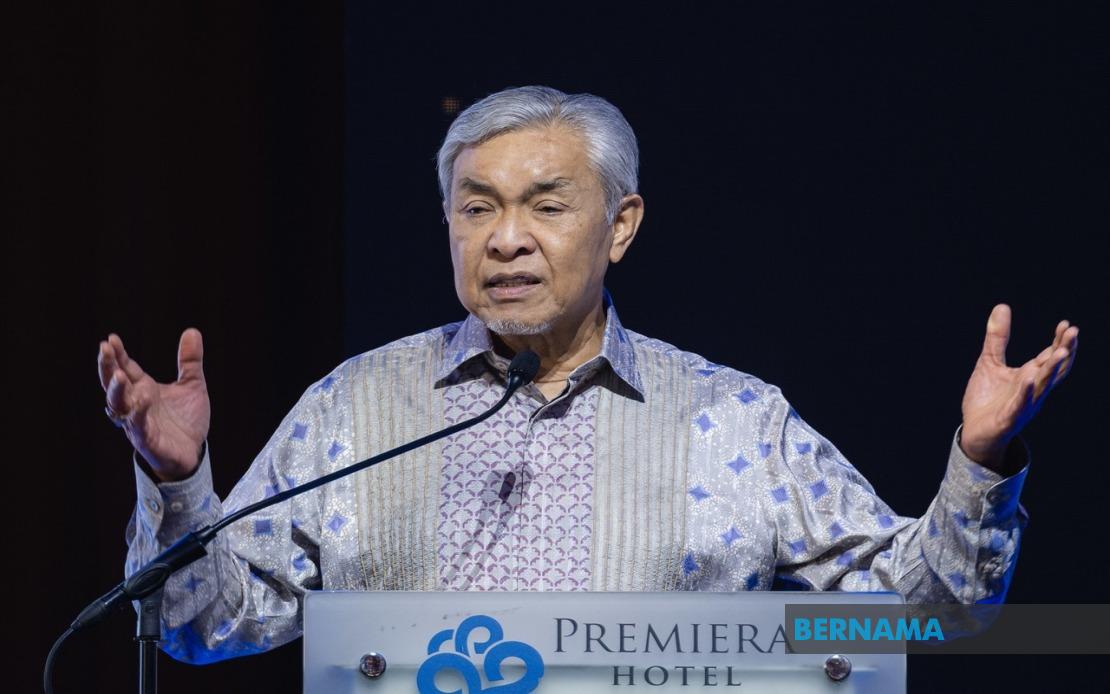
Deputy Prime Minister Datuk Seri Dr Ahmad Zahid Hamidi has signalled openness to funding rural road construction projects in Sabah and Sarawak through the 2027 budget, provided the proposed routes address connectivity gaps between isolated communities and established towns. Speaking after the Ministry of Rural and Regional Development's annual awards ceremony in Kuala Lumpur, Ahmad Zahid, who also oversees the portfolio as minister, outlined a framework within which such infrastructure proposals would be evaluated and potentially greenlit for implementation.
The assurance comes as both East Malaysian states continue grappling with connectivity challenges that hamper economic activity and service delivery across their vast territories. Rural road networks form the backbone of agricultural commerce, healthcare access, and educational opportunity in remote areas where communities remain dispersed across challenging terrain. Ahmad Zahid's statement reflects the government's recognition that infrastructure gaps remain a critical development bottleneck, particularly in regions where natural geography constrains conventional transport links.
According to the Deputy Prime Minister, the Ministry of Rural and Regional Development has established clear criteria for evaluating road construction submissions. Projects must demonstrably enhance connectivity between peripheral settlements and existing major urban centres or established communities. This targeted approach aims to prioritise investments with the greatest multiplier effect on economic participation and social mobility rather than pursuing infrastructure for its own sake. The ministry intends to review all outstanding proposals once stakeholder consultations conclude, Ahmad Zahid explained.
However, Ahmad Zahid cautioned that approval and financing remain contingent on adherence to established protocols overseen by the Ministry of Finance and the Public Works Department. Such procedural checks serve to ensure fiscal prudence and technical soundness, though they also introduce administrative layers that can extend approval timelines. The consultation phase, which involves coordinating between federal agencies, state governments, and local authorities, will determine which projects advance to the budgeting stage for eventual consideration in the 2027 allocation cycle.
Beyond the immediate matter of rural road funding, Ahmad Zahid articulated a broader philosophical shift in how his ministry approaches development work. He called for adoption of what he termed a "new discipline" within the Rural and Regional Development Ministry—one emphasising ruthless evaluation of programme effectiveness and swift adaptation when results fall short. This framework requires continuous assessment: successful initiatives warrant expansion, underperforming efforts demand acceleration or remedial action, and failed programmes should either be reformed substantially or terminated.
This performance-oriented stance reflects mounting fiscal pressures and rising public expectations for government efficiency. Rather than perpetuating programmes based on inertia or institutional habit, Ahmad Zahid is advocating for dynamic management where outcomes determine continuation. The Deputy Prime Minister stressed that rural communities deserve public spending that translates tangibly into improved living standards and expanded economic opportunity, not merely the completion of infrastructure projects divorced from genuine developmental impact.
Ahmad Zahid additionally reframed rural development as extending well beyond traditional infrastructure construction. Contemporary rural advancement, he argued, must cultivate entire ecosystems capable of generating sustainable livelihoods and employment. This perspective acknowledges that roads alone, however essential, insufficient without complementary investments in skills training, market access, value-added processing, and entrepreneurial support systems. The Ministry must therefore adopt a more holistic approach integrating infrastructure with human capital development and economic enablement.
The Deputy Prime Minister also touched on the imperative for public sector transformation, characterising it as fundamentally a mindset shift rather than merely digitising existing processes. Reform requires courage in decision-making, willingness to embrace change, and institutional readiness to abandon outdated practices. Technological modernisation matters less than cultivating an organisational culture where staff possess authority and incentive to challenge inefficiency and propose innovation.
Addressing ministry personnel directly, Ahmad Zahid exhorted staff to commit to continuous learning, maintain unwavering integrity, and embrace accountability in all actions. These values form the foundation upon which effective public service rests, particularly in rural development where implementation touches vulnerable communities dependent on government programmes for essential services. Personal integrity and transparent decision-making build trust and legitimacy, enabling policies to achieve their intended effects.
For Malaysian stakeholders, particularly those in Sabah and Sarawak concerned with infrastructure development, Ahmad Zahid's statements offer cautious optimism while establishing realistic expectations about timelines and approval processes. The 2027 budget cycle remains over a year distant, providing opportunity for affected communities and state authorities to prepare comprehensive proposals demonstrating connectivity benefits and development potential. Success will depend on presenting compelling cases supported by technical soundness and clear developmental logic.
The remarks also signal the government's continued commitment to addressing regional disparities, a persistent challenge in a federation spanning Peninsular Malaysia, Sabah, and Sarawak. Infrastructure investment serves as a policy mechanism for narrowing development gaps and ensuring that peripheral regions participate fully in national economic growth. Whether the 2027 budget allocation ultimately matches aspirations expressed today will depend on fiscal conditions and competing budgetary demands.

