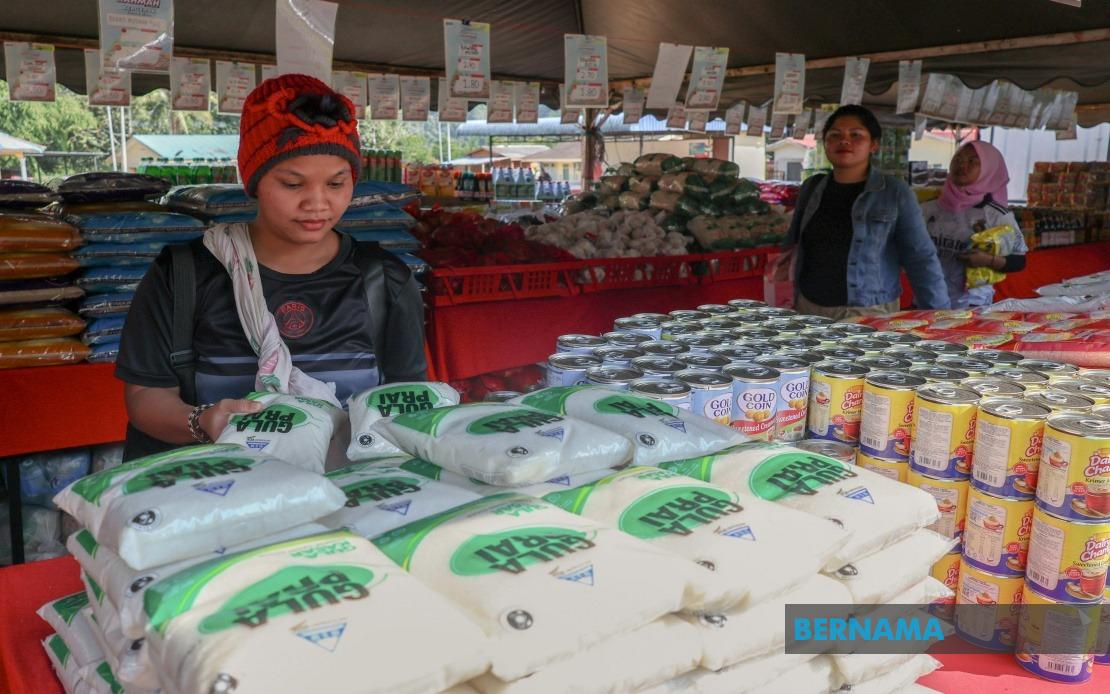
The Domestic Trade and Cost of Living Ministry (KPDN) has reported measurable success in bridging the price disparity that has long disadvantaged Malaysians living in geographically isolated areas. Since rolling out the Essential Goods Distribution Programme, controlled items ranging from basic staples such as sugar and white rice to energy products like LPG and RON95 petrol now command consistent pricing regardless of whether consumers live in bustling urban centres or remote countryside settlements.
Before the initiative took root, residents scattered across Malaysia's peripheral zones routinely shouldered substantially inflated expenses for goods available at standardised rates elsewhere in the country. The structural challenge of transporting goods over difficult terrain and across considerable distances had created a hidden poverty tax on rural populations, who paid premium prices simply for geography. The programme directly addresses this inequity by ensuring supply chains function efficiently enough to deliver price parity.
The results speak plainly in several measurable cases. In Pulau Libaran, located within Sabah, liquefied petroleum gas cylinders previously commanded prices of RM39 per unit but now trade at the regulated rate of RM26.60, representing a reduction exceeding one-third. Packaged cooking oil followed a similar trajectory, dropping from RM3.50 per packet to the controlled ceiling of RM2.50. These adjustments translate into meaningful weekly savings for households that depend on these items for cooking and heating.
The programme's financial underpinning reflects substantial government commitment. A RM250 million allocation for the current year supports distribution reaching 1.03 million residents spread across Sabah, Sarawak, Terengganu, Kelantan, Pahang and Kedah. This geographical footprint encompasses 212 distinct zones, nearly 830 separate distribution territories, and more than 1,500 individual points of sale where consumers access these regulated goods. The infrastructure investment demonstrates that price standardisation across dispersed populations requires considerable logistical coordination.
Sabah receives the largest share of resources, with RM107.3 million allocated to support 492,566 recipients across 78 zones. Within the Libaran constituency specifically, RM1.76 million funds operations across eight distribution areas and nine sales points serving 17,061 local residents. These allocations reveal how the ministry has customised support levels to match population densities and geographic challenges in different regions, rather than applying uniform funding formulas that would ignore local circumstances.
The programme's architecture incorporates multiple safeguards designed to prevent diversion of subsidised goods away from intended beneficiaries. The ministry has established standardised operating procedures governing deliveries at every stage, from warehouse to consumer. Additionally, dedicated monitoring and coordination committees at both federal and state levels exercise ongoing oversight, creating redundant accountability mechanisms that make systematic leakage more difficult to sustain.
Evaluation research conducted through the Programme Outcome Evaluation Committee indicates strong acceptance among participating communities. Survey respondents overwhelmingly confirmed that the initiative directly improved their financial capacity to afford essential goods, and demonstrated clear preference for the programme's continuation. This qualitative feedback matters significantly because policy success ultimately depends on whether targeted populations perceive tangible benefit rather than merely receiving technical implementation of bureaucratic initiatives.
For Malaysian policymakers confronting persistent rural development challenges, this programme illustrates how targeted intervention addressing specific market failures can yield concrete improvements in living standards. The rural-urban price gap persists partly because logistics costs, lower sales volumes, and limited competition create naturally higher prices in remote areas. Government intervention that absorbs transportation costs or guarantees demand can neutralise these market disadvantages without requiring permanent subsidies or price controls on the broader economy.
The initiative carries relevance beyond individual household finances. When rural residents spend less on essential cooking fuel and basic foodstuffs, freed resources flow toward education, healthcare, and small business investment that builds longer-term community capacity. Price stability also reduces consumer uncertainty and enables better household financial planning, particularly important for lower-income families spending large percentages of income on basic necessities. These indirect benefits compound over time as communities gain economic breathing room.
The programme's effectiveness in Sabah and Sarawak assumes particular significance given the logistical challenges these states present. Sabah's archipelagic geography, with numerous islands requiring maritime transport, creates genuinely substantial distribution costs that purely market-driven systems struggle to overcome affordably. By absorbing these transportation premiums through central allocation, the government enables coastal and island communities to access the same essential goods at prices reflecting only the underlying production costs rather than the true expense of reaching them.
Regional Southeast Asian observers noting Malaysia's approach may recognise parallels with similar price stabilisation efforts elsewhere in the region. Countries attempting to balance inflation concerns against rural welfare typically face analogous tensions between fiscal sustainability and political pressure to protect vulnerable populations from commodity price volatility. Malaysia's framework, emphasising targeted distribution rather than blanket subsidies, offers a potentially replicable model for other economies seeking to address rural disadvantage through market-based mechanisms complemented by strategic government intervention.
Continuing the programme requires sustained political commitment and careful monitoring to prevent cost escalation that could render the RM250 million allocation insufficient. The ministry's emphasis on control measures and evaluation committees suggests awareness that such programmes demand active management to deliver promised outcomes. As Malaysia's cost-of-living debates intensify in coming years, the Essential Goods Distribution Programme's demonstrated capacity to narrow rural price gaps will likely remain central to government strategy for protecting rural communities from inflation's harshest effects.

