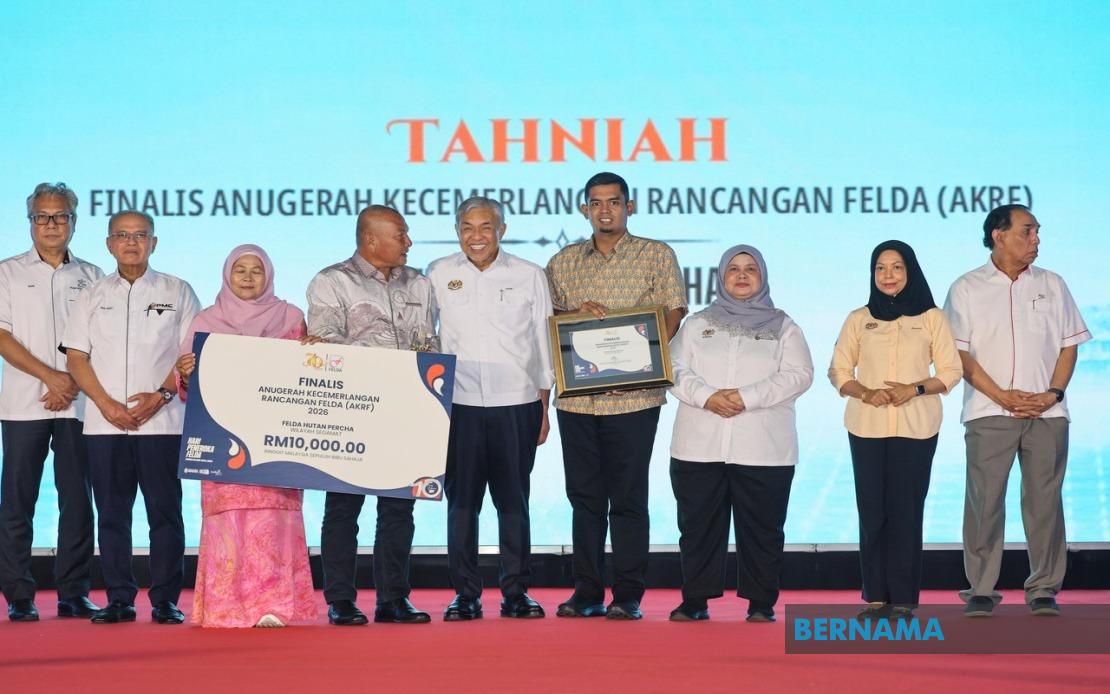
Deputy Prime Minister Datuk Seri Dr Ahmad Zahid Hamidi has called for a fundamental shift in how Malaysia approaches rural development, arguing that the sector cannot thrive if confined to a purely domestic framework. Speaking at the World Rural Development Day 2026 celebration in Maran, the Rural and Regional Development Minister stressed that rural entrepreneurs must cultivate the ambition and capability to enter larger regional and international markets. This perspective represents a meaningful departure from traditional rural development models that have historically emphasised local infrastructure and community-level interventions, instead positioning Malaysian rural economies as potential participants in cross-border trade networks and value chains.
The opportunities Ahmad Zahid identified extend particularly toward the ASEAN region and the expanding global halal economy, sectors where Malaysia maintains competitive advantages and established networks. Malaysian rural products and brands possess inherent qualities that could resonate with consumers across the region and beyond, he suggested, but realising this potential requires overcoming psychological and structural barriers that have historically limited rural participation in international commerce. The minister's emphasis on confidence and market penetration reflects broader economic thinking about how rural development can transition from subsistence-focused activities to export-oriented enterprises capable of generating substantial wealth for farming communities and agro-based entrepreneurs.
Central to Ahmad Zahid's vision is the National Rural Economy Agenda, which he positioned as Malaysia's comprehensive blueprint for the next phase of rural transformation. This framework appears designed to coordinate policy, investments, and initiatives across multiple government agencies and private sector participants, moving beyond the fragmented approach that has sometimes characterised rural development efforts. By establishing a unified agenda, the government aims to create coherence between infrastructure investment, entrepreneurship support, skills development, and market access initiatives that individually may produce limited impact but collectively could catalyse meaningful rural economic growth.
Under this agenda, the ministry has introduced several flagship initiatives over the past three years intended to strengthen rural entrepreneurship and market reach. The RisSMart and IkonDesa programmes represent attempts to bridge the gap between rural producers and wider consumer markets, providing platforms and support mechanisms that reduce transaction costs and information asymmetries. These programmes have reportedly supported the development of more than 7,000 new rural entrepreneurs, a substantial cohort that collectively has created 15,000 jobs and generated sales exceeding RM1.77 billion. These figures suggest that targeted support for rural enterprise, when properly structured, can produce measurable economic contributions and employment opportunities at scale.
The achievements in human capital development indicate that rural Malaysia is experiencing improved access to higher education opportunities. Nearly 500 Orang Asli students gained university admission, Ahmad Zahid noted, describing this as the highest number ever recorded for this demographic group. This development carries significance beyond the immediate educational achievement, as it suggests a broadening talent pipeline from rural and indigenous communities that could contribute to both rural enterprises and the broader economy. Education access functions as a fundamental prerequisite for rural communities to participate effectively in modern market economies and to develop the skills necessary for competitive advantage.
Physical infrastructure improvements during the 12th Malaysia Plan period demonstrate sustained government investment in rural connectivity. Nearly 5,000 kilometres of rural roads received upgrades, addressing a persistent constraint on rural development in Malaysia. While this investment remains significant, the modest scale relative to Malaysia's total road network underscores the scale of rural infrastructure deficits that persist in various regions. Enhanced road connectivity directly reduces logistics costs for rural producers seeking to access urban and export markets, facilitating the kind of market integration Ahmad Zahid advocated.
Electricity and water supply expansion reached thousands of rural households, with electricity extended to more than 7,000 homes and clean water supplied to over 10,000 households. These utilities represent foundational requirements for modern rural living standards and for productive economic activities. Access to reliable electricity enables rural entrepreneurs to operate mechanised production facilities, cold storage systems, and digital technologies essential for participating in contemporary value chains. Nearly 10,000 homes were built or refurbished, benefiting approximately 40,000 rural residents and representing substantial investment in rural residential quality of life.
The World Rural Development Day framework provides international context for Malaysia's rural agenda. Proclaimed by the United Nations General Assembly on September 6, 2024, with July 6 designated as the annual observance date, this UN initiative marks the establishment of the Centre on Integrated Rural Development for Asia and the Pacific. Malaysia's adoption of this commemoration beginning in 2026 signals formal alignment with international rural development priorities and provides a platform for showcasing the country's rural policies to regional and global audiences.
For Southeast Asian observers, Malaysia's articulation of a regional and international rural development strategy carries particular relevance. Rural development remains a critical challenge across ASEAN, with substantial portions of the region's population residing in agricultural and rural areas where income levels and economic opportunities lag behind urban centres. Malaysia's experience in attempting to integrate rural entrepreneurs into regional value chains could offer lessons for neighbouring countries grappling with similar challenges. The emphasis on halal economy integration reflects Malaysia's distinctive positioning within global trade networks and demonstrates how countries can leverage specific sectoral specialisations to create rural economic opportunities.
The integration of rural development with regional and global market access represents a significant reorientation of policy emphasis. Rather than viewing rural areas primarily as recipients of subsidies and welfare provisions, or as repositories of traditional agricultural practices, Ahmad Zahid's framing suggests rural communities as potential economic actors capable of participating in contemporary commercial networks. This perspective requires complementary investments in digital infrastructure, business training, quality standards compliance, and market information systems that enable rural producers to meet the technical and commercial requirements of wider markets. The success of initiatives like RisSMart and IkonDesa in generating substantial sales volumes suggests that when appropriate support systems are established, rural entrepreneurs can respond effectively to market opportunities.
Looking forward, the challenge for Malaysian policymakers involves sustaining momentum in rural entrepreneurship support while managing expectations about the pace and scale of rural economic transformation. Rural development typically unfolds over extended timeframes, and the benefits of improved infrastructure and entrepreneurship support often accumulate gradually. However, the targets Ahmad Zahid articulated and the progress demonstrated across infrastructure, education, and entrepreneurship metrics suggest that coordinated policy implementation can produce meaningful results. The emphasis on regional and global market access provides a compelling rationale for rural investment and entrepreneurship support, positioning rural development not as a peripheral concern but as integral to national economic competitiveness.

