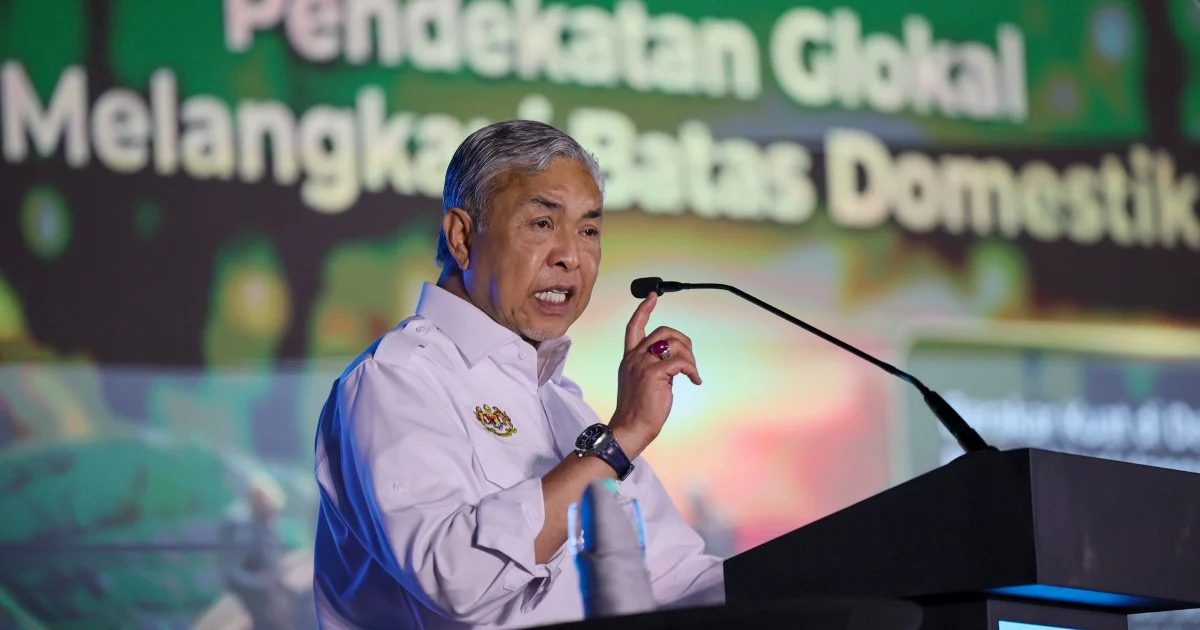
Deputy Prime Minister Datuk Seri Dr Ahmad Zahid Hamidi has underscored the critical importance of synchronising Malaysia's rural development efforts with broader global economic and developmental objectives. Speaking at MARAN, the official said the National Rural Economic Agenda must function as a foundational blueprint that ushers rural areas into a new phase of sustainable and competitive growth.
Zahid's remarks reflect growing recognition within Malaysia's federal leadership that rural prosperity cannot be pursued in isolation from international market dynamics, environmental standards, and technological advancement. The Deputy PM's framing suggests that policymakers are increasingly conscious of the need to integrate countryside economic strategies with global competitiveness frameworks, rather than treating rural development as a separate domestic policy track.
The emphasis on the National Rural Economic Agenda as a guiding document indicates the government's intention to move beyond incremental, ad-hoc rural initiatives toward a coherent long-term vision. This strategic repositioning acknowledges that rural communities—home to approximately 43 per cent of Malaysia's population—must be equipped to participate meaningfully in the knowledge-based, digitally-integrated global economy rather than remain dependent on traditional agricultural models alone.
Zahid's invocation of the global agenda reflects Malaysia's commitment to international development frameworks, including sustainable development goals and regional trade arrangements. As Southeast Asia's third-largest economy, Malaysia recognises that rural development choices have implications for the nation's overall competitiveness in regional and global markets. Rural areas that lag in infrastructure, digital connectivity, and skills development create drag on national productivity and innovation metrics that increasingly determine economic rankings.
The Deputy PM's statement also carries implications for how Malaysia approaches rural diversification. Rather than encouraging rural communities to anchor their future solely in agriculture and commodity-dependent activities vulnerable to price fluctuations and climate impacts, the agenda framework suggests promoting value-added industries, agro-technology, e-commerce capabilities, and service-sector opportunities that can integrate rural economies into global supply chains and digital platforms.
For Malaysian stakeholders, Zahid's positioning is particularly relevant given ongoing discussions about regional integration through trade agreements and the competition from neighbouring ASEAN economies in attracting manufacturing investment and digital infrastructure projects. Rural areas that successfully transition toward knowledge and technology-intensive activities could become competitive locations for regional operations, but this requires deliberate policy alignment and substantial infrastructure investment.
The Deputy PM's comments also underscore the government's awareness that development disparities between urban and rural regions can undermine social cohesion and political stability. By framing rural progress as integral to Malaysia's global standing rather than merely a domestic welfare concern, Zahid appears to be repositioning rural development as a national competitiveness imperative rather than a subsidiary concern.
Implementing this vision will require coordination across multiple government agencies and substantial capital allocation. The National Rural Economic Agenda will likely need to address persistent infrastructure deficits—particularly in broadband access, transportation networks, and industrial facilities—that currently constrain rural economic participation. Without these foundational investments, even well-intentioned policy frameworks will struggle to translate into tangible improvements in rural incomes and opportunities.
Zahid's remarks also hint at the potential role of private-sector participation in rural development. Markets increasingly reward companies that demonstrate commitment to inclusive growth and sustainable practices, creating potential alignment between corporate interests and rural development objectives. However, ensuring that private investment benefits rural communities rather than exploiting them will require clear regulatory frameworks and transparent governance mechanisms.
The timing of these statements reflects evolving global discourse around inclusive development and the recognition that countries cannot sustain long-term stability and prosperity when significant population segments are left behind. For Malaysia, with its historical emphasis on bridging urban-rural divides through government programs, the reframing of rural development as a global-competitiveness imperative rather than a welfare issue signals a subtle but important shift in policy philosophy.
As Malaysia navigates post-pandemic economic recovery and positions itself within an increasingly multipolar, technology-driven global economy, the success of initiatives like the National Rural Economic Agenda will significantly influence whether the nation can maintain its middle-income status and move toward high-income development without exacerbating regional inequality. The Deputy PM's public commitment to this agenda suggests that rural development will remain a central priority in coming years, though translating rhetoric into sustainable on-ground improvements remains the critical challenge ahead.
Moving forward, stakeholders will monitor how the government operationalises this framework through budget allocations, institutional capacity-building, and accountability mechanisms that demonstrate tangible progress in rural incomes, employment creation, and quality of life indicators—the ultimate measures of successful development aligned with both local needs and global standards.

