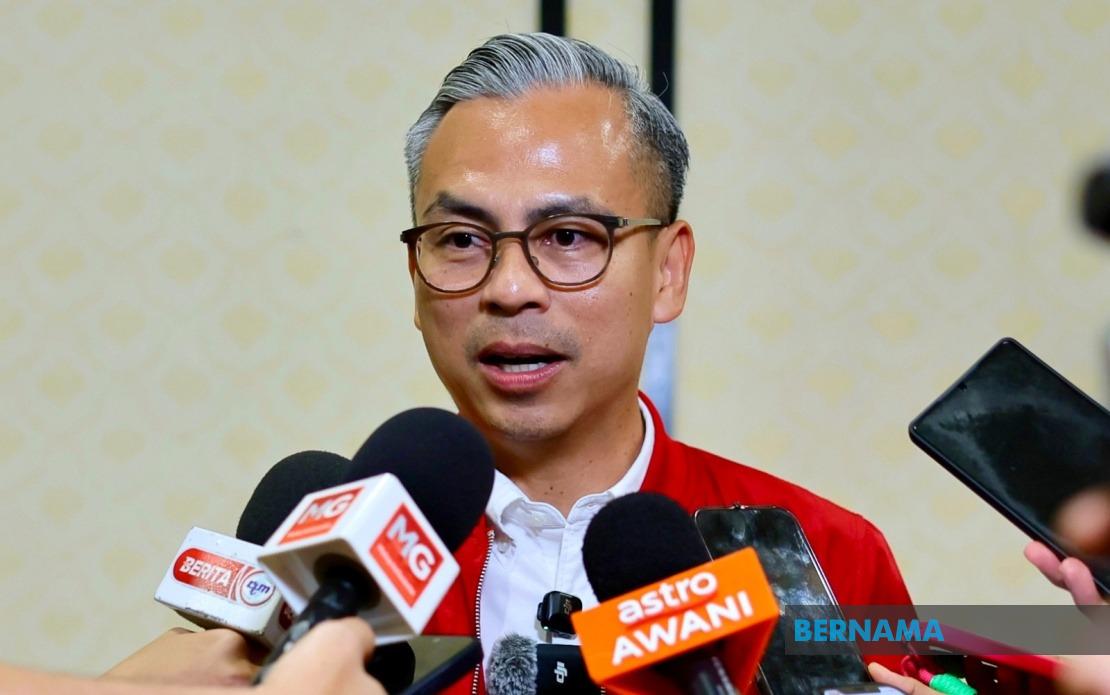
Communications Minister Datuk Fahmi Fadzil has extended an invitation to broadcast a live dialogue between incumbent Johor Menteri Besar Datuk Onn Hafiz Ghazi and Pakatan Harapan's Dr Maszlee Malik on Radio Televisyen Malaysia, signalling the government's willingness to facilitate direct engagement between political rivals ahead of the state election scheduled for July 11. Speaking in Muar, Fahmi emphasised that RTM stands ready to provide airtime for such a discussion at any mutually convenient location and time, with Johor Bahru mentioned as a possible venue for the encounter.
The offer reflects a broader strategic positioning by Pakatan Harapan to elevate the campaign discourse beyond traditional partisan attacks. Fahmi clarified that the proposed platform would not serve as a venue for political point-scoring or adversarial theatrics, but rather as an opportunity for substantive conversation about the state's development direction and future trajectory. This framing appears designed to position the opposition as focused on governance issues rather than personal attacks, a distinction that carries weight among swing voters and middle-class constituencies that often decide state-level contests in Malaysia.
The proposal arrives amid existing pressure from certain quarters demanding that Pakatan Harapan publicly announce its chief minister candidate before engaging in any formal debates or dialogue sessions. By offering the broadcast platform first, Fahmi has shifted the onus back to Barisan Nasional, effectively challenging them to accept a debate regardless of whether a formal opposition candidate designation has been made. This tactical manoeuvre allows Pakatan Harapan to appear confident and open to scrutiny while framing any reluctance from the ruling coalition as evasive.
Fahmi has articulated a philosophical position that underscores the value of political leaders who can encounter criticism and alternative perspectives without defensiveness. He argued that this capacity to engage professionally with dissenting views constitutes a fundamental leadership quality essential for guiding Johor's development over the coming five-year term. This argument resonates particularly in an era where Malaysian voters increasingly expect their elected representatives to demonstrate openness to public accountability and diverse opinions, rather than operating behind closed doors or dismissive of scrutiny.
The backdrop to this offer involves Maszlee's own recent engagement initiatives. The PH candidate has already demonstrated willingness to hold interactive discussions, having engaged with 41 young voters to discuss their aspirations for the state's future. Fahmi commended this approach, suggesting it represents the kind of grassroots connection and responsiveness that modern governance requires. By highlighting Maszlee's outreach efforts, the Communications Minister has constructed a narrative where the opposition appears more attuned to citizen concerns and more willing to listen than the incumbents.
Maszlee will contest the Puteri Wangsa state seat in a crowded field that includes Barisan Nasional's Teow Chia Ling, Nicholas Paul Vincent representing Parti Bersama Malaysia, MUDA's Rashifa Aljunied, and independent contender Wang Wee Seong. This five-way contest reflects the increasingly fragmented nature of Malaysian electoral politics, where traditional two-coalition battles have given way to multi-cornered races that can dramatically affect outcomes. The presence of multiple challengers means that Maszlee does not face a binary fight but must build a broader coalition of support across different voter demographics.
Meanwhile, the Machap constituency presents a more straightforward contest between Onn Hafiz, the Barisan incumbent, and Pakatan Harapan's Nor Hafiz Roslan. This direct matchup between the sitting Menteri Besar and his most immediate PH challenger carries symbolic weight, as it will substantially determine the trajectory of the state government regardless of outcomes elsewhere. A victory for Nor Hafiz Roslan would signal a genuine challenge to Barisan's dominance in this historically crucial state, whereas a decisive win for Onn Hafiz would consolidate the coalition's control.
The timing of Fahmi's offer reflects the compressed campaign schedule imposed by the election commission. With polling day set for July 11 and advance voting scheduled for July 7, candidates have limited time to reach voters and establish their credentials. A live RTM broadcast would provide significant reach across the state's electorate, offering both candidates simultaneous access to a large audience and the opportunity to demonstrate their communication skills and depth of knowledge on state-level issues.
Fahmi has used the occasion to appeal to younger voters specifically, urging them to overcome any logistical obstacles and participate in the electoral process. His messaging emphasises that their votes carry direct consequences for Johor's development direction over the next five years, a framing that attempts to elevate voter participation beyond mere civic obligation and toward recognition of material self-interest. Youth turnout has become increasingly important in Malaysian elections, as younger voters demonstrate different preferences and priorities than their elders, and their participation can shift outcomes in competitive races.
The proposal to broadcast a state-level debate on the national public broadcaster carries implications beyond Johor itself. It signals RTM's role in facilitating political dialogue at the state level, establishing a precedent that may influence how other state elections conduct their campaigns. If the debate occurs, it would provide valuable content for RTM's news and current affairs programming while simultaneously enhancing the broadcaster's credibility as a neutral platform for political discourse, an important consideration given persistent criticism regarding RTM's editorial independence.
For Pakatan Harapan, the initiative represents an attempt to build momentum in Johor, a state that has been governed by Barisan Nasional since independence and remains crucial to any attempt at federal-level political change. Winning or significantly improving the opposition's performance in Johor would reshape the national political landscape and enhance Pakatan's claim to be a viable alternative government. The opposition's willingness to engage in public debate on the public broadcaster subtly reinforces this positioning by suggesting confidence in their ability to articulate a compelling vision for the state.
Barisan Nasional's response to this offer will be closely watched by political analysts and observers across Malaysia. Acceptance would demonstrate confidence and willingness to engage with critics, while any reluctance could be interpreted as defensive or evasive, potentially damaging the coalition's image as a secure and transparent government. The initiative thus places the incumbent in a position where declining may carry political costs, while accepting commits their leader to a high-stakes performance that could significantly affect the campaign trajectory.

