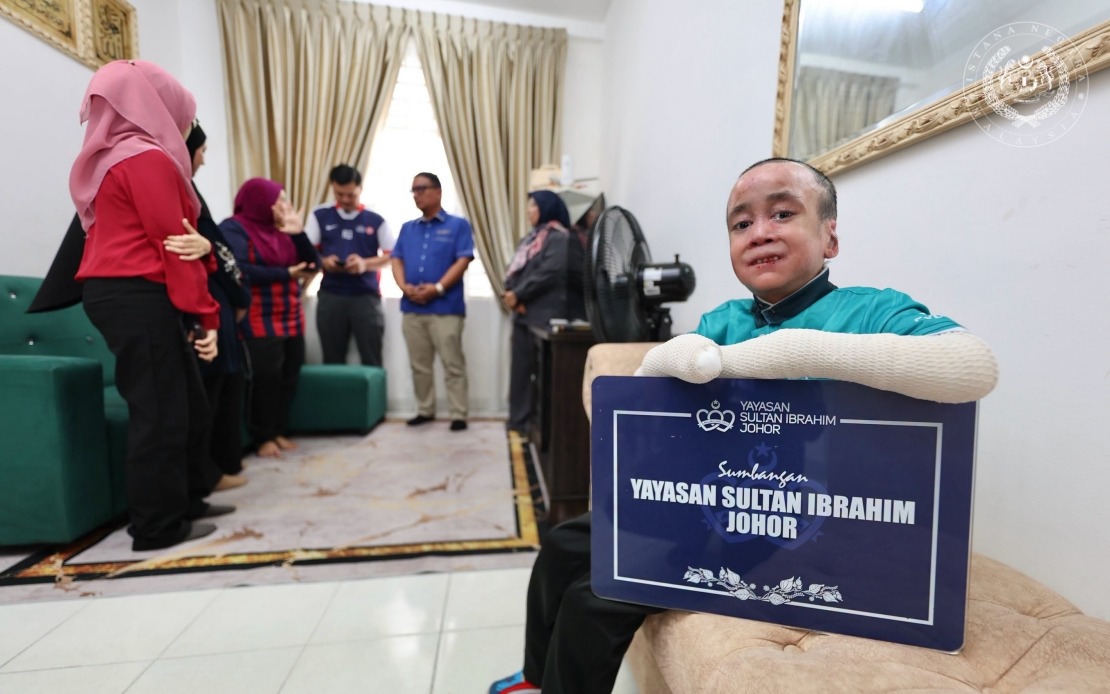
Johor's royal foundation has stepped in to support a teenager grappling with one of the body's most challenging chronic conditions. Muhammad Hazreel Mikhail Hizar, 15, has lived with epidermolysis bullosa—a rare genetic disorder causing severe skin fragility and blistering—since birth, placing extraordinary physical and financial strain on his household. The Yayasan Sultan Ibrahim Johor (YSIJ) delivered assistance through its Ziarah Kasih community support programme, presenting the aid at the family's home in Sungai Tiram People's Housing Project on August 18.
Epidermolysis bullosa represents one of medicine's most taxing conditions, demanding round-the-clock attention that extends far beyond routine healthcare. Hazreel's management requires meticulous wound cleaning protocols to prevent potentially life-threatening infections, alongside strict environmental controls—his living space must be kept consistently cool and air-conditioned to minimise skin trauma. The cumulative demands of such care reshape every aspect of family life, transforming basic household management into a specialised medical operation where vigilance cannot be relaxed.
The burden of Hazreel's condition falls predominantly on his mother, Noor Halimaton Hashim, a single parent responsible for three children. Her situation exemplifies the hidden cost of chronic illness within Malaysian households: she cannot pursue full-time employment because Hazreel's condition demands her constant physical presence and vigilance. This trapped circumstances—unable to work, unable to step away—creates a compounding vulnerability where medical expenses mount precisely when earning capacity collapses. The family's residence in a People's Housing Project reflects the economic circumstances many Malaysian households face when confronted with catastrophic health challenges.
The YSIJ intervention arrives at a moment of acute family need, according to Noor Halimaton's statement to the Royal Press Office. She expressed profound gratitude for the foundation's recognition of her family's circumstances, underscoring how targeted assistance can provide breathing room for households already stretched to their limits. The programme's significance extends beyond the immediate financial relief—it acknowledges that chronic illness creates invisible expenses beyond hospital fees, encompassing medication, specialised care equipment, utilities for temperature control, and foregone income when caregiving takes absolute priority.
Yayasan Sultan Ibrahim Johor operates as a charitable vehicle focused on community welfare across the state, with the Ziarah Kasih programme serving as a conduit for identifying and supporting vulnerable households. By directing resources toward documented cases of hardship, the foundation models an approach that moves beyond generalised charity toward targeted intervention where need is most acute. Epidermolysis bullosa cases represent precisely the category of long-term chronic conditions that strain state healthcare systems and family finances simultaneously, making strategic support interventions particularly valuable.
The condition affecting Hazreel carries implications for understanding Malaysia's broader healthcare landscape. Rare genetic disorders like epidermolysis bullosa demand specialised dermatological expertise, access to wound care supplies, and coordinated multidisciplinary management—resources concentrated in tertiary hospitals. Families living in smaller cities or rural areas often face significant challenges accessing appropriate care, managing disease flare-ups, and obtaining necessary materials. The geographic distribution of expertise and resources creates unequal access based on residential location, an issue compounded when families lack means to travel for specialist consultations.
Single-parent households managing chronic illness in children represent a particularly vulnerable demographic within Malaysia's social landscape. These families simultaneously navigate complicated healthcare navigation, financial precarity, and caregiving demands that prohibit conventional employment. While Malaysia's social safety net has expanded considerably, gaps remain—particularly for conditions requiring sustained, intensive home-based management rather than episodic clinical interventions. Programmes like Ziarah Kasih attempt to address these gaps through targeted community identification and support delivery.
The presentation of assistance through the foundation carries symbolic weight within Malaysian governance structures. Sultan Ibrahim Sultan Iskandar's personal interest in the case, reflected through the foundation's direct engagement and the royal social media presence documenting the initiative, signals high-level commitment to welfare issues. Such visibility can catalyse broader public awareness about chronic childhood conditions and the family circumstances they create, potentially encouraging both private charitable involvement and policy attention to relevant gaps in service provision.
For households managing epidermolysis bullosa, medical management extends across the entire lifespan, creating long-term financial and emotional demands. Adolescence presents particular challenges as Hazreel navigates both the typical developmental pressures of teenage years alongside managing a condition that affects appearance, restricts activities, and generates psychological burden. The intervention at this stage of his life—providing relief to his mother and resources for his care—acknowledges the critical developmental window of adolescence and the importance of adequate support during these formative years.

