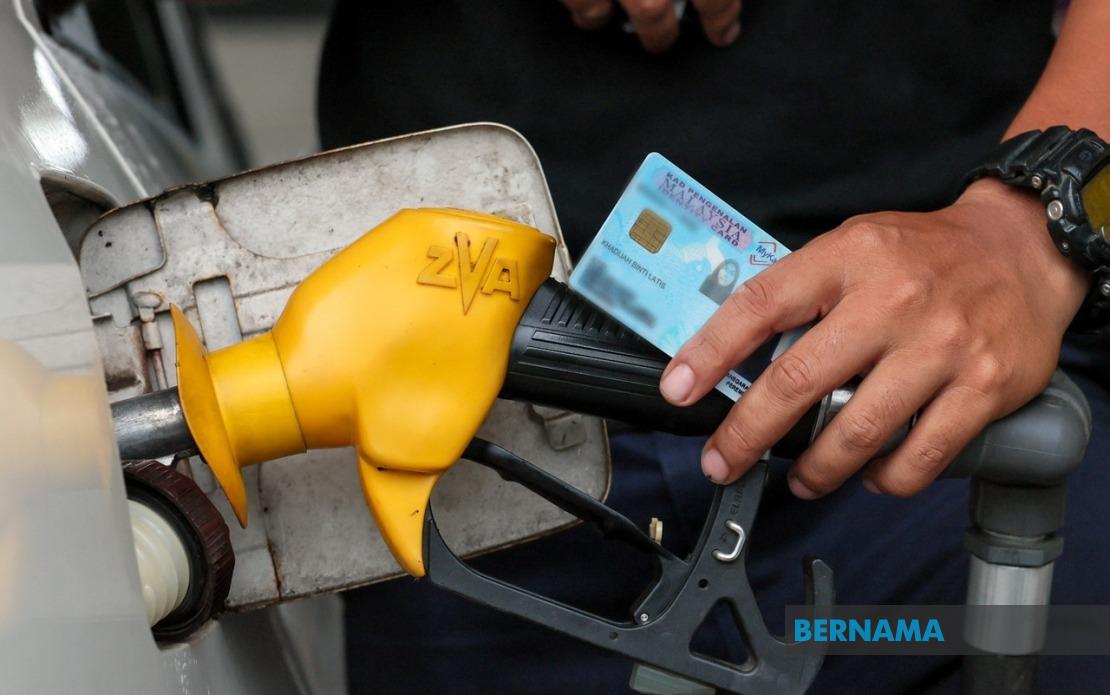
Malaysia's government has moved to ease transportation costs for millions of households by restoring the basic BUDI MADANI RON95 petrol quota to 300 litres per month, reversing a previous reduction to 200 litres. Prime Minister Datuk Seri Anwar Ibrahim announced the decision during his 2026 National Day address in Putrajaya, signalling a shift in the administration's approach to fuel subsidies after a period of fiscal constraints. The reinstatement, effective September 1, will provide immediate relief to over 16 million Malaysians who depend on subsidised RON95 fuel for their daily transportation needs.
The restoration of the higher quota represents a calculated policy recalibration by the government, reflecting changing circumstances in global energy markets and domestic fiscal capacity. Herniza Roxanne Marcus, an economics lecturer at Universiti Teknologi MARA's Sabah branch, emphasised that the decision balances the government's budgetary limitations with its commitment to protecting household purchasing power during an economically challenging period. She noted that such adjustments are not indicators of suddenly improved government finances, but rather pragmatic responses to shifting geopolitical risks and energy price volatility that have defined markets since the previous quota reduction.
For lower and middle-income groups—the B40 and M40 categories that account for the majority of Malaysia's population—the quota increase carries particular significance. Fuel expenditure represents a substantially larger portion of disposable income for these segments compared to higher-earning households, making the additional 100 litres monthly a meaningful cushion rather than a marginal benefit. In regions like Sabah, where vast distances between settlements and limited public transport infrastructure force reliance on private vehicles, the expanded quota addresses a genuine transportation equity issue that extends beyond urban corridors.
The relief extends beyond passenger vehicles. More than half a million owners of diesel-powered pickup trucks and jeeps will gain access to up to 400 litres of BUDI Diesel monthly, acknowledging the needs of workers in agricultural, construction, and rural industries who depend on diesel for livelihood activities. This dual-tier support suggests the government recognises that fuel costs penetrate multiple economic sectors and cannot be addressed through a one-size-fits-all approach.
Marcus provided nuanced analysis of the measure's macroeconomic implications, cautioning against expectations of direct inflationary relief. While the quota increase will not single-handedly reduce overall inflation rates, it functions as a containment mechanism that moderates transportation cost pressures and reduces the likelihood of secondary price increases in goods and services dependent on fuel-intensive distribution networks. By maintaining affordability in the transportation sector, the subsidy indirectly supports price stability across supply chains that feed essential commodities to consumers.
The decision also reflects governmental recognition of how household budgeting operates in practice. When transportation costs consume excessive portions of monthly income, families make difficult trade-offs between mobility and other necessities such as food quality, educational materials, and healthcare access. The quota restoration provides psychological and practical breathing room that allows households to rebalance their spending patterns without entering crisis mode at month's end.
Real-world experiences underscore the practical impact of such policy changes. Rozainah Abdul Rahim, a 36-year-old journalist who frequently exhausts her fuel quota, described how the previous 200-litre allowance proved inadequate for her professional demands and personal circumstances. Her weekly commutes between Port Dickson in Negeri Sembilan and Kuala Lumpur, combined with daily coverage assignments across multiple locations, exemplify how the constraints affected not merely discretionary travel but economically productive activity. The restoration of 300 litres addresses the gap between policy assumptions about average usage and the reality of diverse Malaysian lifestyles and work patterns.
The timing of the announcement—coinciding with National Day festivities and framed within broader cost-of-living narratives—carries political messaging alongside economic substance. The government positions the decision as responsive governance that acknowledges household struggles without overstretching fiscal resources. This framing proves important in Malaysian political discourse, where fuel subsidies carry historical weight and symbolic significance as markers of government commitment to ordinary citizens.
From a regional perspective, Malaysia's approach to fuel subsidies continues to diverge from neighbouring economies pursuing rapid subsidy reduction. Indonesia's energy price reforms and Thailand's targeted subsidy mechanisms follow different trajectories, making Malaysia's maintenance of substantial fuel support—despite global efficiency trends—a distinctive policy choice. This reflects domestic political economy considerations that prioritise stability and household income protection over rapid market liberalisation, a calculation influenced by Malaysia's road-dependent transport infrastructure and the economic importance of private vehicle ownership.
The restoration also provides context for understanding broader subsidy architecture. Malaysian subsidy policy increasingly emphasises selectivity, directing support to specific vehicle categories and fuel types rather than universal access, while maintaining high absolute volumes for core segments. This targeted approach attempts to balance fiscal responsibility with welfare protection, though ongoing debates centre on whether such mechanisms adequately serve the poorest households versus accruing benefits disproportionately to more mobile middle-income groups.
Looking forward, the decision establishes new baseline expectations for policy-makers. Future quota reductions will face greater political resistance given the demonstrated precedent of restoration, while permanent maintenance at 300 litres may become politically entrenched regardless of economic conditions. This dynamic reflects how subsidy policies, once implemented, develop constituencies resistant to reduction and establish social contracts difficult to recalibrate downward.
The announcement ultimately signals that Malaysia's government intends to manage the cost-of-living crisis through incremental welfare adjustments rather than structural economic transformation. While economists debate the measure's macroeconomic efficacy, for millions of Malaysians facing daily transportation expenses that strain household budgets, the restoration represents tangible relief that enables them to navigate their economic circumstances with marginally greater flexibility than previous months allowed.

