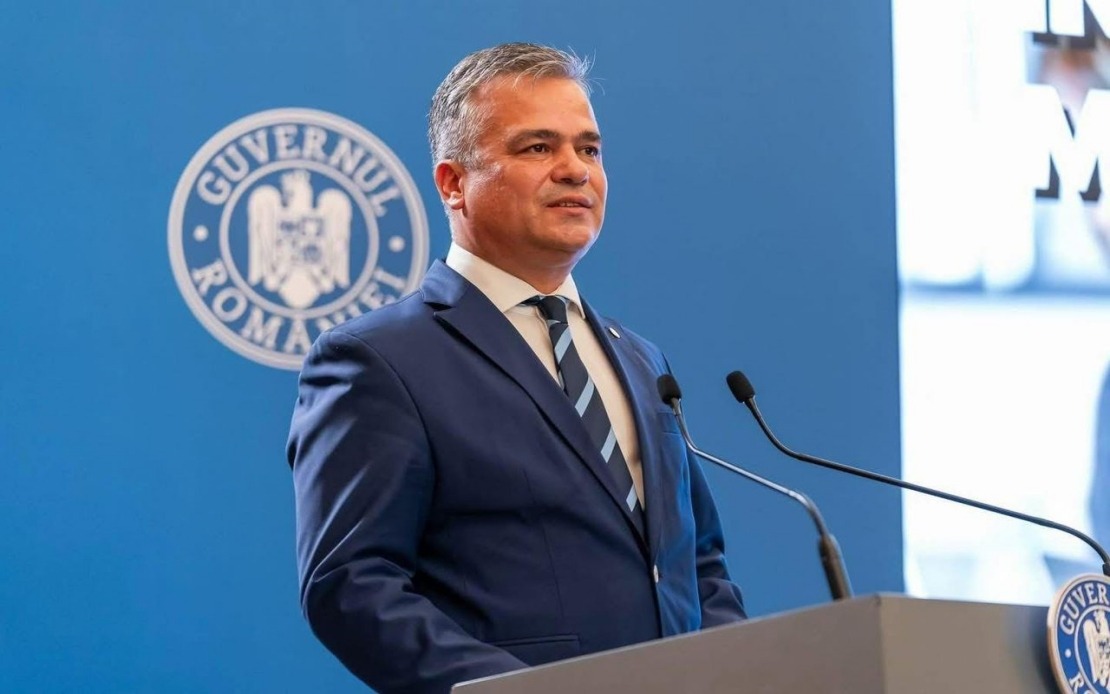
Adrian Vestea, Romania's incoming prime minister, submitted his government programme and cabinet roster to parliament on Monday, marking a significant step toward resolving a period of political uncertainty that has gripped the Balkan nation. The move followed formal endorsement from the Social Democratic Party (SDP), which had thrown its weight behind Vestea at a meeting the previous day. In a statement posted to social media, Vestea emphasized that presenting these foundational documents represented a critical juncture for restoring institutional normalcy and public confidence after weeks of governmental limbo.
The composition of Vestea's proposed cabinet represents an intriguing political development in Romanian politics, particularly given the stated positions of major parties involved. As the first vice-chair of the National Liberal Party (NLP), Vestea's appointment itself was unconventional, and his cabinet reflects this complexity. Though the NLP leadership has publicly maintained its refusal to enter into coalition arrangements with left-leaning parties, Vestea's lineup incorporates both Social Democratic representatives and NLP members loyal to him personally, suggesting a pragmatic realignment within Romania's fractious political landscape.
The government's stated agenda centres on five interconnected policy pillars that address both immediate governance concerns and longer-term economic development. Political stability ranks foremost among these priorities, underscoring how deeply the recent governmental impasse has shaken confidence in Romania's democratic institutions. The cabinet has pledged to accelerate the absorption of European Union funding, a matter of considerable urgency given that Romania, like other Central European states, faces pressure to effectively deploy billions in available EU resources before funding cycles close.
Economic stability constitutes the third priority, reflecting the broader regional and global economic uncertainties affecting Central and Eastern European nations. Romania has experienced inflation pressures and currency volatility that parallel challenges facing neighbouring countries and other emerging economies. The government's infrastructure investment agenda forms the fourth pillar, encompassing the modernization of Romania's transport networks, energy systems, and digital infrastructure—areas where Eastern European states have historically lagged Western counterparts.
National security emerges as the fifth strategic focus, a preoccupation that has intensified significantly for Romania and its NATO allies since Russia's full-scale invasion of Ukraine in February 2022. Romania's geographic position as a NATO member bordering Ukraine and the Black Sea region makes security considerations paramount. Investment in defensive capabilities, cybersecurity resilience, and strategic partnerships represents a critical component of the new government's mandate.
The parliamentary presentation of the cabinet composition was merely the opening phase of a multi-stage approval process. Romanian media outlets reported considerable uncertainty regarding whether parliament would formally endorse the proposed ministerial lineup, indicating that Vestea's SDP backing, while necessary, may not guarantee smooth passage through legislative scrutiny. Individual parliamentarians from constituent parties or opposition benches could potentially challenge specific appointments or seek modifications to the government's policy platform.
For Malaysian and Southeast Asian observers, Romania's current political dynamics offer instructive parallels regarding coalition-building in diverse democracies. The tension between formal party positions and pragmatic political flexibility that characterizes Vestea's situation mirrors challenges that arise in multi-party systems across Asia, where stated refusals to cooperate often give way to creative political arrangements when governing requires cross-party support. The question of whether individual party members will prioritize party unity or support particular leaders transcends geographic boundaries.
The timing of Vestea's cabinet presentation arrives amid broader European political realignments. Romania's economic integration with Western Europe and its NATO membership create stakes that extend beyond domestic concerns, affecting European Union cohesion and NATO capability in a critical geopolitical region. A stable, functioning Romanian government represents an asset not only for Romanian citizens but for the broader regional and transatlantic security architecture.
The uncertainty surrounding parliamentary approval reflects the fractious nature of contemporary Romanian politics, where no single party commands legislative dominance and backbench MPs retain considerable influence. The SDP's endorsement provides essential momentum, but Vestea must navigate potential objections from various quarters. His personal popularity and the perceived competence of his proposed ministers may prove decisive factors in determining whether parliament grants the formal votes of confidence required for the cabinet to assume office and begin implementing its five-point agenda.