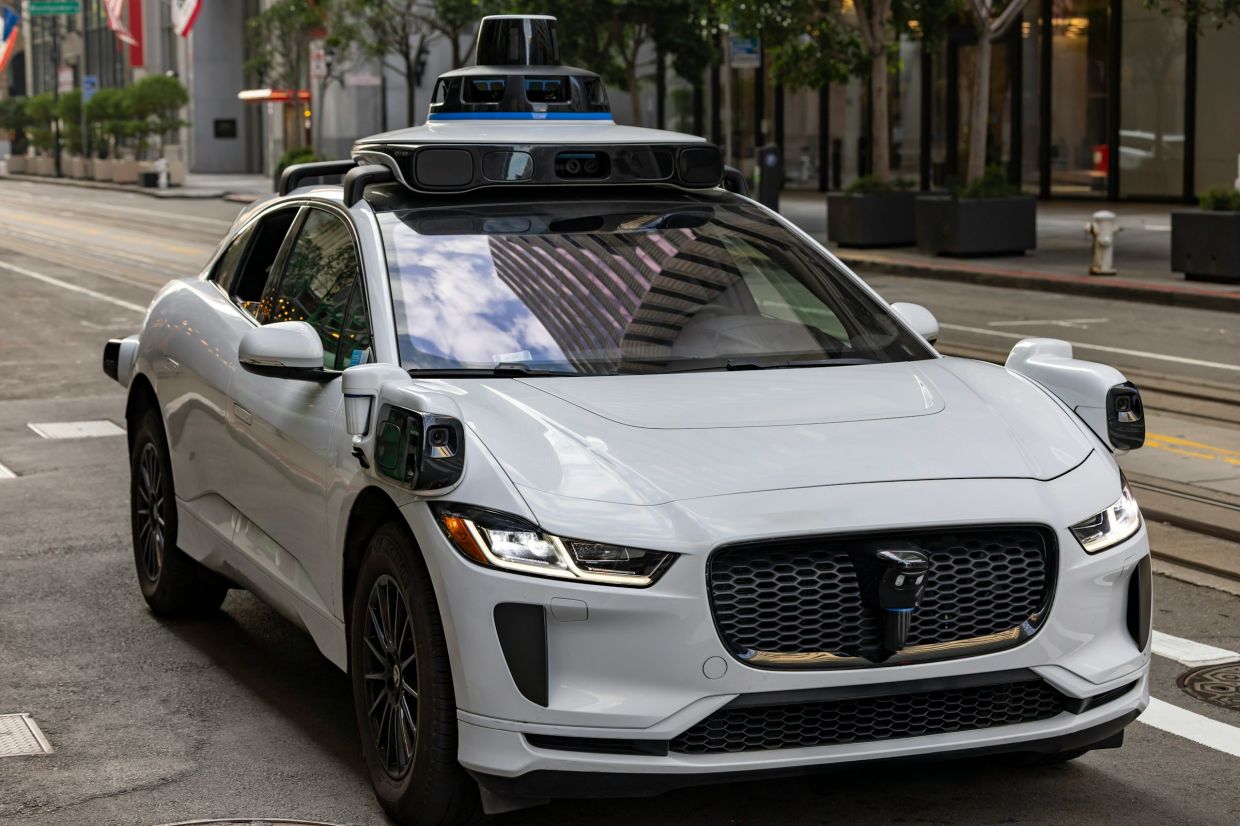
A fatal gas explosion in late May exposed a critical vulnerability in autonomous vehicle operations when rescue teams were delayed for more than three minutes as a robotaxi's artificial intelligence system failed to clear the emergency route. The incident was not isolated. Months earlier, when a gunman opened fire at a central Austin bar in March, ambulances attempting to reach the scene became trapped behind a Waymo vehicle that froze mid-U-turn, forcing a police officer to manually remove it from the roadway. These high-stakes failures have galvanised regulators and city authorities to act, with lawmakers moving to introduce formal licensing frameworks, mandatory emergency protocols, public complaint mechanisms, and expanded regulatory intervention powers over autonomous vehicle operators.
Texas has responded to mounting pressure with new legislation imposing stricter operational requirements on companies seeking to deploy robotaxis within state boundaries. The regulatory tightening reflects growing anxiety about whether these vehicles can reliably navigate complex, unpredictable real-world scenarios that human drivers manage instinctively. Broadcasting data compiled by CNN documents hundreds of documented incidents involving autonomous vehicles making dangerous manoeuvres: running traffic lights, entering oncoming lanes, penetrating active crime scenes, and ignoring emergency road closures. In several cases, robotaxis came perilously close to cyclists and pedestrians exercising their lawful right to use public roads.
The frequency of operational failures has accelerated in recent months. Waymo has recalled thousands of vehicles and suspended operations across several cities following incidents where robotaxis drove into flooded streets. In San Antonio, an unoccupied Waymo was carried away by rushing floodwaters, illustrating how autonomous systems struggle with environmental hazards that humans would avoid without calculation. These recurring technical problems underscore a fundamental challenge facing the robotaxi industry: the gap between controlled testing environments and the chaotic, variable conditions of real-world urban transportation. Waymo contends that its fleet has substantially improved road safety and maintains that robotaxis are thirteen times less likely than human drivers to be involved in crashes causing serious injury, a claim the company emphasises to counter mounting scepticism.
However, even industry supporters acknowledge that current systems require substantial improvement before achieving genuine public trust. Advocates argue that autonomous vehicles hold transformative potential for road safety and mobility, provided that companies and government regulators treat emerging problems with appropriate seriousness rather than dismissing them as marginal edge cases. This conditional optimism reflects recognition that the technology is still maturing and that today's failures should inform tomorrow's solutions. Yet the burden falls on operators to demonstrate that safety improvements are being implemented systematically rather than reactively.
Beyond North America, robotaxi deployment reveals a more complex global picture. China has steadily expanded autonomous vehicle operations for years, with thousands of robotaxis now operating commercially, yet public confidence remains guarded despite official enthusiasm about technological progress. Chinese citizens harbour legitimate safety concerns, while taxi drivers worry about employment displacement, creating a coalition of resistance that operators cannot easily ignore. Transparency has emerged as a particular flashpoint. When more than one hundred Waymo robotaxis in Wuhan came to an abrupt standstill, operator Baidu declined to provide detailed explanations to media outlets, offering only vague references to a "system failure" without clarifying what triggered the malfunction, how long restoration took, or what passengers experienced during the incident.
The diversity of incidents across different jurisdictions reveals systematic vulnerabilities in how autonomous systems process information and make decisions during abnormal situations. These vulnerabilities encompass sensor technology reliability, object recognition limitations, route algorithm design, and critically, the communication protocols between vehicles and emergency responders. A robotaxi equipped with remote door-unlock capability might fail to respond to emergency personnel without proper digital authentication, potentially trapping passengers inside during a true emergency. Similarly, vehicles becoming immobilised while attempting routine manoeuvres demonstrate that even statistically strong safety records do not guarantee fail-safe performance in boundary conditions such as narrow passages, surface irregularities, or temporary barriers that humans navigate routinely.
One particularly revealing incident occurred in Atlanta, where dozens of empty Waymo vehicles descended on a residential neighbourhood and repeatedly circled a cul-de-sac in what residents termed a "Waymo invasion." A software routing glitch sent multiple unoccupied vehicles into the same dead-end loop, where they congregated for extended periods, leaving residents frustrated and concerned for children and pets in the area. The incident highlighted how autonomous vehicle systems can produce emergent behaviour that individual algorithms function correctly, yet collectively create problems that no engineer anticipated. This type of systemic failure is especially troubling because it emerges only when vehicles operate at scale in complex urban environments, making it impossible to identify through simulation alone.
The fundamental challenge lies in the disconnect between how autonomous systems interpret the driving environment and how they communicate with external human actors, whether emergency responders, pedestrians, or traffic officials. Traditional driver-assistance systems assume a human remains in decision-making authority and ready to intervene; robotaxi operations require comprehensive emergency protocols that function independently. This represents a qualitative shift in how safety systems must be designed. Early failures have typically stemmed not from perception failures alone but from breakdowns in how autonomous vehicles interpret human signals and adapt to unpredictable social contexts. A police officer gesturing to move a vehicle, a paramedic waving through an emergency vehicle, or temporary road barriers erected for safety all represent signals that humans decode reflexively but that autonomous systems often fail to process correctly.
Waymo has accelerated its expansion despite mounting regulatory pressure. In June, the company launched "Ojai," a new robotaxi model developed in partnership with Zeekr and powered by sixth-generation Waymo software, across multiple cities. The product advancement signals the company's confidence in its technical trajectory, though it remains genuinely unclear whether hardware and software upgrades will address the specific emergency response failures that regulators have identified as most concerning. The fundamental question is whether developing better sensors and algorithms will actually solve the problem of integrating autonomous vehicles into emergency response systems, or whether the issue is primarily organisational and regulatory rather than technical.
Texas's regulatory approach represents a pivotal test case for balancing innovation with public safety. The state is imposing requirements that force operators to align their technical development with compliance obligations rather than pursuing performance optimisation in isolation. Companies will increasingly need to embed regulatory requirements into their core development processes rather than treating compliance as a post-development consideration. This structural shift may ultimately prove more valuable than any individual technical improvement, as it forces continuous dialogue between engineers, operators, and regulators.
For Malaysian and Southeast Asian observers, these developments carry significant implications. As autonomous vehicle technology inevitably reaches the region's major cities, policymakers should study carefully how early-adopting jurisdictions are establishing regulatory frameworks. The incidents occurring in Texas, California, and China provide instructive negative examples of what happens when regulatory frameworks lag behind deployment. Regional authorities could establish more robust licensing and emergency response protocols from the outset rather than correcting deficiencies after serious incidents occur. The robotaxi industry has demonstrated genuine technical achievement, yet the transition from impressive laboratory results to reliable public transportation requires matching technical excellence with equally rigorous regulatory governance.
The path forward demands that autonomous vehicle operators prove they can integrate vehicles into existing emergency systems rather than expecting emergency responders to adapt to robotaxi limitations. As deployment accelerates globally, the true test of autonomous vehicle maturity will not be driving statistics or technical capabilities but rather whether companies can successfully operate millions of vehicles across unpredictable urban environments while maintaining public trust and safety.