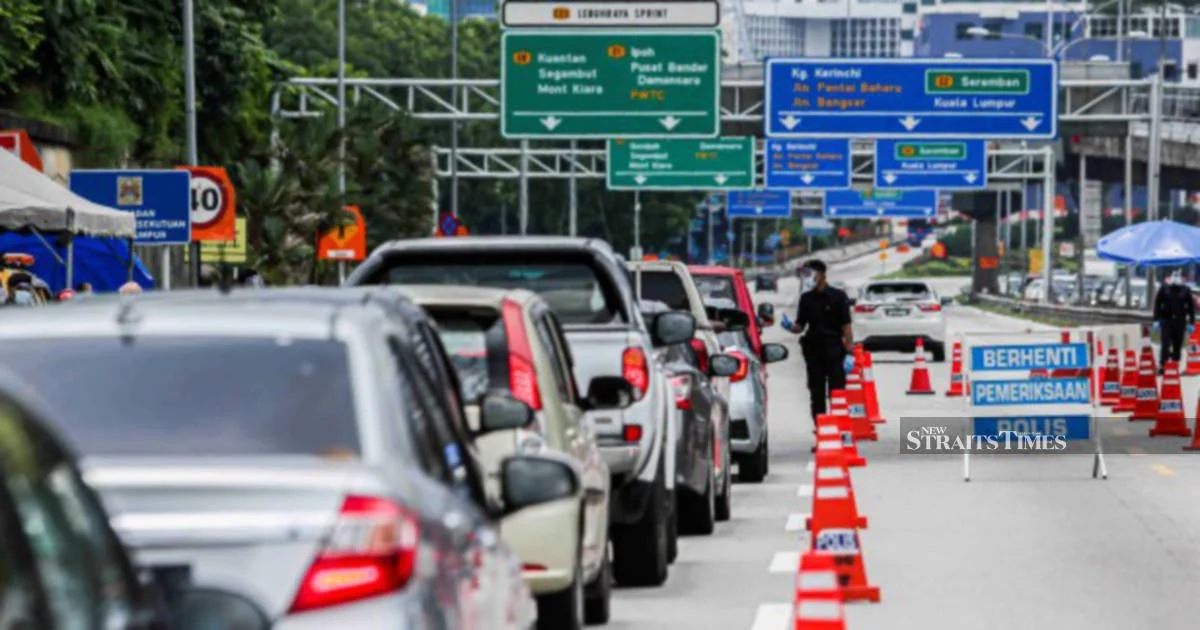
Parliament is examining significant amendments to Malaysia's Road Transport Act 1987 that would substantially elevate penalties for traffic violations across the nation. The proposed changes would lift the maximum compound rate to RM500 for more than 700 distinct categories of road traffic offences, representing a major shift in how authorities enforce traffic regulations. The legislative proposal reflects growing concerns about road safety and compliance, with policymakers arguing that steeper financial consequences may encourage better driver behaviour and reduce hazardous conduct on Malaysian roads.
The current framework governing traffic penalties has remained largely unchanged for years, prompting transport authorities to advocate for modernisation. Inflation and the need for more effective deterrence have fuelled calls to bring compound rates in line with contemporary economic realities. The breadth of the proposed amendments—covering over 700 separate offence categories—demonstrates the comprehensive nature of the overhaul, touching everything from speeding and seatbelt violations to parking infractions and vehicle-related breaches. This sweeping approach suggests lawmakers intend the penalty increases to address systemic compliance issues rather than targeting specific violations.
The RM500 threshold represents a substantial jump that will affect both individual motorists and commercial drivers, who make up a significant proportion of those issued traffic compounds. For commuters accustomed to lower penalty amounts, the increase may feel punitive; however, supporters contend that comparable jurisdictions throughout Southeast Asia have already adopted similar or higher penalty structures. Transport policy experts note that penalty escalation can serve dual purposes: generating revenue for road maintenance and safety programmes while simultaneously encouraging behavioural change through the prospect of higher personal financial consequence.
Malaysia's traffic safety record has drawn ongoing scrutiny, with fatal and serious injury accidents remaining a public health concern. Government statistics consistently highlight speed-related violations, reckless driving, and safety equipment neglect as major contributors to road deaths and serious injuries. By increasing compound rates, authorities hope to create psychological incentives for drivers to comply with traffic laws, particularly among repeat offenders who may currently view penalties as negligible deterrents. The scale of the proposed amendments suggests policymakers view this measure as integral to a broader strategy for reducing road trauma.
The legislative amendment process will require careful parliamentary debate, as opposition voices may raise concerns about regressive impact on lower-income earners and small business owners who depend on vehicles for their livelihoods. Transport workers, taxi drivers, and delivery personnel operating on tight margins may face disproportionate burden if they accumulate multiple traffic compounds. Some analysts have cautioned that without complementary measures—such as enhanced traffic law enforcement consistency and public awareness campaigns—the penalty increase alone may not substantially improve compliance rates or reduce accidents.
Implementation of the revised penalties will also require coordination across multiple enforcement agencies, including the Royal Malaysia Police, the Road Transport Department, and municipal authorities responsible for traffic management in cities and towns. Each agency will need to ensure uniform application of the new rates and update their systems and staff training accordingly. The transition period between legislative passage and full enforcement will be critical in communicating the changes to the driving public and preparing administrative infrastructure.
Regional comparison reveals that several neighbouring countries maintain traffic penalty frameworks aligned with or exceeding the proposed RM500 threshold, suggesting Malaysia is catching up rather than leading a penalty escalation trend. Singapore, Thailand, and Indonesia all employ substantial compound rates for serious traffic violations, and their experience may offer insights into implementation effectiveness. Malaysian transport authorities will likely reference these examples in parliamentary testimony to demonstrate that such measures are internationally established practice rather than experimental policy.
The financial implications for individual drivers merit consideration, particularly for those who accumulate multiple violations. A single driver receiving several compounds could face hundreds of ringgit in penalties, creating cumulative financial pressure that extends beyond isolated incidents. Commercial operators managing large vehicle fleets may also see their compliance costs rise significantly, potentially affecting transportation pricing and logistics operations. These broader economic consequences will likely feature prominently in parliamentary deliberation and public discourse.
Parliamentary passage is not assured, despite government backing, as lawmakers may seek amendments to the proposed structure or demand compromise on specific offence categories. Some legislators may advocate for tiered approaches distinguishing between minor and serious violations, or propose exemptions for first-time offenders. The amendment process could extend beyond initial parliamentary reading, with multiple revisions possible before final enactment. Transport stakeholders, industry representatives, and civil society organisations will probable submit testimony or lobbying efforts during the parliamentary review period.
Once the amendments pass parliament—if they do—the new penalty structure will reshape daily compliance incentives across Malaysia's transportation ecosystem. Drivers in all segments will need to adjust behaviour assumptions and understanding of financial consequences, with particular impact among those already at risk of repeat violations. The measure represents a policy shift toward stricter enforcement philosophy, though whether it meaningfully improves safety outcomes will depend on consistent police application and sustained public awareness of the new penalties. The coming parliamentary debate will reveal the political calculus around traffic safety policy in Malaysia.