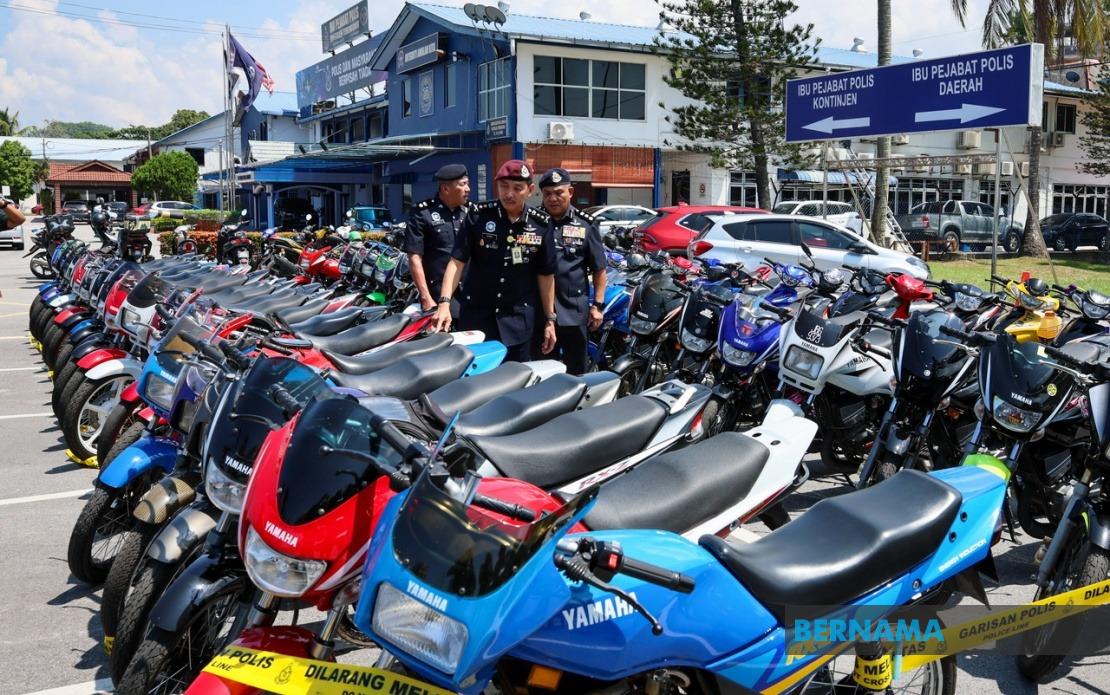
The escalating death toll at Malaysia's largest motorcycle gathering has prompted urgent calls for a systematic approach to safety management, signalling that conventional enforcement methods are inadequate for an event of such massive scale. Shahrim Tamrin, formerly with the Malaysian Institute of Road Safety Research, has warned that the RXZ Members programme can no longer be treated as a routine motorcycling event but must instead be managed as a complex large-scale operation requiring comprehensive planning and risk mitigation strategies.
The statistics paint a concerning picture of deterioration. Over the past three calendar years, the programme has recorded a troubling upward trajectory in fatalities: two deaths in 2024, five in 2025, and most recently eleven during the 2026 edition held at the Gong Badak Motor Racing Circuit in Kuala Nerus. This is not a random spike but a clear pattern suggesting systemic vulnerabilities in how the event is being managed and organised. The consistency of the increase implies that without substantive intervention, future editions may see even higher casualty figures.
The scale of the 2026 programme underscores why traditional safety approaches have failed. With more than 200,000 participants converging on the venue across two days, this represented the largest gathering since the RXZ Members programme began in 2017. Such numbers exceed the capacity of standard traffic enforcement mechanisms and demand instead the sophisticated planning typically applied to major public events. The Bukit Aman Traffic Investigation and Enforcement Department documented 46 road accidents involving motorcyclists during the four-day period surrounding the gathering, with eleven proving fatal. The severity distribution reveals that whilst minor incidents dominated the count at 65.22 percent, the proportion of fatal accidents at 23.91 percent remains unacceptably high.
Sahrim's proposed framework addresses this complexity through multiple interconnected components. Entry and exit route planning becomes critical when managing such massive participant flows. Pre-event risk assessments would identify potential danger zones before incidents occur. Strategic placement of ambulance deployment points and establishment of a dedicated emergency response centre would ensure rapid medical intervention for injured riders. A formal communications plan would keep participants, organisers, and authorities aligned throughout the event. These elements, taken together, represent a shift from reactive crisis management towards proactive event administration.
The audit recommendations carry particular significance for continuous improvement. Shahrim advocates for post-event safety analysis covering accident locations, timing, causation factors, rider demographics, and motorcycle-related variables. Critically, audit findings should be published and analysed before the next iteration, allowing evidence-based refinements rather than reactive adjustments made in the aftermath of tragedies. This approach recognises that patterns in accident data often reveal preventable causes that remain invisible without systematic scrutiny.
Noise and emissions complaints from residents highlight how the event impacts communities beyond participant safety. Shahrim's recommendation to tighten enforcement of noise and exhaust standards reflects growing recognition that large-scale motorcycle gatherings carry external costs. The excessive noise and air pollution reported during the recent edition suggests that environmental regulations are either inadequately enforced or insufficiently clear during major events.
The Yamaha RXZ motorcycle itself presents unique regulatory challenges that warrant attention. Most units currently in use are between 20 and 35 years old, and many have undergone multiple ownership transfers, restoration work, or modifications that create documentation complications. Shahrim recommends that the Road Transport Department explore pathways for re-registration of roadworthy machines, provided they pass Computerised Vehicle Inspection Centre checks. However, this flexibility must not extend to unsafe modifications; motorcycles altered in ways that compromise safety should either be restored to original specifications or remain off the road. The imperative here is ensuring all vehicles carry valid road tax and insurance coverage.
Marshal and group leader training emerges as another critical intervention area. When participants organise into convoy formations, inadequate leadership and safety instruction can amplify accident risks. Collaboration between police, the Road Transport Department, and RXZ clubs to develop structured training for marshals would professionalise convoy management and instil safer riding practices during group movements. This initiative recognises that much of the risk occurs not just at the event venue but during participant journeys to and from the gathering.
Travel advisory measures, modelled on frameworks implemented by highway concessionaires during festive seasons, could substantially reduce fatigue-related accidents. Information campaigns highlighting peak travel periods, suggesting alternative routes, and recommending designated rest stops would distribute participant flow more evenly and reduce pressure on road networks. Such advisory systems have proven effective in reducing accident rates during high-volume travel periods and could be adapted for the RXZ programme's unique participant profile.
The implications of inaction extend beyond individual casualties. Repeated fatal incidents threaten the event's continuation, which in turn affects the motorcycle enthusiast community and related business interests. More fundamentally, however, large loss of life at a recurring public gathering demands intervention proportionate to the scale of preventable harm. Shahrim's analysis suggests that 28 deaths across three years represent an institutional policy failure rather than inevitable tragedy, and that systematic risk management offers practical pathways toward substantial safety improvements.
For Malaysian policymakers and event organisers, the RXZ Members situation offers a instructive case study in scaling event safety frameworks. As Malaysia increasingly hosts large-scale public gatherings across diverse sectors, the systematic approaches advocated here provide a template transferable to other high-risk events. The question facing authorities is whether the RXZ programme will become the catalyst for developing robust large-event safety standards, or whether preventable deaths will continue accumulating until stronger intervention becomes unavoidable.

