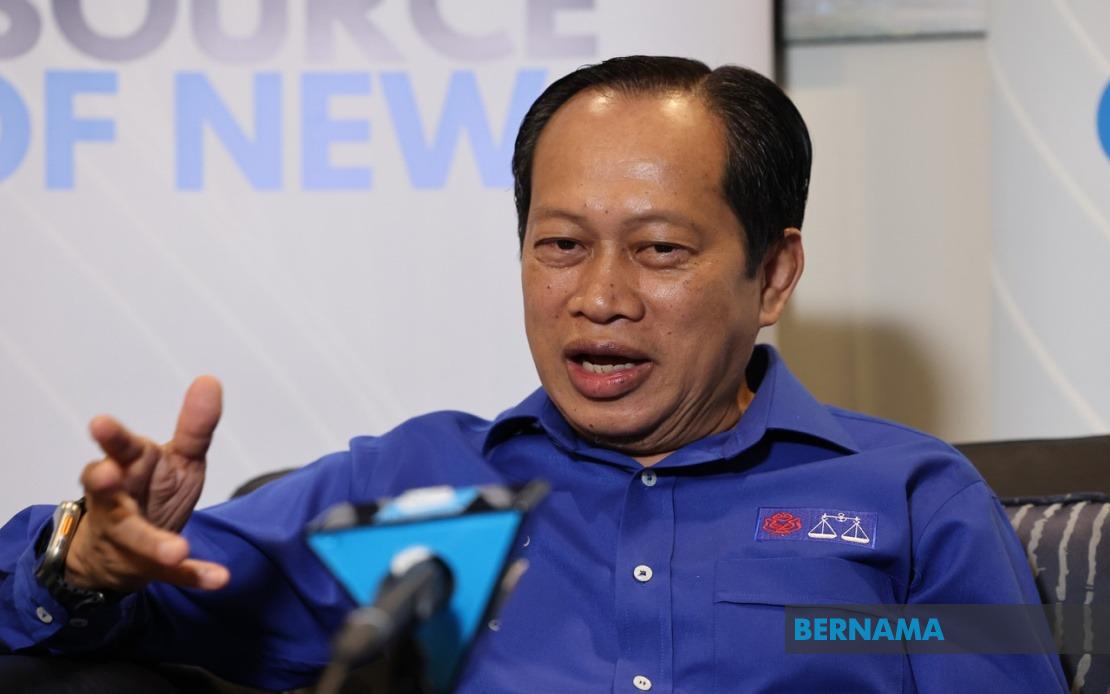
Infrastructure upkeep across Malaysia's road network cannot succeed without synchronised action across multiple tiers of government and elected representation, Deputy Works Minister Datuk Seri Dr Ahmad Maslan underscored during an official visit to Johor Bahru on July 2. His remarks underscore a longstanding challenge in the country's maintenance framework: the fragmentation of responsibility across federal departments, state bodies, and local administrations. Speaking to Bernama, Ahmad outlined his vision for a more cohesive approach to tackling deteriorating road surfaces and congestion issues that increasingly feature in public complaints.
The minister has directed the Public Works Department (JKR) to accelerate its repair operations on damaged stretches of road throughout the country. Critically, he emphasised that state assemblymembers, Members of Parliament, and municipal authorities each hold distinct responsibilities in identifying and prioritising maintenance work. This multi-layered accountability model reflects Malaysia's federal structure but also highlights the coordination challenges that arise when different political parties control state governments and federal representation. Ahmad's call for greater urgency comes amid mounting public dissatisfaction with road conditions in several states, prompting more visible advocacy from political representatives seeking to address constituent grievances.
During his fact-finding mission across Johor, Ahmad visited all ten district JKR offices throughout the state, gathering operational briefings and assessing resource allocation. His instructions to accelerate repairs signal that the ministry recognises growing public frustration over potholed roads and inadequate drainage. The scale of Johor's road infrastructure—spanning urban highways, rural routes, and connecting roads—demands a coordinated response. By directly engaging district-level engineers and supervisors, Ahmad sought to remove bureaucratic obstacles and instil a sense of urgency into maintenance schedules. His fieldwork approach contrasts with purely administrative oversight, suggesting the ministry is taking a more hands-on stance to monitor performance.
The deputy minister's comments arose in response to a recent high-profile inspection by Dr Maszlee Malik, the Pakatan Harapan candidate for the Puteri Wangsa state seat. On June 29, Maszlee undertook a notable journey along Jalan Tebrau in a Perodua Myvi, departing from Kampung Melayu Majidi and travelling to Ulu Tiram. His inspection was prompted by accumulating complaints on social media platforms regarding the deterioration of road surfaces and persistent traffic bottlenecks affecting commuters. The former Education Minister subsequently documented his experience, noting that his vehicle experienced significant jolting on numerous sections due to uneven and damaged road surfaces. His observations of severe congestion during peak travel hours reinforced broader public concerns about both maintenance standards and traffic flow capacity.
Maszlee's public assessment of Jalan Tebrau's condition illustrates how political candidates increasingly leverage social media feedback to identify infrastructure deficits and demonstrate responsiveness to voters. This trend reflects evolving patterns of political engagement and accountability in Malaysia, where grassroots complaints circulated online can trigger official scrutiny. For Ahmad, the inspection underscored the necessity of clearer communication channels between residents, elected representatives, and maintenance agencies. Rather than viewing Maszlee's inspection as political opportunism, Ahmad's measured response suggests acknowledgment that opposition politicians raising infrastructure concerns may serve a public service function by highlighting neglected areas.
The allocation and approval process for road maintenance work follows a structured pathway that Ahmad detailed in his statement. Federal roads, highways, and bridges receive funding allocations channelled through state-level entities including the State Economic Planning Unit (UPEN) and state executive councils. This mechanism enables applications from JKR offices and local authorities to be formally assessed and ranked according to priority criteria before receiving ministerial approval. The system aims to ensure that maintenance resources are deployed where greatest need exists. However, Ahmad's emphasis on expediting this process suggests that current timelines may not adequately reflect the urgency of deteriorating conditions or the capacity for rapid response demanded by public expectations.
For Malaysian commuters and residents, Ahmad's directive holds practical implications. Improved coordination could reduce delays in addressing reported road hazards, potentially lowering accident rates and vehicle damage claims. In states like Johor, where significant traffic volumes traverse key corridors serving industrial zones and residential areas, maintenance efficiency directly impacts economic productivity and quality of life. The peninsula's aging road network, much of which was constructed decades ago, requires sustained investment and proactive management. Ahmad's intervention suggests the ministry recognises that reactive approaches to maintenance—waiting until roads reach critical deterioration—prove costlier and less effective than planned preventive work.
The minister's emphasis on multi-stakeholder collaboration also carries implications for how responsibility is assigned when road maintenance falls short. By explicitly naming assemblymembers, MPs, and local agencies as having distinct roles, Ahmad establishes clearer accountability structures. When a road remains damaged despite complaints, residents can identify which official body has neglected their duty. This transparency, if implemented rigorously, could reduce the diffusion of responsibility that often occurs when maintenance authority spans multiple offices. Political representatives from both ruling and opposition parties can be held accountable by voters for their performance in escalating local road concerns through appropriate channels.
Ahmad's remarks also signal the ministry's awareness that infrastructure maintenance represents a visible and tangible measure by which voters assess government performance. Road conditions affect daily commutes, business operations, and safety perceptions. While grand infrastructure projects capture headlines, the unglamorous work of patching potholes and replacing worn asphalt directly touches citizens' lives. Opposition politicians like Maszlee evidently recognise this political salience, explaining why his Jalan Tebrau inspection garnered public attention. The government's response, emphasising coordination and acceleration, reflects understanding that perceived neglect of basic maintenance can erode public confidence more substantially than delays in ambitious development schemes.
Moving forward, Ahmad's directive will likely reshape how JKR district offices prioritise requests and coordinate with local political representatives. Implementation will require clearer protocols for issue reporting, assessment, and approval timelines. Technology platforms could enhance this process, enabling real-time reporting of road hazards and automated escalation to appropriate authorities. Southeast Asian neighbours like Singapore have pioneered such systems, achieving rapid response to infrastructure complaints. Malaysia's considerably larger territory and more complex multi-level governance structure present greater implementation challenges, yet the underlying principle remains transferable. Enhanced transparency around maintenance schedules and budget allocations could further strengthen public confidence in the process.
The broader context for Ahmad's intervention extends beyond Johor's immediate challenges. Across Peninsular Malaysia, periodic reports of road deterioration prompt political criticism and public concern. Traffic-related incidents, including accidents attributed to poor road conditions, periodically trigger media investigations and parliamentary questions. Infrastructure maintenance competes with development projects for budget allocations and political attention. However, Ahmad's direct engagement with district JKR offices and his explicit instructions to accelerate repairs suggest growing recognition that maintenance cannot be indefinitely deferred in favour of new construction. Sustainable infrastructure management requires balancing expansion with preservation of existing assets. His call for unified stakeholder action represents a sensible acknowledgment that no single agency can succeed alone in managing Malaysia's complex road network.

