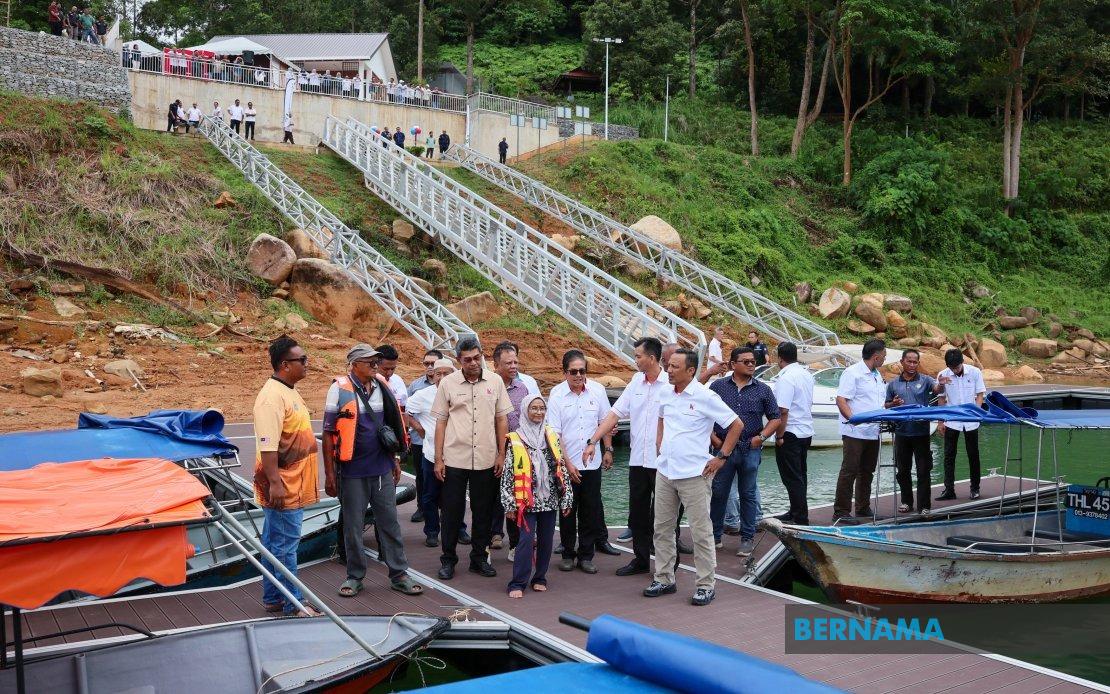
Terengganu's central development authority has inaugurated a major infrastructure project designed to reshape tourism operations at Tasik Kenyir, one of Southeast Asia's most significant man-made lakes. The RM8.7 million jetty facility, completed on July 6 this year, represents a significant milestone in the region's efforts to upgrade its ecotourism offerings and establish itself as a competitive international destination.
Datuk Rozi Mamat, chairman of Terengganu Tengah Development Authority (KETENGAH), outlined the strategic importance of the initiative during the formal handover. The project gained approval under the Third Rolling Plan of the 11th Malaysia Plan (RMK-11), reflecting its alignment with national development priorities. Construction commenced in 2023, underscoring a two-year implementation timeline that culminated in a fully operational facility. The jetty can accommodate more than 80 houseboats and speedboats, addressing a longstanding infrastructure gap at the lake.
The facility addresses persistent operational challenges that have hindered Tasik Kenyir's growth trajectory. Previously, boat operators faced congestion and disorganization around Pengkalan Gawi, where vessels berthed without coordinated planning or adequate safety measures. Rozi acknowledged that the new jetty would gradually resolve these issues, creating an orderly system that benefits both operators and visitors. This organizational improvement extends beyond mere logistics; it directly impacts the visitor experience and the lake's international reputation.
Tasik Kenyir occupies a unique position within Malaysia's tourism landscape. Established as the nation's largest hydroelectric reservoir, it evolved into an ecotourism destination offering activities unavailable elsewhere in the region. The lake's pristine waters, surrounding rainforest, and endemic species attract nature enthusiasts globally. However, infrastructure deficiencies have long constrained its potential. Modern facilities—safe, clean, and efficiently managed—are prerequisites for competing with established international ecotourism sites in Southeast Asia, where investment in visitor infrastructure has become increasingly competitive.
The jetty project incorporates comprehensive amenities that transform the operational environment. Beyond the primary boat berthing facilities, the development includes approximately 600 metres of pedestrian walkway, providing safe pedestrian access along the waterfront. The facility offers 86 parking bays, accommodating the vehicle traffic generated by day-trippers and resort guests. Public toilet facilities meet international tourism standards, while a dedicated guard post ensures security and operational oversight. These elements collectively create an environment that meets expectations of contemporary travelers accustomed to organized, safe facilities.
Infrastructure supporting operational efficiency distinguishes this project from basic berthing arrangements. An electrical substation supplies power to houseboat facilities, a critical amenity for overnight stays. Water supply systems serve both operational and domestic purposes. A pump house maintains water pressure and circulation, while a dedicated waste disposal facility prevents environmental degradation that has plagued lakeside tourism zones elsewhere in the region. These systems reflect understanding that ecotourism sustainability depends on infrastructure that protects the natural environment while serving visitor needs.
KETENGAH's broader developmental agenda contextualizes the jetty project within a comprehensive strategy for central Terengganu. The authority received RM48.36 million in development allocations for 2024, supporting 28 programmes and projects across Dungun, Hulu Terengganu, and Kemaman districts. Tasik Kenyir benefits disproportionately from this allocation, hosting six concurrent projects. Alongside the jetty development, initiatives include upgrading the Sungai Petang Kelah Sanctuary Complex, conducting slope repairs at tourist attractions, redeveloping tourism facilities at Pulau Petang, constructing a public mini park at Gawi Point, and refurbishing the Herbal Park.
This concentrated investment reflects recognition that Tasik Kenyir's development potential extends across multiple complementary attractions. The Kelah Sanctuary, featuring endemic freshwater fish species, attracts nature researchers and educational tourists. Pulau Petang offers island experiences within the lake environment. Gawi Point's mini park development creates accessible waterfront recreation space for casual visitors. The Herbal Park demonstrates traditional ecological knowledge while generating tourism revenue. Collectively, these facilities position Tasik Kenyir as a multifaceted destination rather than a single-activity location.
For Malaysia's regional tourism competitiveness, the jetty project carries implications extending beyond Terengganu. Southeast Asian nations increasingly prioritize ecotourism as economically sustainable development. Thailand's lake and river tourism offerings, Indonesia's integrated destination planning, and Vietnam's emerging ecotourism investments create competitive pressure. Malaysia's natural advantages—including Tasik Kenyir's scale and pristine conditions—risk remaining underexploited without corresponding infrastructure investments. This project demonstrates governmental commitment to translating natural assets into tourism revenue through strategic infrastructure development.
The project also addresses an underexploited market segment. Houseboat tourism, while established in certain global destinations, remains nascent in Malaysian contexts. International visitors increasingly seek immersive nature experiences distinct from conventional resort stays. Houseboats on Tasik Kenyir offer authentic engagement with the lake environment. By providing organized berthing with modern amenities, KETENGAH creates conditions for houseboat operators to expand offerings and attract international clientele seeking unique Southeast Asian experiences.
Operational efficiency gains should not be underestimated. Organized berthing reduces accident risks associated with congested, unplanned waterfront areas. Clear designations prevent conflicts between operators competing for limited space. Systematic management enables authorities to monitor environmental compliance, ensuring that tourism development doesn't degrade the lake ecosystem. These operational improvements directly support the ecotourism positioning that distinguishes Tasik Kenyir from conventional resort destinations.
The facility's completion marks a transitional moment for Terengganu's tourism sector. Infrastructure projects require ongoing operational effectiveness to deliver promised benefits. Success depends on sustained management quality, continuous facility maintenance, and marketing efforts positioning Tasik Kenyir within international tourism networks. Rozi's confidence regarding the project's transformative potential reflects optimism that remains contingent on execution excellence in subsequent operational phases.
Looking forward, the jetty project establishes a template for infrastructure-driven tourism development in Malaysian contexts. Its comprehensive approach—addressing safety, convenience, environmental protection, and operational efficiency simultaneously—provides a model for other lake and riverside destinations throughout the region. As KETENGAH implements concurrent projects across Tasik Kenyir, the cumulative effect should position the destination to compete effectively within Southeast Asia's increasingly sophisticated ecotourism market.

