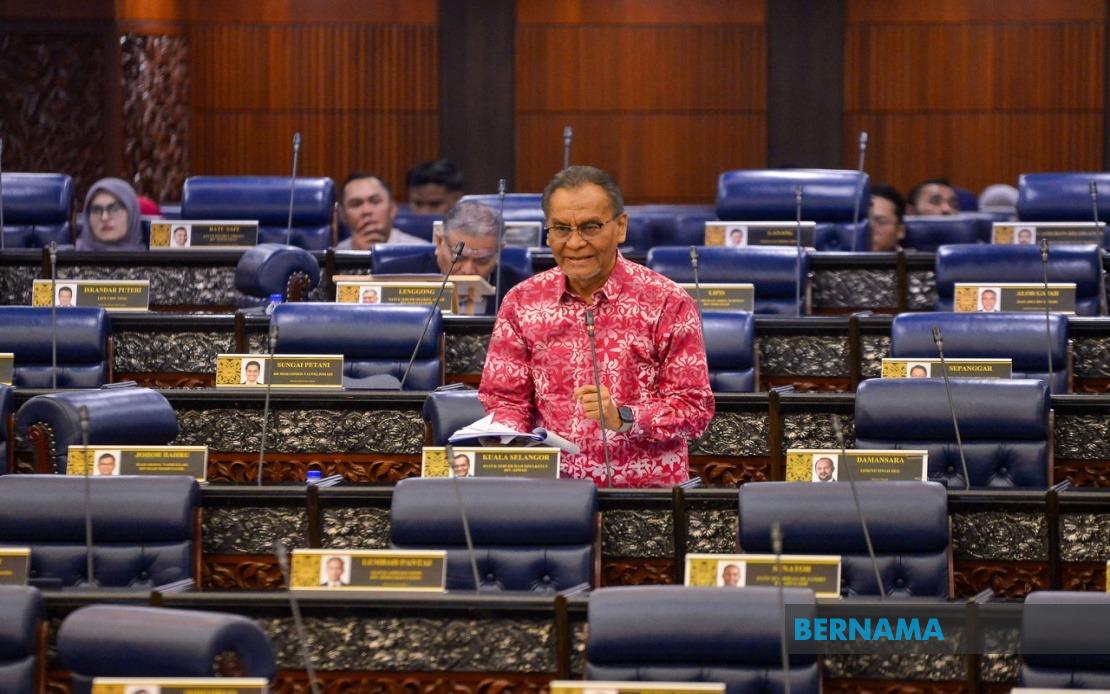
Health Minister Datuk Seri Dr Dzulkefly Ahmad has moved to reassure the public and lawmakers that a RM500 million expenditure restriction imposed on the Ministry of Health represents a purely administrative manoeuvre that will leave patient care and service delivery untouched. Speaking during parliamentary question time on July 2, he characterised the adjustment as a recalibration of budgetary resources rather than a genuine cut to operational capacity.
The restriction warrant, formally issued by the Finance Ministry on June 5, accounts for approximately 1.07 per cent of the MOH's annual allocation of nearly RM46.52 billion. This relatively modest proportion became Dzulkefly's primary argument for dismissing apprehensions that rural and urban healthcare facilities would experience degraded services. He emphasised that the adjustment emerged from prudent financial planning and the reality of Malaysia's civil service constraints, not from any reduction in the ministry's core operational requirements.
At the heart of Dzulkefly's explanation lies the persistent challenge of unfilled positions within the public health system. The MOH had been allocated funding for 18,641 positions approved by the Public Service Department, yet recruitment difficulties have left numerous vacancies on the payroll. Rather than squander funds earmarked for staff that cannot be hired, the ministry identified this surplus allocation as an opportunity to demonstrate fiscal responsibility. The RM500 million saving thus represents the difference between budgeted personnel costs and the reality of a workforce that, despite approval, remains incomplete.
The minister explicitly stated that the restriction warrant does not touch allocations directly tied to day-to-day operations, medical staff remuneration, training initiatives, or procurement of medical equipment and supplies. Instead, the adjustment involved what he termed a strategic "re-planning of expenditure" centred on maximising the efficiency of available financial resources. This distinction carries significant weight for frontline healthcare workers and patients, as it suggests the constraint falls on the administrative periphery rather than the operational core.
Dzulkefly fielded his explanation in response to questions from Datuk Shahelmey Yahya, a backbencher from BN-affiliated Putatan, and a supplementary query from Abdul Latiff Abdul Rahman representing PN-held Kuala Krai. Both lawmakers had raised concerns that fiscal adjustments would undermine healthcare delivery and the implementation of public health infrastructure projects, fears rooted in experiences elsewhere where budget cuts have translated into service disruptions. The minister's nuanced response attempted to distinguish between nominal spending reductions and operational impact.
Critics and healthcare observers in Southeast Asia will note that such assurances, while technically sound, require close monitoring. The relationship between budget constraints and service quality often manifests indirectly—through delayed maintenance, postponed equipment upgrades, or stretched staff capacity. Malaysia's healthcare system, already contending with ageing infrastructure in some quarters and expanding demand across both urban and rural regions, remains sensitive to resource pressures. The assertion that rural areas will experience no service degradation thus warrants scrutiny as implementation unfolds.
Beyond defending the fiscal adjustment, Dzulkefly used the parliamentary forum to trumpet initiatives aimed at addressing a parallel healthcare concern: the escalating cost of private medical treatment. The MOH, operating through its Joint Committee on Private Healthcare Costs, announced plans to roll out a basic health protection scheme known as Base Medical and Health Insurance or Takaful (MHIT). The pilot phase will commence at selected hospitals during July, with full national implementation targeted for January 2027. This scheme is positioned as an affordable, consumer-friendly alternative to conventional private insurance policies, offering essential coverage without the complexity or premium burdens that have deterred many middle-income Malaysians from securing health protection.
Complementing this insurance initiative, the government is also introducing a Diagnosis Related Groups (DRG) payment system across public, private, university, and military hospitals nationwide. The DRG framework standardises how hospitals charge for treatments based on diagnostic categories, theoretically bringing transparency and consistency to a system where fees have historically varied considerably between institutions. For patients navigating the private healthcare landscape—a growing phenomenon in Malaysia as waiting times and accessibility challenges persist in the public system—such standardisation could yield meaningful savings and facilitate better treatment planning.
These parallel initiatives reflect the ministry's strategy of addressing healthcare affordability through multiple channels simultaneously. While the RM500 million adjustment targets government spending efficiency, the MHIT scheme and DRG system tackle the private sector's structural cost challenges. Together, they suggest an administration attempting to navigate the competing pressures of fiscal discipline and healthcare accessibility—a balancing act central to policymaking across Southeast Asia as ageing populations and chronic disease burdens intensify demand for medical services.
For Malaysian healthcare stakeholders—from patients and workers to hospital administrators and insurance providers—the coming months will prove decisive in validating or contradicting Dzulkefly's assurances. The MOH's ability to maintain service standards while absorbing the RM500 million adjustment, coupled with the successful implementation and uptake of MHIT and DRG systems, will determine whether this moment represents prudent resource management or the opening phase of silent service degradation. Regional observers will be watching closely, as Malaysia's policy responses frequently influence healthcare debates across neighbouring nations grappling with similar fiscal and demographic pressures.

