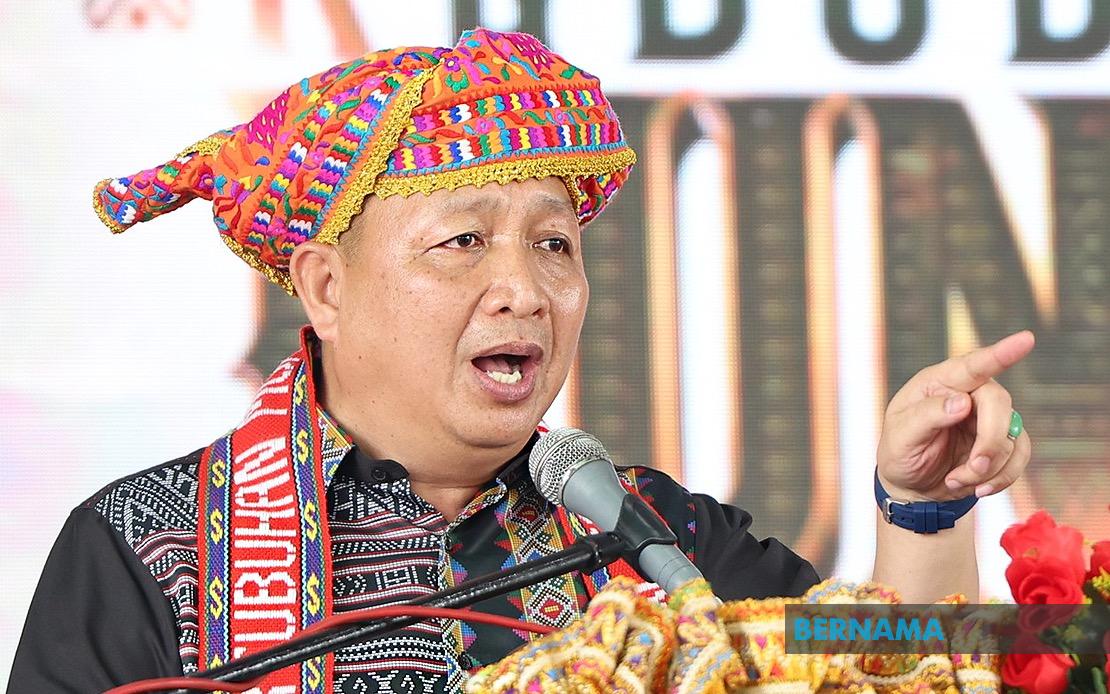
Sabah's remote communities stand to gain significantly from a RM4.06 billion rural water supply initiative announced at the Rungus Cultural Festival in Kudat, with the unprecedented decision to channel funds directly through state government structures rather than managing them from the federal capital. Deputy Prime Minister Datuk Seri Dr Ahmad Zahid Hamidi unveiled the allocation through the Rural Water Supply (BALB) programme during the festival, signalling a new approach to addressing chronic water access challenges in the state's interior regions.
Kota Marudu Member of Parliament Datuk Wetrom Bahanda, who also leads the Malaysian Momogun Rungus Association, framed the initiative as evidence of deeper federal commitment to rural development. The decision to bypass Putrajaya's traditional management structures and place implementation responsibility with Sabah's state apparatus reflects growing recognition that centralised administration often struggles to respond to the nuanced, location-specific needs of dispersed rural populations. This represents a meaningful departure from conventional practice, where the Rural and Regional Development Ministry typically retained direct control over infrastructure spending.
The rationale behind decentralisation rests on a practical understanding of ground realities. State governments, being closer to their constituents, can more accurately diagnose where water shortages are most acute and design solutions tailored to local geography, population density, and existing infrastructure. By transferring both funds and discretionary authority to Sabah's administration, federal planners are essentially acknowledging that one-size-fits-all approaches designed in Putrajaya frequently misallocate resources or implement projects that fail to match actual community requirements. This efficiency argument carries particular weight in Sabah, where terrain complexity and settlement patterns make uniform solutions especially inappropriate.
The scale of the allocation—RM4.06 billion—represents a substantial commitment to addressing what remains one of Sabah's most persistent development gaps. Rural water supply deficiencies have long constrained economic opportunity and quality of life across the state's interior, creating disparities between urban centres and remote settlements that extend far beyond mere inconvenience. Limited clean water access directly impacts agricultural productivity, limits options for small-scale enterprise development, and contributes to preventable health issues. The announcement therefore carries implications reaching well beyond infrastructure into human development and economic inclusion.
Wetrom's comments highlighted complementary road infrastructure initiatives that reinforce this broader development framework. Projects including the Sonsogon-Megandai, Mangin, Rendemon, Teringai, Sembayan, and Raritiden to Pampang Poring road improvements collectively address connectivity challenges that have historically isolated interior communities. When considered together with water supply investments, these road upgrades create conditions for more comprehensive rural transformation. Better connectivity enables delivery of water infrastructure materials and maintenance support, while also facilitating market access that encourages residents to remain in or return to rural areas rather than migrating toward urban centres.
The focus on Kota Marudu and Kudat districts reflects federal acknowledgment that these areas face particular development deficits. Both have historically ranked among Sabah's poorest regions, with limited economic diversification and infrastructure gaps that discourage investment and job creation. By targeting water and transport infrastructure simultaneously, policymakers are attempting to create cumulative benefits that might catalyse broader economic activity. Improved water security alone provides one foundation, but combined with road access, it potentially enables agricultural expansion, small-scale manufacturing, or tourism development that currently faces severe constraints.
Wetrom also noted federal support for upgrading Matunggong subdistrict to full district status, a proposal that would enhance local administrative capacity and potentially unlock additional development financing. District status typically brings enhanced governance structures, dedicated budgets, and greater autonomy in resource allocation. This proposal suggests federal willingness to support institutional restructuring alongside infrastructure investment, recognising that administrative capacity and physical infrastructure must advance together for sustainable development outcomes.
The delegation model outlined here offers lessons potentially applicable across Southeast Asia, where numerous governments struggle to deliver rural services effectively through centralised bureaucracies. Malaysia's experiment with direct state-level implementation of previously federal-managed programmes could provide valuable data on whether decentralisation genuinely improves service delivery or whether it merely shifts accountability challenges without addressing underlying capacity constraints. Success will depend substantially on Sabah's ability to mobilise and coordinate the allocated funds while maintaining transparent, efficient procurement and project management.
For Malaysian readers, particularly those in other rural regions, the Sabah announcement signals shifting federal priorities toward genuinely decentralised development governance. If implementation succeeds, similar models might be extended to rural areas in Peninsular Malaysia, Sarawak, and other parts of Sabah. However, the initiative also raises questions about whether state governments possess sufficient technical expertise, project management experience, and financial oversight mechanisms to justify this expanded responsibility. The coming months will prove instructive regarding whether this represents genuine institutional evolution or merely reshuffles accountability without delivering improved outcomes for Sabah's rural communities.

