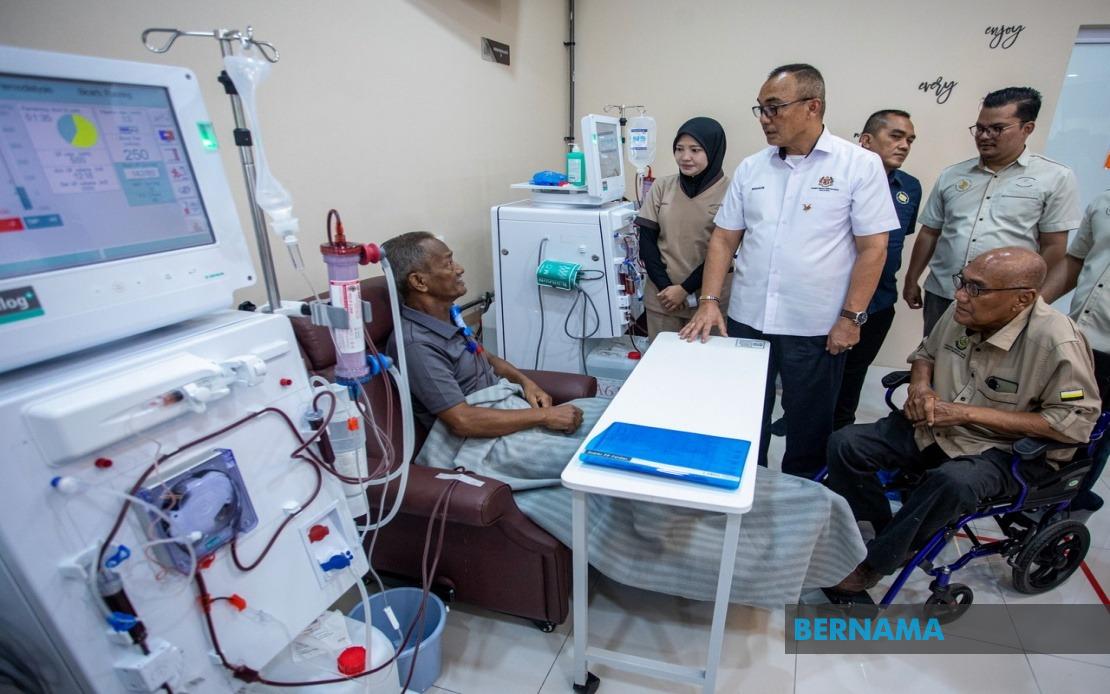
The Malaysian Armed Forces Veterans Affairs Department is moving forward with an ambitious expansion of specialist healthcare infrastructure, committing more than RM18 million towards establishing nine new dialysis centres across the country. The initiative reflects growing recognition of the healthcare needs among veterans and their dependents, whilst simultaneously extending treatment access to the broader public. This substantial investment underscores the government's commitment to strengthening welfare provisions for those who have served in the military, a priority that has gained momentum in recent policy discussions around veteran support.
The geographical distribution of these facilities demonstrates strategic planning to ensure equitable coverage across the nation. Selangor will host the largest concentration with four centres, positioning the state's veteran population and their families for convenient access to dialysis treatment. Perak will receive two facilities, whilst Negeri Sembilan, Johor, and Pahang will each benefit from one centre. This distribution pattern aligns with both population density and the known geographic spread of veteran communities, though it also suggests that other states may still face gaps in specialist renal care provision.
Major General Datuk Semaon Marjuki, the director-general of the Malaysian Armed Forces Veterans Affairs Department, characterised the expansion as a strategic response to growing demand for dialysis services among the veteran population. Speaking during the inauguration of the Batu Kurau facility in Perak, he emphasised that the new centres would serve not merely military personnel but their family members and the general public, reflecting a broader healthcare utility beyond the veteran community alone. This inclusive approach potentially positions these facilities as significant additions to Malaysia's renal care infrastructure, particularly in areas where public healthcare resources may be stretched.
The operational responsibility for these centres rests with DVET Holding Sdn Bhd, a wholly-owned subsidiary of the MAF Veterans Foundation, ensuring that governance and operations remain aligned with veteran welfare objectives. This structural arrangement allows for specialised management focused on the specific needs of the military community whilst maintaining commercial sustainability. The model represents a middle path between purely public provision and private sector engagement, potentially offering advantages in both accountability and operational efficiency.
Each facility has been constructed to meet the rigorous standards established by Malaysia's Ministry of Health, incorporating modern diagnostic and treatment equipment alongside experienced nursing staff. The emphasis on creating patient-friendly environments speaks to contemporary understanding that dialysis treatment, which demands multiple weekly visits for several hours at a time, requires more than clinical competency. The comfort and accessibility of treatment spaces significantly impact patient adherence and psychological wellbeing, factors that influence long-term health outcomes in chronic kidney disease management.
Currently, approximately 2,055 armed forces veterans nationwide are receiving dialysis treatment through various channels including JHEV-operated facilities, the Social Security Organisation, and other approved private establishments. This population base provides a clear rationale for the infrastructure investment, suggesting that existing capacity has been inadequate to meet demand. The expansion programme essentially acknowledges that scattered provision across multiple providers has become inefficient compared to a coordinated network specifically developed for veteran populations.
From a regional health systems perspective, Malaysia's investment in these facilities carries implications that extend beyond veteran care alone. Chronic kidney disease and end-stage renal disease requiring dialysis represent growing public health challenges across Southeast Asia, driven by rising prevalence of diabetes and hypertension. By developing additional dialysis capacity, Malaysia is simultaneously addressing broader demographic health pressures whilst prioritising a specific vulnerable population. This dual benefit illustrates how targeted veteran health programmes can generate spill-over improvements in general healthcare infrastructure.
The timing of this initiative coincides with broader policy discussions across the region regarding how governments should balance competing healthcare demands with finite resources. Malaysia's approach—dedicating substantial public investment to serve a defined, organised constituency—contrasts with some neighbouring countries where renal care provision remains fragmented or concentrated in urban centres. The demonstrated commitment to veteran health may also set precedent expectations for other special populations requiring ongoing medical intervention.
Looking forward, the success of this nine-centre network will likely influence future veteran health policy and potentially demonstrate whether dedicated facilities can achieve better clinical outcomes and patient satisfaction than dispersed provision through general healthcare systems. The centres' performance metrics—including patient satisfaction, clinical outcomes, operational efficiency, and community utilisation—will provide valuable data for health planners. Should the model prove successful, similar approaches might be applied to other chronic conditions affecting both veterans and the general population.

