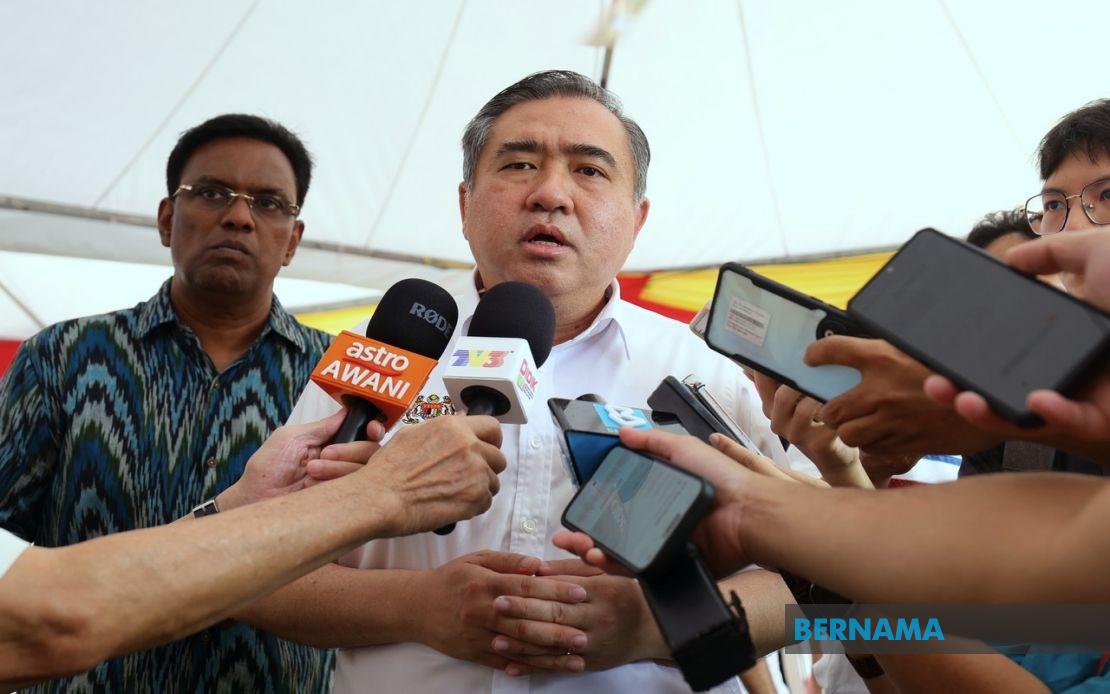
Transport Minister Anthony Loke has announced a RM100,000 funding package for Kampung Bukit Temiang in Seremban as part of the government's MADANI Adopted Village Programme, marking another step in the administration's commitment to direct engagement with rural communities. The minister disclosed that the capital injection comprises equal contributions from two sources: RM50,000 sourced from the Railway Assets Corporation, a statutory body operating under his ministry's purview, and RM50,000 from his personal allocation as the sitting Member of Parliament for Seremban.
The allocation signals a systematic approach to rural development that prioritises community consultation before capital expenditure. Rather than imposing predetermined infrastructure projects, the government initiated dialogue with Kampung Bukit Temiang residents to identify their most pressing needs. From these consultations emerged a targeted list of upgrades encompassing renovation of the village community hall, structural repairs to residential properties, systematic improvements to the local drainage infrastructure, and other essential facilities. This methodology represents a departure from top-down development models that have characterised previous rural investment cycles in Malaysia.
Loke explained that the Railway Assets Corporation and the Federal Village Development and Security Committee will jointly oversee implementation on a phased basis. The JPKK, a federal-level coordinating body for village initiatives, possesses flexibility in execution methods. Government agencies like RAC can undertake works directly, alternatively the committee can mobilise community members through gotong-royong voluntary cooperation schemes, or engage qualified local contractors to execute specific tasks such as roof rehabilitation. This multi-pathway approach acknowledges practical constraints in rural areas, including labour availability and contractor accessibility.
The MADANI Adopted Village Programme itself represents a broader governmental philosophy that individual ministries should cultivate direct relationships with local communities rather than operating through conventional bureaucratic channels. By assigning specific villages to particular ministries for focused development support, the framework aims to create accountability loops where senior officials encounter community challenges firsthand. Loke positioned this initiative as integral to delivering governance that responds to grassroots priorities rather than ministerial assumptions about local needs.
Beyond village-level development, Loke simultaneously addressed a complementary initiative affecting Malaysia's transport sector. The government recently increased its commitment to the National MADANI Taxi Renewal Programme by RM10 million, supplementing the RM10 million initially allocated within Budget 2026. This additional RM20 million total reflects mounting enthusiasm from taxi and hire car operators, who have responded favourably to the vehicle replacement scheme's financing options and supporting benefits. The top-up allocation specifically targets enhanced awareness and participation campaigns to reach operators who remain unaware of available incentives.
The taxi modernisation programme transcends simple vehicle replacement finance. Instead, it constitutes a holistic initiative addressing multiple dimensions of driver welfare and industry sustainability. Operators participating in the scheme receive comprehensive briefings on driver-friendly financing arrangements designed to minimise borrowing costs relative to vehicle values. Simultaneously, the programme introduces mechanisms for income augmentation, social protection frameworks covering unexpected hardship, streamlined permit application processes, and modernisation incentives encouraging adoption of contemporary vehicle standards. Prime Minister Anwar Ibrahim's original conception of the programme emphasised these supplementary elements rather than treating vehicle finance as an isolated measure.
Government positioning of the taxi-and-hire-car sector demonstrates sophisticated understanding of transport market dynamics in Malaysia. Rather than viewing e-hailing platforms and traditional taxi services as inherent competitors locked in zero-sum competition, officials characterise them as complementary service providers that can coexist beneficially. This framing acknowledges e-hailing platforms' genuine competitive advantages in user convenience and real-time booking while recognising taxi drivers' legitimate claims to market share and income security. The government's role involves facilitating cooperative frameworks where both service models strengthen through integration rather than destructive rivalry.
Implementation coordination involves multiple institutional actors spanning transport regulation, public transit planning, and industry association bodies. The Land Public Transport Agency, Malaysia's primary regulator for ground transport services, joins the Transport Ministry in overseeing programme rollout alongside various stakeholders. This multi-actor framework extends beyond government to encompass taxi associations representing driver interests, financial institutions providing credit facilities, automotive manufacturers supplying modernised vehicles, and e-hailing technology operators. Such collaborative architecture reflects recognition that sustainable sector transformation requires voluntary participation and stakeholder buy-in rather than regulatory coercion alone.
The concurrent announcements regarding village development and taxi modernisation illustrate the MADANI administration's attempt to address development challenges across geographic and sectoral dimensions simultaneously. Rural communities receive targeted infrastructure investment identified through genuine consultation mechanisms, while urban-based service workers benefit from financing schemes and income support programmes. Both initiatives emphasise direct engagement between government institutions and affected populations, positioning the administration as responsive to grassroots circumstances rather than imposing standardised solutions. For Malaysian observers monitoring governance quality, these initiatives merit evaluation based on implementation fidelity, whether promised consultation mechanisms genuinely influence project selection, and whether programme benefits ultimately reach intended beneficiaries rather than becoming captured by intermediaries or deflected through administrative delays.

