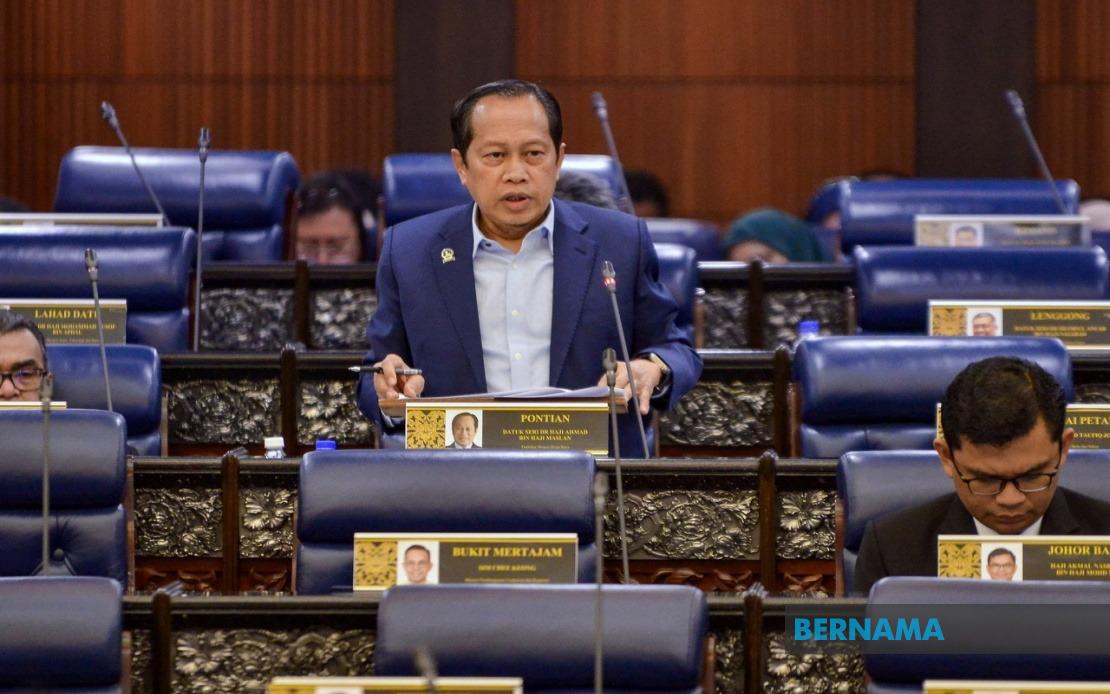
The federal government has distributed RM1.2 billion in compensation payments to landowners affected by the Sabah Pan Borneo Highway Phase 1 project, Deputy Minister of Works Datuk Seri Ahmad Maslan announced in Parliament. The corresponding effort in Sarawak has resulted in RM737 million being paid out under the same infrastructure initiative, reflecting the substantial financial commitment required to relocate residents and businesses along the strategic cross-border corridor.
In addressing concerns raised by WARISAN MP Isnaraissah Munirah Majilis during question time, Ahmad Maslan emphasized that the government is absorbing all compensation costs without passing the burden to affected communities. This approach underscores the administration's position that landholders and business operators should not suffer financial hardship as a result of major infrastructure development in their areas. The comprehensive coverage of compensation, incidental losses, and administrative expenses demonstrates a deliberate effort to manage the social impact of the highway expansion.
The most pressing issue surrounding the project remains its ballooning cost envelope. The Sabah PBH Phase 1 budget has nearly doubled since initial assessments, climbing from the 2015 estimate of RM12.86 billion to the current figure of RM24.889 billion. This nearly 94 percent increase has sparked legitimate questions from lawmakers about project management and financial planning, particularly given the significant gap between original projections and present-day expenditure.
Ahmad Maslan attributed the cost escalation to the shift away from the Project Delivery Partner model, which was terminated in 2019. The government had opted to transition towards a Federal Conventional Contractor methodology, a change that necessitated a comprehensive reassessment of remaining work after five years had elapsed since the original scope was defined. This restructuring required fresh technical evaluations and updated cost calculations across all remaining construction phases and components.
From a technical standpoint, numerous factors contributed to rising expenses beyond simple inflation. The deputy minister cited scope and design modifications as key drivers, alongside unforeseen geotechnical conditions that demanded specialized soil stabilization and treatment measures. Additionally, widespread utility relocation work—involving the repositioning of telecommunications, water, electricity, and sewerage infrastructure—consumed substantial resources that may not have been fully anticipated during the initial planning phase.
The project's complexity is further reflected in its organizational structure. Phase 1A encompasses 16 separate work packages valued at RM10.9 billion, while Phase 1B comprises 19 packages totaling RM13.989 billion. This division suggests varying levels of difficulty across different segments of the highway corridor, with some sections encountering more technical and logistical complications than others.
Macroeconomic factors have significantly amplified construction costs across Southeast Asia in recent years. The price volatility of essential materials—particularly iron, bitumen, and cement—has squeezed project budgets throughout the region. Malaysia's construction sector has been particularly vulnerable to global commodity price fluctuations, given the country's reliance on both domestic suppliers and international imports. Beyond materials, labor costs and machinery rental rates have climbed substantially, reflecting both increased demand for skilled workers in the construction industry and higher equipment depreciation expenses.
The Pan Borneo Highway initiative itself carries considerable strategic importance for Malaysian infrastructure development. By connecting Sabah and Sarawak through improved terrestrial routes, the project aims to enhance economic integration across East Malaysia while reducing transportation times for goods and people. For Malaysian readers and policymakers, the project represents a significant commitment to regional development equity, though the cost trajectory raises pertinent questions about project governance and procurement efficiency.
For stakeholders in Sabah and Sarawak, the substantial compensation disbursements provide tangible evidence of the government's financial obligations materializing. However, the growing cost differential between original estimates and current figures may warrant heightened scrutiny regarding whether project management structures are delivering value for money. The transition from a partnership model to direct government contracting introduced fresh complexities that extended timelines and inflated expenses.
The compensation arrangements themselves merit attention from a regional development perspective. At RM1.2 billion for Sabah and RM737 million for Sarawak, these figures represent substantial resource transfers to rural and semi-rural communities that traditionally depend on agriculture and natural resources. The rapid disbursement of these funds can stimulate local economies, though questions remain about whether landowners receive truly fair market valuations or whether transparent assessment mechanisms are in place.
Moving forward, the government faces mounting pressure to demonstrate that the final project cost represents justified expenditure. The current budget of RM24.889 billion must deliver infrastructure outcomes proportionate to the investment, with clear timelines for completion and measurable economic benefits for East Malaysian communities. For Malaysian policymakers and regional observers, this project serves as a case study in the challenges of executing mega-infrastructure programs across geographically dispersed and technically demanding terrain.

