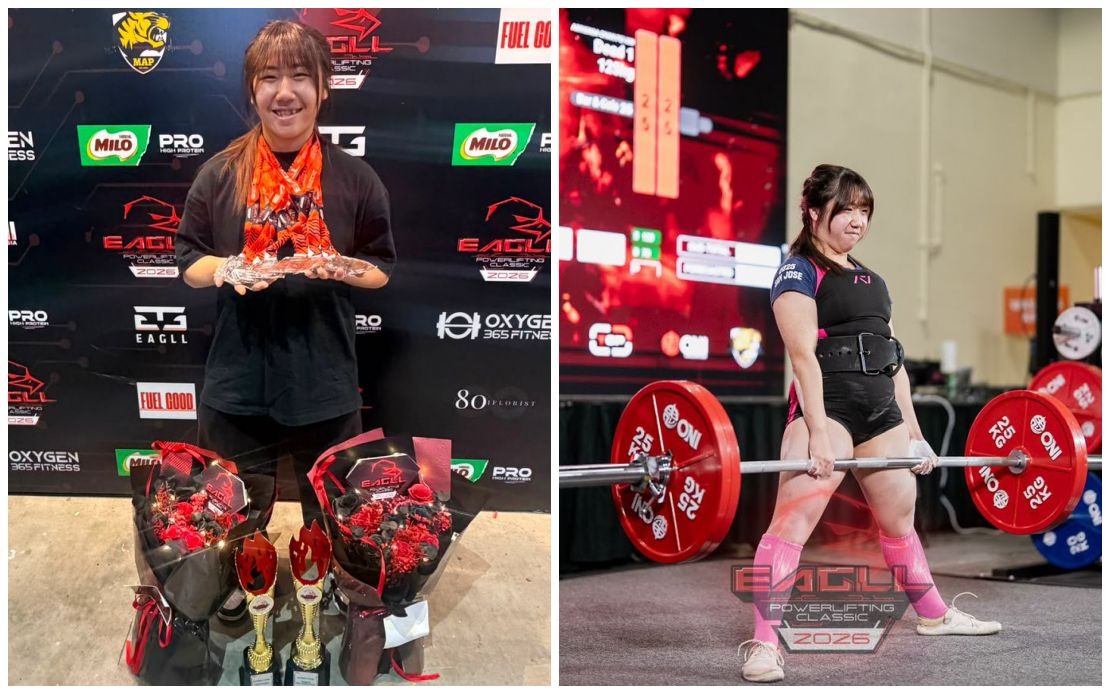
Sarawak's Abrienda Chan has transformed her championship aspirations into tangible results by shattering five national records across the Under-57 kilogramme category at the Eagll Powerlifting Classic (EPC) 2026 in Kuala Lumpur. The 20-year-old's dominant display, which netted her seven gold medals and a silver across both junior and open divisions, represents a watershed moment in her athletic career and underscores Malaysia's emerging strength in women's powerlifting. Her breakthrough comes at a critical juncture, as she prepares for two prestigious international competitions scheduled for 2027 that could establish her as a genuine medal contender on the world stage.
Chan's record-breaking performance encompassed five separate benchmarks that will now define the national standard in her weight class. Her new marks include an open squat of 128 kilograms, bench press records of 70 kilograms in both junior and open divisions, and most significantly, a combined total of 343 kilograms across all three lifts in both age categories. These figures are particularly impressive considering that Chan competes at just 151 centimetres in height, a physical dimension that places her among the sport's smaller competitors globally. Her ability to move substantial weights relative to her body mass demonstrates the technical proficiency and raw power she has developed through dedicated training and strategic programming.
The achievement carries added weight given that Chan was forced to abandon attempts at additional records during the competition due to technical difficulties on her final squat attempt, meaning her actual potential extends beyond what was officially registered. Rather than risk catastrophic failure in the deadlift portion—the final of the three competitive lifts—she and her coaching team adopted a conservative approach designed to secure the overall titles and protect her gold medal haul. This decision-making reveals a maturity in competitive strategy that often takes athletes years to develop, suggesting her coaches recognise her trajectory as one demanding careful management of both immediate results and long-term progression.
Beyond the headline records, Chan's overall competition results paint a picture of comprehensive dominance within her age group. She claimed the Junior and Sub-Junior Overall Championship title while finishing as runner-up in the open division—a placement that genuinely surprised her given her relative youth compared to the open category field. Her second-place finish in a division typically occupied by far more experienced lifters carries considerable psychological value, as it validates the quality of her preparation and demonstrates her capacity to compete against athletes several years her senior. This cross-generational performance suggests she has genuinely closed the experience gap and possesses the physical tools to operate effectively across multiple levels of competition simultaneously.
Chan's powerlifting pedigree extends beyond her recent performances at the EPC. She previously dominated the Under-52 kilogramme sub-junior category and continues to hold national records in all three individual lifts plus the combined total within that division. This progression upward in weight class, while maintaining or improving her competitive standing, indicates she has managed the delicate balance of body composition adjustment without sacrificing the technical proficiency that underpins elite lifting. Her gold medal at the 2024 Asian Classic Powerlifting Championships further demonstrates her capacity to perform under high-pressure international conditions, establishing her credentials as someone capable of medal-winning performances beyond Malaysia's borders.
Chan's upcoming international calendar represents the culmination of her current development phase. The 2027 World Classic & Equipped Bench Press Championships in Istanbul and the 2027 World Classic Sub-Junior & Junior Powerlifting Championships in Haining, China represent consecutive opportunities to validate her progress against the world's elite. Her stated objective—breaking into the world's top three in the U57 junior category—remains realistic but demanding, as it requires sustained improvement across all three lifts while competing against internationally seasoned opponents. The timing of these competitions, coupled with her current trajectory, suggests her coaching team has calculated that 18 months of focused preparation should position her competitively for a medal-winning performance.
The support infrastructure surrounding Chan's development deserves recognition as a critical success factor often overlooked in discussions of individual athletic achievement. Her family's continuous backing, combined with her coach's technical guidance and Turbo Fitness's provision of training facilities and competition expense support, has effectively removed the financial and logistical barriers that frequently derail promising athletes from lower-income backgrounds. This ecosystem of support—particularly the sponsorship component—underscores how access to resources remains a determinative factor in translating raw talent into international competitiveness. Without such backing, athletes of Chan's calibre might struggle to afford travel to qualifying competitions, train at facilities with appropriate equipment, or receive coaching from specialists in the discipline.
Chan's emergence as Malaysia's leading female powerlifting prospect arrives during a period of growing global recognition for women's strength sports. Powerlifting has transitioned from a niche pursuit to a sport with increasingly robust international competition structures and media visibility. The International Powerlifting Federation now hosts world championships across multiple divisions and age categories, creating genuine pathways for young athletes to establish themselves on the international circuit. Chan's rise within this expanding landscape positions her as a representative of Malaysian strength and conditioning excellence, capable of generating interest both domestically and across Southeast Asia.
The technical dimensions of Chan's records warrant examination, as they reveal something about her particular strengths within the sport's three disciplines. Her combined total of 343 kilograms represents the aggregate of her performances, but the relative proportions—128 kilograms squat, 70 kilograms bench press, and by calculation 145 kilograms deadlift—suggest she maintains relatively balanced strength across the disciplines rather than possessing a single dominant lift. This balanced development is advantageous internationally, as it reduces an opponent's ability to strategically target her weaker points. Her bench press figure of 70 kilograms, matching across both junior and open categories, indicates particular technical mastery in a lift where equipment compatibility and body geometry play outsized roles compared to the squat and deadlift.
Looking ahead, Chan's trajectory carries implications beyond individual achievement. Success by Malaysian athletes in historically underrepresented sports generates broader interest in those disciplines domestically and can catalyse investment in grassroots development. Her visibility through international competition could inspire younger female athletes to explore powerlifting rather than defaulting to more established disciplines. This multiplier effect—wherein one athlete's success expands the talent pool for subsequent generations—remains crucial for Malaysian sport more broadly, particularly in strength disciplines where Malaysia has historically competed at lower levels compared to regional neighbours like Thailand and South Korea.
Chan's own assessment of her readiness for the challenges ahead reflects an athlete coming to understand both her capabilities and her remaining development needs. Her acknowledgement that competition experience has deepened her self-awareness and body awareness suggests cognitive maturity matching her physical development. The resilience evident in her response to narrowly missing additional records—framing it as a calculated risk management decision rather than a failure—indicates psychological stability that serves elite athletes well during the inevitable setbacks that characterise high-level sport. Her gratitude towards her support system, meanwhile, suggests an athlete unlikely to be derailed by the ego complications that occasionally afflict rapidly ascending competitors.

