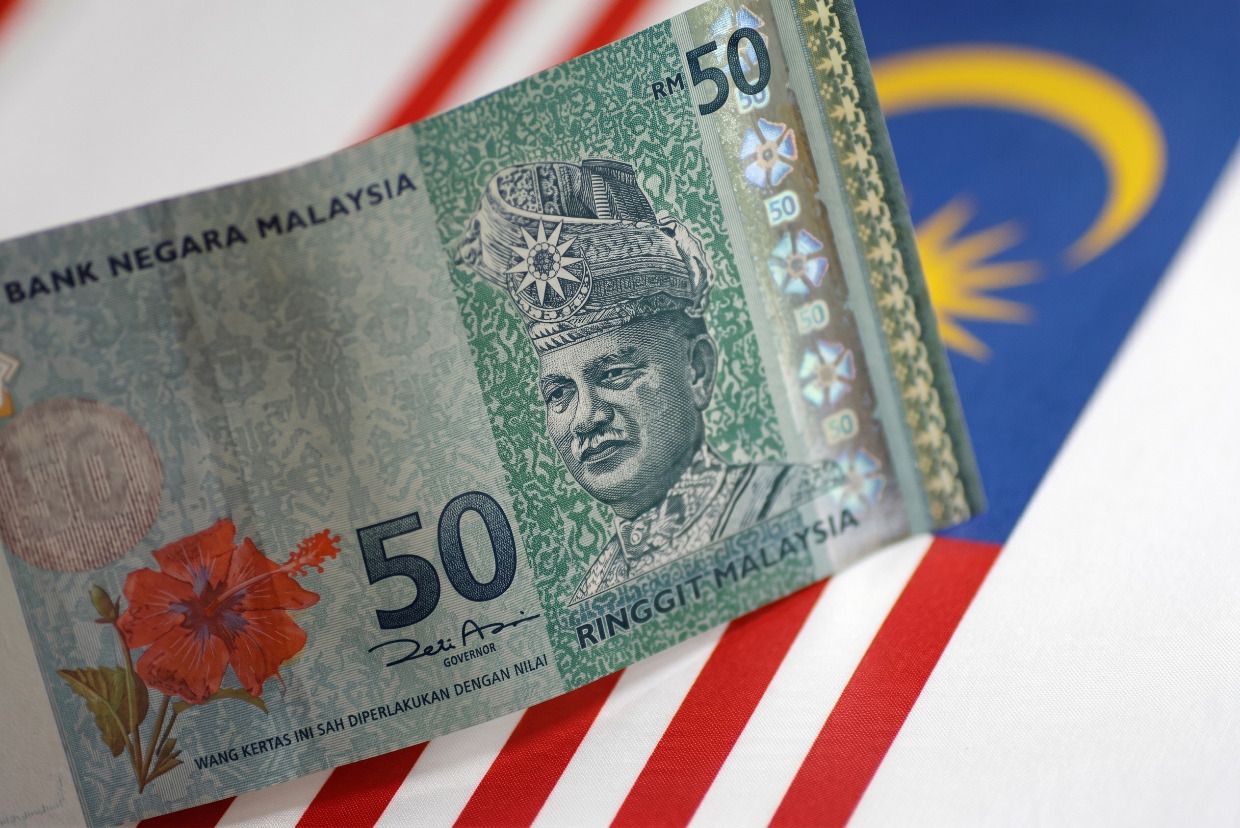
Malaysia's currency is positioned for a meaningful turnaround after an uneven first half, with financial analysts increasingly confident that a combination of policy intervention and strong economic fundamentals will propel the ringgit higher in the coming months. The currency's June performance as Asia's weakest performer appears to mark a turning point rather than the start of a prolonged decline, according to market strategists who have grown more bullish following Bank Negara Malaysia's commitment to enhance foreign-exchange inflows.
The outlook for ringgit strength has crystallized around two distinct price targets from major international banks. Royal Bank of Canada has projected the currency will trade at 3.95 per dollar by the close of this year, reflecting an appreciation from the 4.0722 level recorded on Friday. Australia & New Zealand Banking Group's forecast proves even more optimistic, suggesting the ringgit could strengthen to 3.80 per dollar—a level not reached since 2015. These projections underscore growing conviction in financial markets that Malaysia's currency has entered a genuine recovery phase.
At the heart of this bullish reassessment lies Bank Negara Malaysia's intensified push to encourage corporations to repatriate and convert their overseas earnings into ringgit. The central bank announced these measures on June 24, immediately preceding a meaningful shift in the currency's performance trajectory. The policy initiative directly addresses a structural challenge facing Malaysia's currency market: despite the nation running substantial trade surpluses, foreign-exchange inflows have not reliably translated into ringgit strength. By creating specific incentives for businesses to bring home foreign earnings and convert them domestically, BNM is attempting to close this critical gap between trade flows and currency performance.
Royal Bank of Canada's Abbas Keshvani, a macro strategist based in Singapore, has articulated why this particular policy lever matters so profoundly for currency outcomes. He emphasizes that the conversion incentives represent a crucial mechanism linking Malaysia's solid trade surplus directly to ringgit appreciation. Without effective conversion policies, corporations may accumulate foreign-currency reserves without necessarily strengthening domestic currency demand. The central bank's approach therefore addresses not merely the symptom of weak ringgit performance but rather the underlying structural impediment preventing trade surpluses from naturally supporting the currency.
The timing of BNM's initiatives carries particular significance when viewed against Malaysia's impressive economic momentum. Total export volumes surged 45 percent year-on-year during May, an acceleration driven substantially by global enthusiasm for data centre infrastructure and international demand for Malaysian electrical and electronic products. This export dynamism has expanded Malaysia's trade surplus to unprecedented monthly levels, reaching 40 billion ringgit in May alone—equivalent to approximately USD 9.8 billion. Such robust trade flows provide the genuine economic foundation upon which currency recovery narratives rest, distinguishing Malaysia's situation from situations where currency appreciation rests primarily on speculative positioning.
Beyond merchandise trade, financial flows into ringgit-denominated debt securities have reinforced the overall picture of capital flowing into Malaysia. Global funds purchased approximately USD 2.1 billion of local bonds through June 29, positioning the bond market toward its strongest monthly inflow since May 2025. This sustained appetite for Malaysian fixed-income instruments reflects international investor confidence in Malaysia's macroeconomic stability and relative value proposition. The convergence of robust merchandise exports and resilient foreign portfolio investment creates the sort of multi-layered capital inflow environment that historically produces durable currency strength.
Context matters considerably when assessing these developments. Bank Negara Malaysia's current efforts to encourage foreign-exchange inflows echo similar initiatives implemented during 2024, when the ringgit had descended to its weakest level against the US dollar in more than two decades. Those earlier measures proved reasonably effective, with the ringgit subsequently rebounding to become Asia's strongest-performing currency throughout 2024. The central bank is therefore drawing on recent policy experience while adapting to contemporary challenges, suggesting institutional learning regarding optimal approaches to managing exchange rate dynamics during volatile periods.
Malaysia's economic performance has clearly benefited from the global artificial intelligence boom, with rising international investment in data centre capacity and accelerating demand for the semiconductors and electronics that feed into technology supply chains. This structural tailwind differentiates Malaysia from numerous other emerging markets struggling with commodity dependence or anaemic export demand. The nation's positioning within critical global technology value chains provides ongoing demand foundations that should support both trade surpluses and foreign direct investment flows.
ANZ analyst Kausani Basak has highlighted the mechanics through which BNM's conversion incentives may translate into concrete currency appreciation. She notes that foreign-currency deposits accumulated by Malaysian businesses during March through May present a pool of potential ringgit conversion candidates. By implementing measures to encourage converting these foreign-currency holdings into ringgit, the central bank essentially provides the policy framework and incentives transforming latent capital inflows into actual ringgit demand. The analyst further emphasizes that resilient foreign direct investment inflows will compound the currency-strengthening effects of conversion programs.
Nevertheless, the ringgit's recovery trajectory faces genuine headwinds that may constrain appreciation even as fundamentals improve. The Federal Reserve's increasingly hawkish policy stance pressures currencies of developing economies as interest rate differentials potentially favour US dollar holdings. More domestically, political uncertainties surrounding upcoming state elections and their implications for Prime Minister Anwar Ibrahim's ruling coalition introduce a layer of uncertainty that international investors typically penalize through reduced risk appetite toward Malaysian assets. These cross-currents suggest that while the underlying trajectory may trend toward ringgit strength, the path forward may prove more volatile than linear forecasts suggest.

