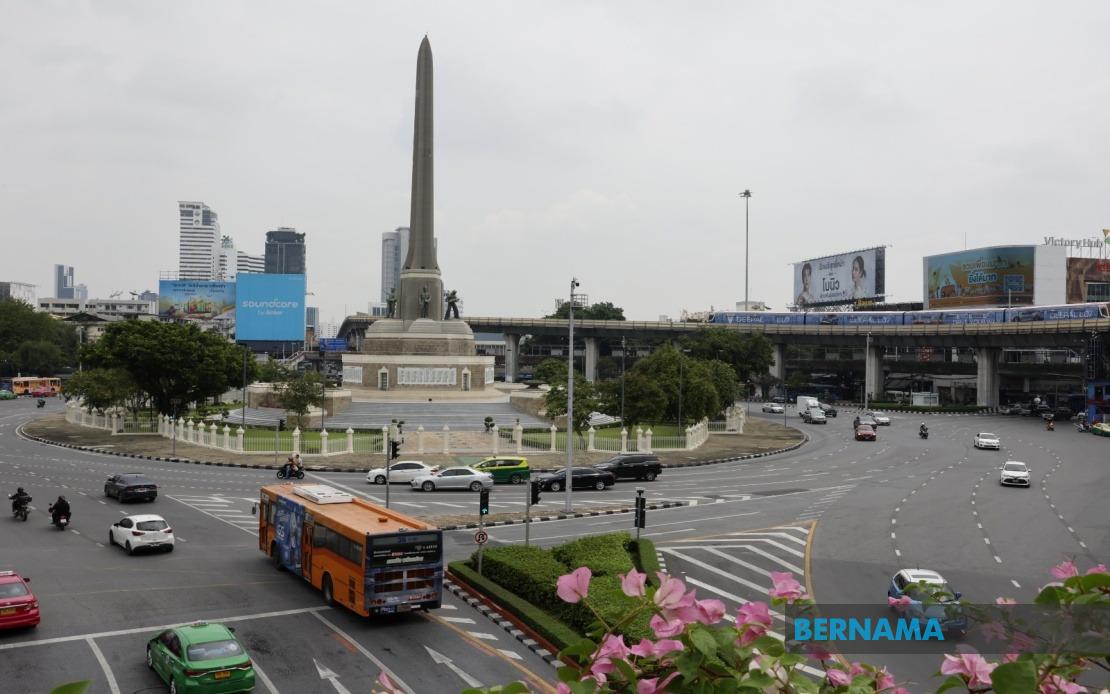
Regional Southeast Asia continues to tackle pressing challenges across conservation, security, and governance. In an interconnected landscape where transnational cooperation increasingly shapes national agendas, developments unfolding simultaneously across Indonesia, Laos, Myanmar, the Philippines, Singapore, Thailand and Vietnam reflect both the divergent priorities and shared concerns of the Association of Southeast Asian Nations. These shifts, from environmental protection to energy security and leadership transitions, underscore how decisions in one capital reverberate across the broader region.
Indonesia is deepening its commitment to marine conservation through a partnership with OceanX, the international research organisation, to fortify management systems across seven marine national parks. The collaboration represents a strategic acknowledgement that Indonesia's vast archipelagic resources—critical not only to national food security but to the region's blue economy—require expertise beyond existing institutional capacity. As maritime boundaries remain contested in several Southeast Asian waters and climate change threatens fish stocks that sustain millions, Indonesia's willingness to invite external scientific scrutiny and partnership suggests a pragmatic approach to stewardship. The initiative also carries diplomatic undertones, signalling Indonesia's openness to global environmental governance frameworks at a moment when protectionism and resource nationalism dominate policy debates elsewhere in the region.
Simultaneously, Indonesia has clarified its handling of Palestinian national Abdul Karim Raed Miqdad, whose deportation the government attributes to a legitimate Interpol red notice issued by Cypriot authorities. The Jakarta administration's emphasis that Karim neither functioned as an activist nor preacher attempts to depoliticise what observers might view as a sensitive deportation in a Muslim-majority nation. The episode illustrates how Southeast Asian governments navigate between domestic constituencies, international law enforcement mechanisms, and geopolitical sensitivities—a balancing act that becomes more precarious as regional powers vie for influence.
In Laos, President Thongloun Sisoulith has issued directives to fortify protection of the Xong River amid concerns about illegal mineral extraction threatening Vang Vieng, one of the nation's premier tourist assets. The presidential order connects environmental degradation to economic strategy: as tourism revenues become increasingly vital for Laos' development, environmental degradation poses not merely ecological but financial risk. This recognition echoes across the region, where Southeast Asian nations grapple with tensions between extractive industries and tourism-dependent economies. Korea International Cooperation Agency support for a US$4.4 million livestock safety initiative meanwhile reflects how development partnerships funnel capacity-building resources into food security infrastructure—a concern amplified across Southeast Asia as global supply disruptions and climate volatility threaten agricultural stability.
Myanmar's Consumer Affairs Department has mandated Myanmar-language labelling on pre-packaged snacks, a move grounded in food safety but reflecting broader questions about consumer protection standards across a region where regulatory harmonisation remains uneven. Such initiatives matter for intra-regional trade, where products manufactured in one Southeast Asian nation traverse borders as tariffs fall and supply chains consolidate. Myanmar and Vietnam's concurrent pledge to deepen bilateral cooperation on tourism, trade and investment gestures toward the economic interdependence that increasingly characterises Southeast Asian partnerships, even amid broader geopolitical tensions.
The Philippines hosted ASEAN-level meetings where energy security and food security dominated discussion, with the Middle East crisis casting a shadow over deliberations. This convergence underscores Southeast Asia's structural vulnerability: the region remains an energy importer despite possessing some global reserves, and disruptions to global shipping lanes—through which Middle Eastern oil and liquefied natural gas transit toward Asian markets—threaten economic growth across all ten ASEAN members. For Malaysia particularly, as a significant energy producer and refiner, these discussions carry implications for export markets and domestic policy coordination. The urgency animating these ASEAN meetings reflects recognition that without coordinated strategies, individual Southeast Asian economies risk economic turbulence if energy supplies constrict or prices spike.
Singapore's announcement of Prime Minister Lawrence Wong's cabinet reshuffle strikes at themes resonating across the developed and developing world: how institutional leaderships manage generational transition while preserving institutional memory. Wong's balancing of experienced figures with younger office holders addresses anxieties about governance continuity in systems where individual leaders carry substantial institutional weight. The concurrent confirmation that Singapore continues to hold the world's most powerful passport—enabling visa-free or visa-on-arrival entry to 192 destinations—reinforces Singapore's positioning as the region's economic linchpin and gateway to global markets, a status envied by peers yet increasingly challenged by Thailand and Vietnam as tourism hubs.
Thailand's Police Commission unanimously approved Pol Gen Samran Nuanma as the nation's 16th national police chief, succeeding Pol Gen Kitrat Phanphet. The succession reflects stability in Thailand's security apparatus at a moment when regional anxieties about transnational crime, drug trafficking and border security remain acute. The uncontested approval suggests institutional consensus around security leadership priorities, though Thailand's security posture and police reform efforts attract ongoing international scrutiny. Meanwhile, Bangkok's Airport Rail Link resumed full service after officials cleared a derailed train, a reminder that Southeast Asian infrastructure, increasingly ambitious in scope, demands constant operational attention as usage intensifies.
Across these developments lies a deeper narrative about Southeast Asia's positioning in an increasingly contested global order. From marine conservation partnerships reflecting environmental interdependence, to energy security discussions prompted by Middle Eastern instability, to cabinet transitions managing domestic governance, and to infrastructure operations sustaining regional connectivity, Southeast Asian nations confront challenges requiring both national initiative and coordinated regional response. The simultaneous occurrence of these events—some forward-looking, others addressing immediate crises—reveals a region neither wholly stable nor in free fall, but navigating perpetual adjustment to external shocks and internal aspirations.

