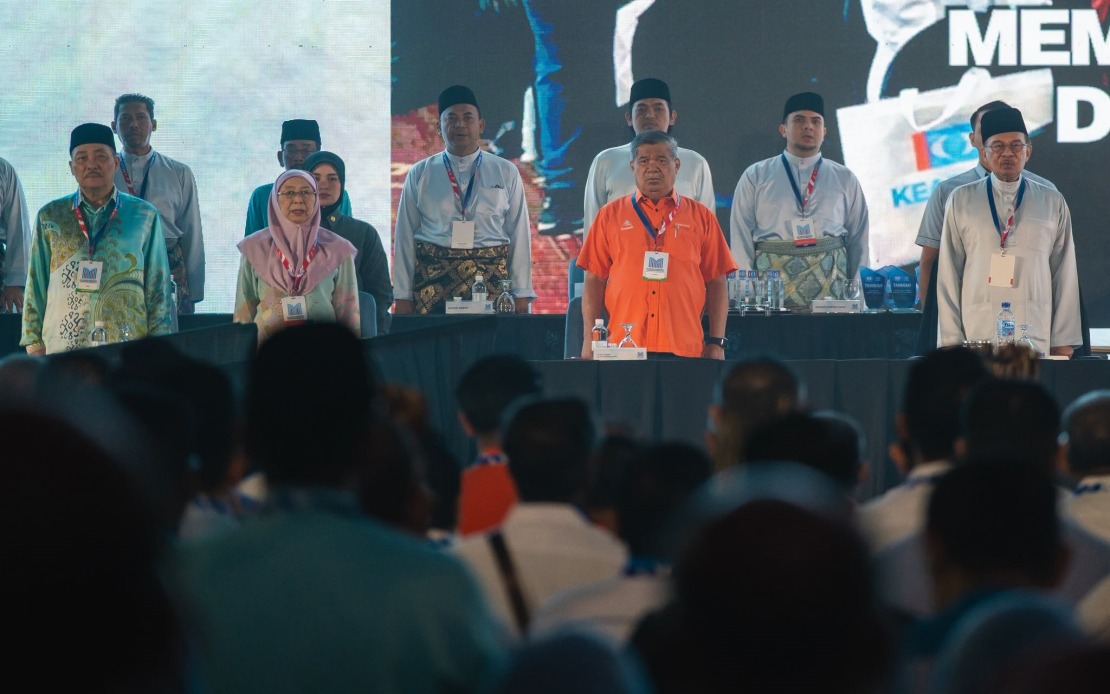
Parti Amanah Negara president Datuk Seri Mohamad Sabu has underscored the necessity of sustaining reform initiatives beyond the point of taking office, characterizing the commitment to good governance and anti-corruption work as an ongoing obligation rather than a campaign promise destined for the archives. Speaking in Melaka during the 2026 Parti Keadilan Rakyat National Congress at the Melaka International Trade Centre in Ayer Keroh, the Agriculture and Food Security Minister emphasized that the public's trust demands constant demonstration through concrete performance, irrespective of the holder of any given portfolio or their political allegiance.
The Amanah leader's remarks appear calibrated to address lingering public scepticism about whether ruling coalitions genuinely maintain their reformist zeal once in power, or whether such pledges dissolve into bureaucratic inertia. Mohamad Sabu articulated a framework where accountability transcends individual personalities or hierarchical rank, suggesting that any official engaging in financial malfeasance or the misappropriation of state resources would face challenge from his party regardless of their standing or previous contributions to the administration. This approach signals an important distinction between reform as performance art and reform as systemic practice embedded within the machinery of government itself.
The minister's emphasis on translating growth metrics into lived improvements for ordinary Malaysians reflects a growing recognition that economic expansion divorced from citizen welfare carries limited political legitimacy. Specifically, he noted that while headline gross domestic product figures matter for technical and international credibility, the government's true test lies in whether households experience diminishing financial strain and whether public services meet rising expectations. This framing resonates particularly in a Southeast Asian context where rapid growth has frequently coexisted with persistent inequality and stagnating real wages, making it a central concern for voters across Malaysia's peninsular heartland and eastern states alike.
An additional dimension of Mohamad Sabu's statement involved reaffirming the administration's commitment to implementing the Malaysia Agreement 1963, positioning the constitutional framework as essential to protecting the constitutional rights of Sabah and Sarawak residents. This represents a strategic emphasis on centre-state relations at a moment when both states have demonstrated increasing assertiveness regarding resource allocation and political autonomy. By connecting reform to MA63 implementation, the Amanah leadership signals that institutional accountability and federalism operate in tandem, rather than as separate policy domains.
The timing of these remarks—delivered during PKR's national congress where coalition partner leader Datuk Seri Anwar Ibrahim similarly emphasised reform continuity—suggests a coordinated messaging strategy aimed at reassuring the coalition's base that pledges made during opposition campaigns have not been shelved or diluted by the complexities of governance. Such synchronization is not accidental; it reflects an understanding that coalition stability depends partly on demonstrating shared commitment to foundational principles, particularly among component parties that occupy different ideological positions on the political spectrum.
Mohamad Sabu's specific endorsement of the proposed repeal of the Universities and University Colleges Act 1971 exemplifies how reform manifests across multiple policy domains simultaneously. The AUKU repeal, long championed by student activists and civil society organisations, represents the removal of restrictions on campus-based political expression and assembly that have persisted since the early 1970s. By characterizing this as an expansion of freedom and democratic space, the Amanah president connects institutional reform to younger demographics, a crucial constituency for any government seeking renewal at the ballot box.
The Malaysian political context makes these statements particularly salient given the nation's track record of electoral cycles producing limited substantive change despite rhetorical commitments to transformation. Previous administrations have promised systemic overhaul only to revert to established patronage networks and institutional conservatism once entrenched in power. Mohamad Sabu's insistence on continuous reform potentially differentiates the current coalition's ambitions from such patterns, though sustainable delivery remains the ultimate test of credibility.
For Malaysian voters and civil society observers across the region, these utterances carry import beyond routine political positioning. They constitute an implicit acknowledgment that governance reform requires permanent vigilance rather than episodic intervention, and that anti-corruption work cannot be instrumentalized for political advantage against opponents while sparing allies from scrutiny. This principle, if operationalized consistently, would constitute a significant departure from Malaysian political tradition where institutional accountability has often served partisan rather than civic purposes.
The invocation of public mandate as a binding contract between rulers and ruled also merits attention as a rhetorical move that elevates democratic responsibility above the prerogatives of office-holding. By framing the government's duty as a demonstration of trustworthiness through measurable outcomes—lower living costs, stronger institutions, less corruption—rather than the mere occupation of ministerial positions, Mohamad Sabu articulates a more demanding standard of governance that Malaysian and regional observers will likely invoke when evaluating administrative performance in coming years. Whether such rhetoric translates into sustained institutional change will ultimately determine the coalition's legacy and the credibility of reform agendas across Southeast Asia's democratic landscape.

