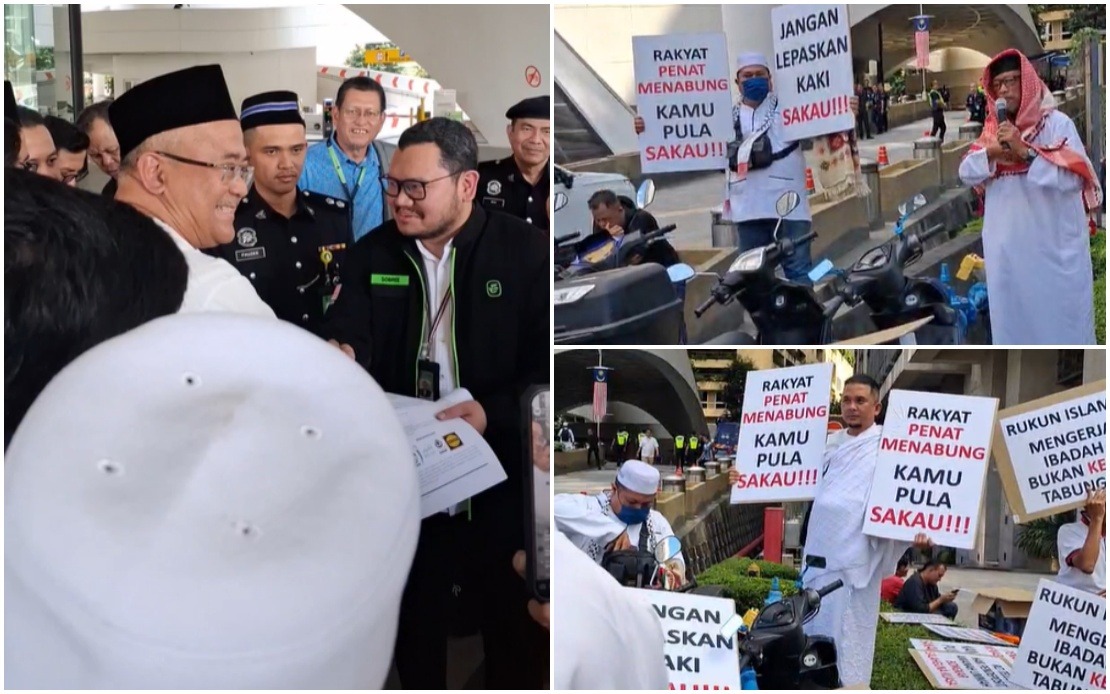
Islamic civil society groups gathered in Kuala Lumpur on August 7 to demand that investigations stemming from the Royal Commission of Inquiry into Lembaga Tabung Haji proceed without political obstruction or outside interference. The call underscores mounting public pressure for accountability following the RCI's examination of the pilgrimage fund's management during the 2014-2020 period, a span encompassing significant governance and financial irregularities that affected millions of Muslim depositors across Malaysia.
Amir Zuhair Abdull Khalid, chairman of the MADANI coalition, framed the matter as transcending partisan political calculation, instead emphasizing the fundamental concerns of fiduciary duty and public trust. The Tabung Haji scandal touches the savings and religious obligations of ordinary Malaysians, many of whom depend on the institution to facilitate their hajj journeys. Any perception that investigations are being compromised—whether through political pressure, delays, or selective prosecution—risks deepening erosion of confidence in both the institution itself and the government's commitment to accountability.
The RCI's findings have exposed not merely financial mismanagement but also allegations of political interference in governance structures and board appointments during the period under review. These revelations compound the seriousness of the underlying financial irregularities, suggesting systemic weaknesses in institutional oversight and independence. Addressing such structural defects requires not only identifying individual culpability but also demonstrating that the state possesses the institutional fortitude to reform its own conduct.
Crucially, the coalition emphasized that determinations of guilt cannot rest on political assertion or public opinion alone. Only the courts, following rigorous investigation and prosecution by competent authorities such as the Malaysian Anti-Corruption Commission (MACC), can establish legal liability. This distinction matters profoundly in a rule-of-law context: premature public judgment or politically motivated prosecution is as corrosive to institutional legitimacy as is impunity for actual wrongdoing.
The MADANI chairman's appeal to the Prime Minister carried an implicit warning. While expressing support for government action on the RCI findings, the coalition simultaneously cautioned against any temptation to manipulate the investigative process for narrow political gain. Such a balance reflects the genuine predicament facing any ruling administration confronted with damaging findings about its predecessors or predecessor institutions: how to pursue genuine accountability without appearing to weaponize the justice system.
The Malaysian Islamic Movement Coalition (HIKAM) and partner organizations formulated ten specific demands addressing the RCI findings. These encompassed immediate legal proceedings against those implicated, recovery of losses and misappropriated assets, full implementation of the RCI's reform recommendations, and ongoing governance improvements under the current administration. Such structured demands prevent the investigation from becoming an open-ended or politically convenient exercise that can be initiated, paused, or redirected according to shifting political winds.
The composition of HIKAM itself—comprising WADAH, IKRAM, HALUAN, and ABIM—lends weight to the demands by representing established Muslim civil society institutions rather than partisan political entities. These organizations command grassroots credibility and speak to constituents whose hajj savings were affected. Their intervention elevates the discourse beyond parliamentary debate into the realm of genuine public accountability to affected communities.
For Malaysians generally and for the Southeast Asian region observing Malaysian governance, the unfolding TH investigation carries broader implications. A successful, transparent investigation that culminates in proportionate legal consequences would signal that even substantial institutional failures can be addressed through established legal mechanisms. Conversely, visible interference, delays, or selective accountability would reinforce cynicism about the capacity of institutions to constrain power.
The RCI period of 2014-2020 encompasses both previous and current political administrations, creating natural tension in how accountability is pursued. Parties responsible for oversight failures during those years come from different political backgrounds, adding complexity to prosecutorial decisions. Insulating the investigative and judicial processes from political pressure becomes not merely a procedural preference but a practical necessity for public credibility.
Movement toward prosecution represents only one dimension of necessary reform. The RCI's recommendations for governance improvements—presumably addressing transparency, board independence, financial controls, and political insulation—must be implemented systematically. Without concurrent institutional reform, successful prosecutions of individuals might generate a false sense of closure while perpetuating the conditions that enabled initial failures.
The timing of the Kuala Lumpur solidarity gathering reflects impatience with the pace of action. Months have passed since the RCI report's release, and while investigations presumably continue, visible progress remains limited. Public frustration with delay is understandable given the scale of potential losses and the number of depositors affected. However, the coalition's calls for speed must be balanced against the legitimate complexities of financial investigation and prosecution.
For Malaysian policymakers, the coalition's intervention offers a constructive framework: acknowledge the gravity of findings, commit to transparent processes under established institutional authority, maintain political distance from investigative and judicial bodies, and pursue comprehensive institutional reform alongside legal accountability. This approach respects both the rule of law and the legitimate expectations of affected communities.
Ultimately, the TH RCI investigation serves as a test case for whether Malaysia's institutions can deliver accountability at scale while maintaining political neutrality. The coalition's emphasis on procedural integrity—transparency, non-interference, and proper legal process—reflects understanding that the legitimacy of outcomes depends fundamentally on the integrity of processes. Only through such disciplined approaches can public institutions rebuild trust among Malaysians whose confidence has been shaken by the discovered lapses.

