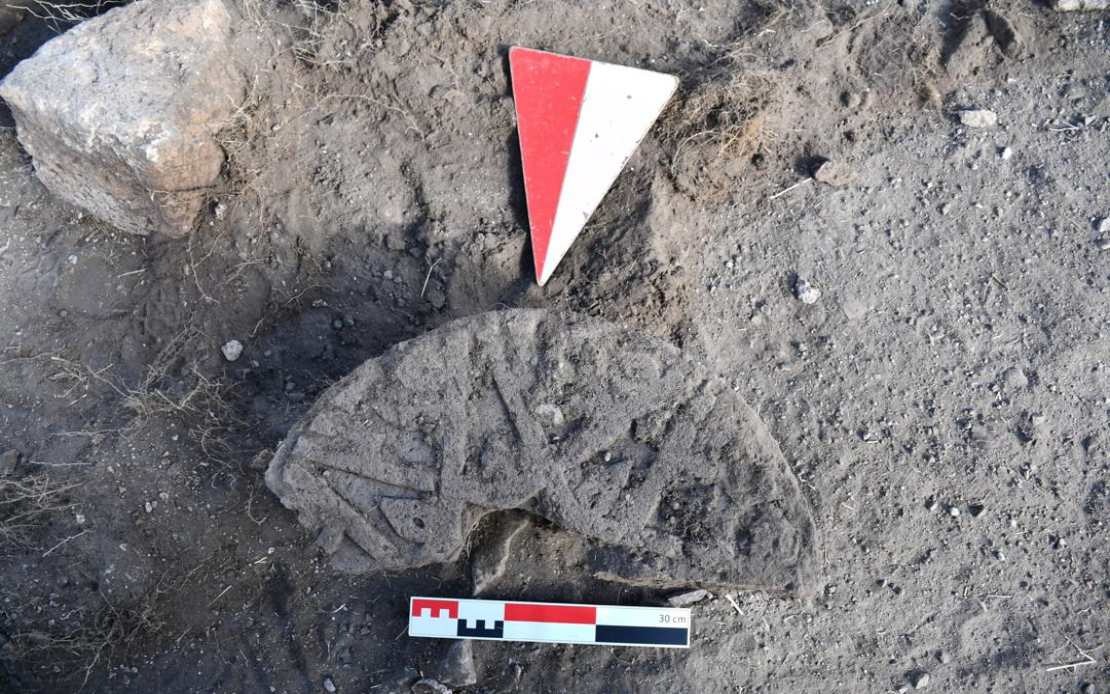
Archaeologists working at the historic Ani site in eastern Türkiye have made a significant discovery that adds another layer to understanding the region's rich multicultural past. A stone artefact bearing multiple inscriptions of Prophet Muhammad's name has been unearthed during ongoing excavations, according to Turkish Culture and Tourism Minister Mehmet Nuri Ersoy. The find represents an important contribution to knowledge about how Islamic heritage was documented and preserved at this ancient crossroads of civilisations.
The inscribed stone features the Prophet's name rendered six times in Kufic script, an ancient angular Arabic writing system that emerged in the early Islamic period and remained in use for religious and formal contexts. Minister Ersoy shared details about the artefact's artistic qualities on social media, noting that three of these inscriptions form part of an intricate decorative band that circles an eight-pointed star, a design element common in Islamic art. The remaining three inscriptions appear elsewhere on the stone, suggesting careful compositional planning by its creators. This deliberate placement of multiple inscriptions indicates the artefact held particular religious or ceremonial significance for those who commissioned it.
The stone was discovered during systematic excavations at a Seljuk cemetery that has been the focus of archaeological study since 2021. The Seljuk period, which followed Byzantine rule in the region, represents a crucial phase in Anatolia's transition to Islamic governance and cultural development. The cemetery site has already yielded valuable insights into burial practices and daily life during this era. The discovery of this inscribed stone within the context of a Seljuk burial ground strongly suggests it originated from a tomb tower, a distinctive architectural feature that served both commemorative and functional purposes in Islamic medieval society.
Ani's significance as an archaeological site extends far beyond this single discovery. Located in the province of Kars on the Turkish-Armenian border, the city occupies a strategic position that made it a vital hub along the ancient Silk Road trade routes. During the 10th and 11th centuries, Ani flourished as the capital of the Bagratid Armenian kingdom, a period when it became renowned throughout the medieval world for its prosperity and cultural sophistication. The city subsequently experienced successive waves of conquest and rule, passing under Byzantine, Seljuk, and Ottoman dominion, each period leaving its architectural and cultural imprint on the landscape.
This layered history makes Ani an exceptional case study for understanding how different religious and political powers shaped urban centres in the medieval Eastern Mediterranean and Near East. The site's strategic location meant it absorbed influences from multiple civilisations, creating a palimpsest of overlapping heritage. The discovery of Islamic-era artefacts like this inscribed stone demonstrates how Ani continued to function as an important centre even after its political significance had waned. For researchers studying cultural continuity and change in the post-Byzantine period, such finds provide tangible evidence of the religious and cultural transformations that reshaped Anatolia following the Seljuk conquest.
The international recognition of Ani's historical importance was formalised when UNESCO designated it as a World Heritage Site in 2016. This status reflects global acknowledgement that the ruins represent exceptional testimony to Armenian architectural traditions and to the broader history of exchanges between Byzantine, Ottoman, and Islamic civilisations. The UNESCO inscription came after decades of conservation efforts aimed at stabilising the site's crumbling structures against further decay from weathering and seismic activity. The continued archaeological work at Ani, including the cemetery excavations that yielded this inscribed stone, occurs within this framework of international cooperation and commitment to preserving the site for future study and appreciation.
For Malaysian readers with interests in Islamic heritage and archaeological methodology, this discovery illustrates how systematically conducted excavations continue to enrich our understanding of how Islamic societies operated and expressed their faith through material culture. The stone's artistic sophistication and careful inscription placement reflect the high level of craftsmanship and theological literacy within Seljuk society. The Kufic script itself carries historical weight, having been used in the earliest Quranic manuscripts and continuing as a prestige script for important inscriptions long after other writing systems became standard for everyday communication.
The cemetery excavations at Ani hold broader implications for Southeast Asian scholars studying Islamic archaeology and heritage management. Ani demonstrates how sites can preserve multiple cultural layers simultaneously, a phenomenon relevant to understanding similar multiconfessional and multicultural sites across Southeast Asia, particularly in Malaysia where numerous heritage areas contain overlapping Hindu, Buddhist, and Islamic remains. The methodological approaches being used at Ani, including careful stratigraphic excavation and detailed documentation of artefact positions, reflect international best practices that influence heritage work across the region.
Turkey's investment in archaeological research at Ani and the government's emphasis on publicising significant discoveries through official channels underscore the political and cultural importance assigned to the site. For Turkish authorities, demonstrating the Islamic heritage of Anatolia through such discoveries serves to contextualise modern Turkey within the broader sweep of Islamic civilisation while simultaneously celebrating Armenian and Byzantine contributions. This inclusive approach to historical narration reflects contemporary international standards in heritage interpretation, where sites are increasingly presented as evidence of creative coexistence rather than simple conquest narratives.
The ongoing excavations at Ani's Seljuk cemetery promise additional discoveries that may further illuminate daily religious practices, artistic standards, and social organisation during the medieval Islamic period in Anatolia. Each artefact discovered adds data points that allow researchers to construct more nuanced pictures of how people lived, worshipped, and expressed their identities across the regions and centuries that Ani's ruins encompass. For a global audience increasingly interested in understanding Islamic heritage as integral to world civilisation rather than peripheral to it, such archaeological work provides essential grounding in material evidence and historical specificity.

