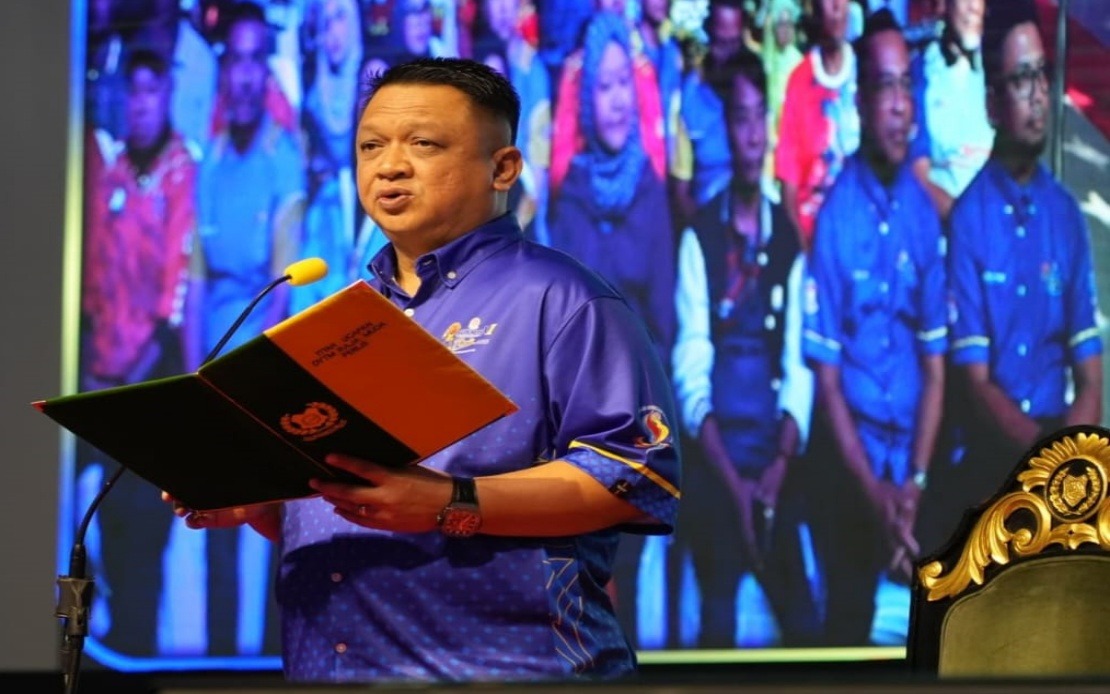
The Raja Muda of Perlis, Tuanku Syed Faizuddin Putra Jamalullail, has articulated a comprehensive roadmap for Majlis Amanah Rakyat (MARA) that places the institution at the intersection of technological disruption, entrepreneurial ambition, and institutional renewal. Speaking at the opening of the 11th Sukan MARA Se-Malaysia (SUKMAS) tournament in Kangar on August 30, the royal patron outlined three interconnected pillars designed to reposition Malaysia's premier bumiputera development agency as a forward-thinking organization capable of navigating an increasingly complex global economic landscape.
At the core of this vision lies MARA's imperative to become a technological pioneer rather than a passive adopter of innovation. Tuanku Syed Faizuddin Putra emphasized that artificial intelligence and emerging technologies represent not merely operational tools but fundamental drivers of organizational transformation. By encouraging MARA personnel to explore and deploy AI applications, the institution can fundamentally enhance its efficiency in delivering services, unlock new dimensions of creative problem-solving, and build institutional capacity to respond to unforeseen challenges. This technological orientation reflects broader regional trends, where Southeast Asian development agencies increasingly recognize that lagging behind in digital adoption places both their organizations and their beneficiaries at a competitive disadvantage in an era defined by rapid technological change.
The second strategic thrust addresses the substance of MARA's core mission: nurturing entrepreneurship that transcends parochial domestic markets. Rather than cultivating business owners content with local consumer bases, the Raja Muda called for MARA to produce entrepreneurs equipped with the sophistication, resilience, and international confidence to establish genuinely competitive enterprises on the global stage. This represents a qualitative shift in how MARA conceptualizes its developmental role. Malaysian entrepreneurs have historically demonstrated capability within protected or familiar markets, but fewer have successfully scaled operations internationally or built companies capable of competing with established global players. By reorienting its training and support mechanisms toward producing internationally-minded business leaders, MARA can contribute meaningfully to Malaysia's broader economic objectives of reducing dependence on commodity exports and foreign direct investment.
The third pillar emphasizes leadership qualities that mirror the organizational transformation MARA itself must undergo. Rather than developing personnel who manage existing systems or respond to predetermined frameworks, the institution should cultivate leaders capable of anticipating change, making decisive judgments under uncertainty, and thinking strategically about organizational direction. This reframing of leadership development reflects acknowledgment that MARA's impact depends fundamentally on the caliber of personnel directing its programs and representing the organization within communities. Leaders who merely execute established protocols cannot effectively guide an organization through transformation; instead, MARA requires personnel who understand systemic change, recognize emerging opportunities, and possess the intellectual agility to pivot strategies as circumstances warrant.
The institutional context for these proposals deserves consideration. MARA, established decades ago as a vehicle for Bumiputera development, operates within Malaysia's unique social contract around affirmative action and community development. The Raja Muda's articulation of strategic renewal reflects recognition that this mandate remains legitimate and important, but that delivering on it effectively in the twenty-first century requires organizational practices fundamentally different from those that sufficed in earlier eras. The reference to MARA not merely adapting to change but positioning itself at the forefront of shaping the future carries particular weight coming from a royal patron; it signals that stakeholders at the highest levels understand the urgency of institutional evolution.
The timing of these strategic interventions during SUKMAS, MARA's biennial sports tournament, deserves examination. Rather than an incidental venue, the sporting event provides meaningful context for the leadership message. The tournament brings together three thousand athletes and officials from fourteen MARA teams across Malaysia, creating what the Raja Muda characterized as a unifying platform that strengthens organizational identity and fosters collective purpose. In this framing, sports transcends recreational activity to become a mechanism for binding dispersed personnel toward shared institutional objectives. The ability to foster organizational cohesion becomes particularly important when institutions face the disruptive pressures of technological change and strategic reorientation.
The competitive landscape that prompted these reflections extends beyond MARA's institutional boundaries. Malaysia confronts increasing regional competition from Southeast Asian peers seeking to capture similar demographic segments and geographic markets. Agencies analogous to MARA in Thailand, Indonesia, and Vietnam pursue similar developmental objectives, often with substantial resource commitments. Malaysian entrepreneurs face international competition not only from established foreign enterprises but increasingly from dynamic startups emerging from neighboring economies. Against this backdrop, MARA's success in executing the technological, entrepreneurial, and leadership dimensions outlined by the Raja Muda carries implications for Malaysia's broader economic positioning within the region.
The specific mention of artificial intelligence warrants particular attention given ongoing global discussions about AI's transformative potential and risks. For a development agency like MARA, AI applications could theoretically enhance program targeting, improve entrepreneurship training curricula through data-driven personalization, and streamline administrative operations. However, successful implementation requires not merely acquiring technology but developing institutional understanding of AI's appropriate applications, limitations, and potential unintended consequences. The Raja Muda's emphasis on MARA personnel being bold in exploring AI suggests recognition that technological conservatism poses institutional risks, but implementation wisdom will determine whether technological adoption translates into genuine organizational benefit.
The entrepreneurship focus connects directly to Malaysia's macroeconomic objectives. The nation's historical development model relied substantially on foreign investment and commodity extraction, patterns increasingly difficult to sustain amid global economic shifts and commodity price volatility. Building a foundation of innovative, internationally-competitive Malaysian companies represents a logical pathway toward economic diversification and sustainable growth. MARA's role in this transition becomes more central if the agency can successfully transition from producer of small domestic traders to developer of ambitious global entrepreneurs. This requires not merely expanded access to capital or technical training but cultural transformation within MARA itself toward genuinely supporting entrepreneurial risk-taking and international market entry.
The leadership development component reflects sophisticated understanding that institutional change depends fundamentally on personnel evolution. MARA's existing staff and emerging leaders were trained within organizational paradigms that may no longer serve contemporary objectives. Developing personnel who think strategically about transformation, feel empowered to make decisions amid uncertainty, and understand themselves as potential catalysts for change represents investment in organizational capacity that transcends particular programs or initiatives. Such leadership development becomes particularly urgent if MARA genuinely pursues the technological and entrepreneurial innovations outlined.
Implementation challenges inevitably arise when government institutions attempt significant strategic reorientation. Institutional inertia, budgetary constraints, and competing political pressures frequently impede transformation efforts that senior leaders champion eloquently. The substantive test of the Raja Muda's vision will emerge in the coming years as MARA allocates resources, redesigns programs, and evaluates personnel against criteria reflecting the articulated strategic priorities. Whether the institution can sustain focus on these objectives despite inevitable implementation difficulties and shifting political priorities remains uncertain.
Regional implications extend beyond Malaysia's borders. If MARA successfully evolves into a technology-enabled developer of globally-competitive entrepreneurs, the model might inform how other Southeast Asian development agencies approach their missions. Conversely, if the strategic pronouncements prove disconnected from institutional reality, they could contribute to growing skepticism about government development agencies' capacity to respond effectively to contemporary economic challenges. The Raja Muda's intervention therefore carries significance both for MARA's institutional trajectory and for broader Southeast Asian discussions about effective development policy in an era of rapid technological and economic change.

