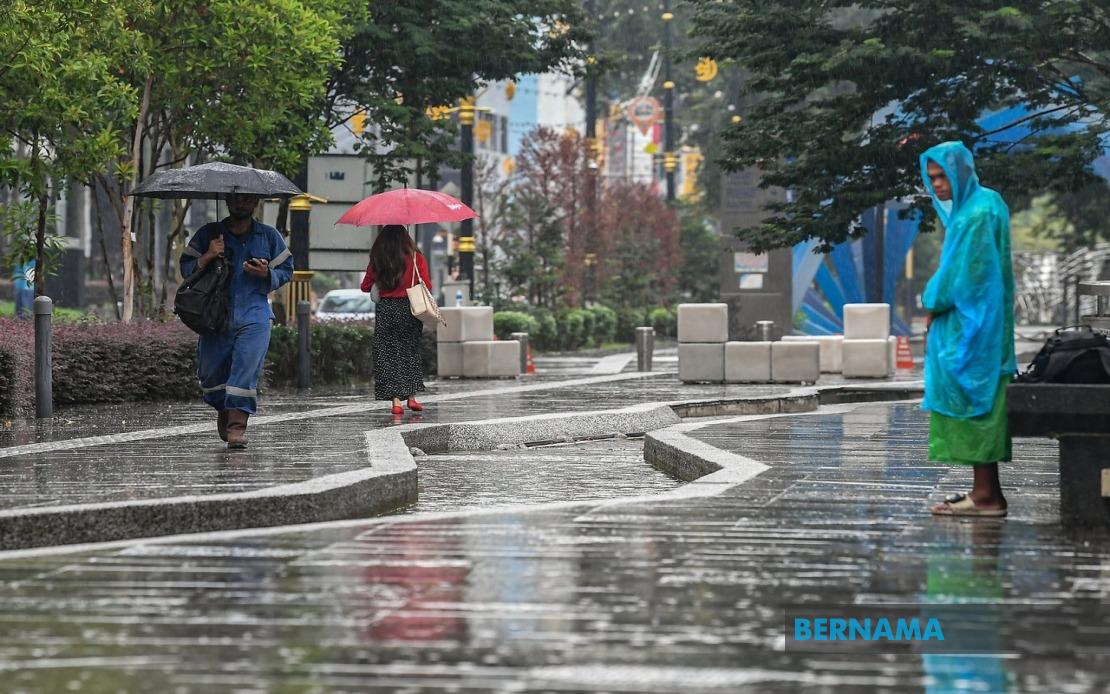
Voters and candidates in Johor face unsettled weather conditions as the state election campaign gets underway, with the Malaysian Meteorological Department warning that rain will affect more than two-thirds of the state's districts during tomorrow morning's nomination process. The precipitation is expected to blanket Johor Bahru, Muar, Batu Pahat, Kota Tinggi, Pontian, Tangkak and Kulai, creating potential logistical headaches for the hundreds of contesting candidates and their supporters gathering at nomination centres across the state.
According to Azlai Ta'at, director of the Malaysian Meteorological Department's Johor division, only three districts—Segamat, Kluang and Mersing—are expected to experience clear skies during the critical early hours when the nomination process unfolds. The weather outlook represents what authorities have characterised as a slight challenge for an electoral exercise already complicated by the need to coordinate activities across a geographically dispersed state. Temperature-wise, conditions will range from a minimum of 24 to 25 degrees Celsius to a maximum between 31 and 34 degrees Celsius, with Segamat anticipated to record the highest readings at up to 34 degrees Celsius.
Beyond the morning nomination period, which is scheduled to run from 9 am to 10 am at 56 designated centres, the weather deteriorates significantly during what will be the afternoon launch of the official campaign season. MetMalaysia has forecast thunderstorms across seven districts including Johor Bahru, Segamat, Kluang, Kota Tinggi, Pontian, Mersing and Kulai, while Batu Pahat and Tangkak face conventional rainfall. Only Muar is expected to remain hot and largely dry. Public warnings have been issued advising campaign supporters and the general electorate to remain vigilant regarding sudden shifts in atmospheric conditions that could complicate movement and outdoor activities.
The nomination process itself represents a critical gateway for the diverse array of political coalitions competing in this 56-seat contest. Pakatan Harapan is presenting a united front across all available seats through a structured distribution favouring PKR with 20 candidacies, Amanah with 19, and DAP contributing 17. This alliance configuration reflects the coalition's strategy to maintain broad geographic and demographic representation whilst balancing internal party interests and winnable seat allocations. The composition demonstrates the ongoing tensions within the opposition coalition regarding seat distribution, particularly given DAP's traditional strength in urban areas and Amanah's focus on rural constituencies.
Barisan Nasional enters the contest fielding candidates across all 56 seats as well, though the distribution heavily favours UMNO's 36 nominees, with MCA allocated 16 positions and MIC four. This allocation pattern underscores the dominance UMNO maintains within the traditional ruling coalition, a dynamic particularly relevant in Johor given the state's historical significance as a Malay-Muslim heartland and UMNO's traditional stronghold. The MCA and MIC allocations remain modest, reflecting both the demographic realities of Johor and the shifting electoral preferences within Chinese and Indian communities over recent election cycles.
Perikatan Nasional's presence introduces a more fragmented competitive landscape, with PAS contesting 11 seats, Bersatu fielding 16 candidates, the Malaysian Indian People's Party five seats, and Pejuang one. This distribution reveals the internal tensions within the bloc, particularly between PAS and Bersatu, which have pursued divergent strategies in recent state elections. Bersatu's larger allocation suggests the party leadership has attempted to establish a more substantial footprint in Johor despite limited prior electoral performance in the state, whilst PAS maintains a focused approach centring on constituencies with stronger Islamic conservative demographics.
Beyond the major coalitions, several smaller parties and new entrants are testing the electoral waters. The Malaysian United Democratic Alliance will contest four seats, Parti Sosialis Malaysia one, whilst Parti Bersama Malaysia makes its electoral debut by fielding 15 candidates across the state. Parti Bersama Malaysia's entry into the contest is particularly noteworthy, as it represents an attempt to capture a political space potentially dissatisfied with existing options and may indicate the emergence of new fault lines in Johor's political competition. The presence of these smaller players suggests the election may be more fractionalised than previous contests, potentially creating opportunities for unexpected outcomes in closely contested constituencies.
The Election Commission has established a structured timeline for the broader electoral process that extends well beyond nomination day. Early voting is scheduled for July 7, affording military and police personnel an opportunity to cast ballots before the general population, whilst polling day itself falls on July 11. This staggered approach reflects standard electoral practice in Malaysian state contests and allows authorities time to manage administrative preparations following the nomination period. The early voting provision is particularly significant given the presence of 12,041 military and 12,710 police personnel and spouses among the registered electorate, constituencies that have traditionally skewed towards governing coalitions.
The electoral register encompasses 2,727,926 registered voters across Johor, comprising 2,703,175 ordinary civilians alongside the aforementioned military and police cohorts. This voter base represents a substantial political prize, and the size of the electorate demands substantial campaign infrastructure and resource allocation from all competing factions. The voter count underscores Johor's demographic and political importance within the Malaysian federation, as the state represents a significant portion of the national electorate and has historically been regarded as a bellwether for broader political trends affecting the peninsula.
For Malaysian observers monitoring the 16th Johor state election, weather disruptions during nomination day should be viewed within the broader context of political competition in a state where incumbency advantages, ethnic demographics, and economic grievances intersect. The rain forecast, whilst logistically inconvenient, is unlikely to materially affect candidate filing or the overall structure of competition, though it may suppress turnout among supporters attending nomination ceremonies. The real significance lies in how the various political coalitions have positioned themselves for the broader campaign period, with Pakatan Harapan attempting to consolidate opposition strength, Barisan Nasional defending traditional dominance, and Perikatan Nasional seeking to disrupt the binary competition. The subsequent weeks will reveal whether these strategic calculations translate into electoral success or whether Johor's voters deliver unexpected verdicts on the competing visions of governance and representation on offer.

