Sudden cardiac arrest remains a silent killer across Malaysia, claiming lives with little warning and demanding split-second responses that often prove unavailable to the general public. The nation's survival rates—hovering between 0.5 and 8.5 percent—reflect a critical gap in emergency infrastructure and public preparedness that costs lives every day. Unlike countries with established networks of lifesaving equipment and trained responders, Malaysia has struggled with inadequate access to Automated External Defibrillators (AEDs) and delayed initiation of Cardiopulmonary Resuscitation (CPR), factors that medical experts identify as the primary barriers to survival.
The brutal arithmetic of cardiac emergencies leaves no room for complacency. Once sudden cardiac arrest occurs, survival chances plummet with each passing minute, dropping precipitously after eight to ten minutes without intervention. This reality has prompted Sunway Medical Centre Velocity to launch an ambitious expansion programme designed to place lifesaving defibrillators within reach of the public across Kuala Lumpur's busiest precincts. The initiative, rolled out through the hospital's corporate social responsibility framework, builds upon previous awareness campaigns by combining hardware deployment with systematic public education—recognising that equipment alone cannot save lives without trained hands to use it.
The strategic placement of AED units reflects careful consideration of where cardiac emergencies are most likely to claim victims. High-traffic transportation hubs including Tun Razak Exchange (TRX), Bukit Bintang, Ampang Park and Muzium Negara MRT stations now house these devices, ensuring accessibility during peak commuting periods. Commercial anchors such as Aquaria KLCC, Menara Public Bank and Menara Public Bank 2 represent additional nodal points in the urban fabric where trained bystanders might be present during emergencies. The expansion further reaches heritage landmarks within the Merdeka 118 Precinct, including the National Heritage Building of Stadium Merdeka, alongside the Public Bank-ITTC and Bangunan Public Bank on Jalan Sultan Sulaiman, creating a dispersed network rather than concentrated clusters.
Dr Wee Tong Ming, Medical Director and Consultant Emergency Physician at Sunway Medical Centre Velocity, articulated the philosophical underpinning of the programme: deaths from cardiac arrest often stem not from insufficient help, but from response delays and equipment unavailability. By concentrating on locations where large numbers of people gather regularly, the hospital addresses a fundamental inequity in emergency access. The visible placement of each AED, supported by clear standees designed for immediate recognition, transforms the landscape of public health readiness. QR code stickers linking to emergency guidance webpages represent a technological bridge between physical equipment and digital education, allowing bystanders who discover an AED to quickly access instructions and reassurance.
Corporate leadership at Sunway Medical Centre Velocity has positioned this initiative within a broader philosophy of public empowerment. Chief Executive Officer Susan Cheow emphasised that medical emergencies should never leave individuals feeling helpless due to knowledge gaps or equipment shortages. This framing transforms cardiac preparedness from a niche medical concern into a shared social responsibility, one that implicates urban planners, building managers, transportation authorities, and corporate facilities managers. The initiative suggests that comprehensive emergency readiness cannot be delegated to hospitals alone but requires coordinated participation across multiple sectors and stakeholder groups.
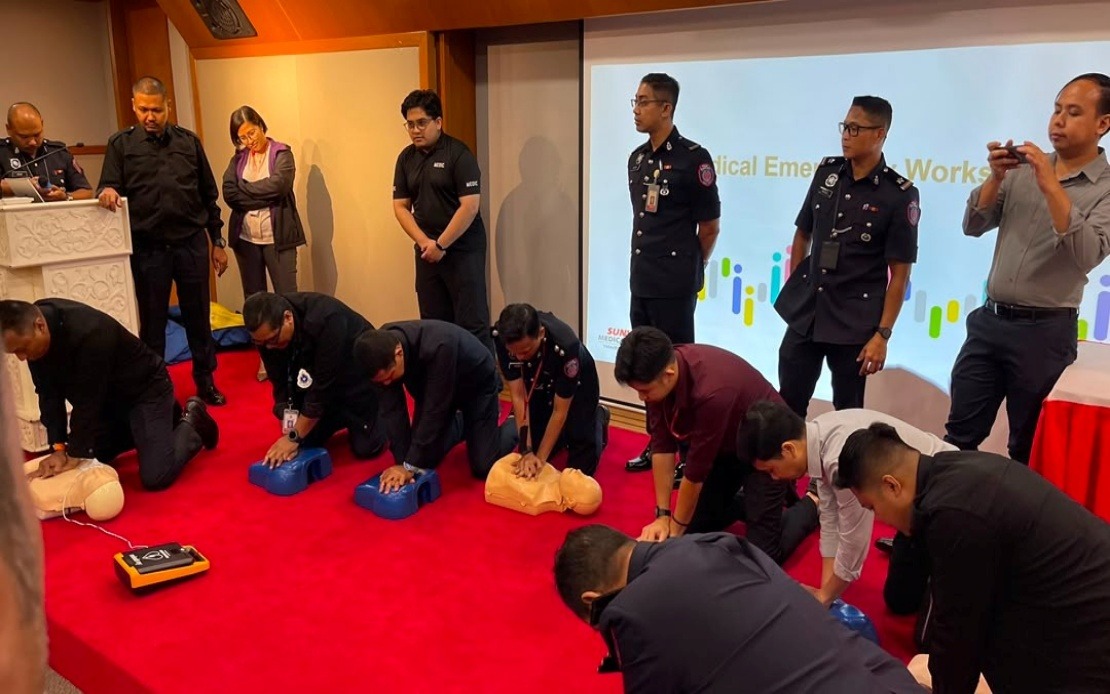
Critically, the AED installation programme represents only half the equation in improving survival outcomes. Parallel to hardware deployment, Sunway Medical Centre Velocity has committed to sustained public education through on-site training sessions and Accident and Emergency awareness talks. These sessions equip citizens with fundamental life support competencies: recognising cardiac arrest symptoms, performing CPR with correct technique, and operating AED devices safely. Without this educational infrastructure, the physical presence of defibrillators risks remaining inert—expensive equipment that bystanders pass by in crisis moments without understanding their purpose or operation.
The knowledge gap in Malaysian emergency response remains substantial. Many members of the public cannot confidently identify cardiac arrest or initiate CPR, while anxiety about device misuse deters potential rescuers from attempting intervention. Dr Wee reinforced that training sessions represent equally critical investments as equipment installation, particularly given the time-critical nature of cardiac emergencies where proper technique and confidence directly correlate with survival. The hospital's emphasis on empowering individuals with both knowledge and confidence acknowledges that bystander-initiated CPR, begun within the first few minutes, dramatically improves outcomes compared to waiting for professional emergency responders.
For Malaysian readers, this initiative carries significant implications for urban public health infrastructure. As metropolitan areas continue expanding and population density increases, the availability of emergency equipment and trained responders becomes increasingly strained. Cities like Kuala Lumpur experience concentrated foot traffic in specific commercial and transportation corridors where sudden cardiac events cluster. The strategic deployment model adopted by Sunway Medical Centre Velocity offers a replicable template for other healthcare institutions and municipal authorities considering similar programmes in other Malaysian cities and towns.
The initiative also signals potential conversations about regulatory frameworks and standards for public AED installations. Unlike many developed healthcare systems with established guidelines for device placement, maintenance, and public access, Malaysia has operated with less structured approaches. Sunway Medical Centre Velocity's comprehensive programme—including clear signage, device maintenance protocols, and educational linkages—suggests what standardised best practice might encompass across the country. Should other institutions and authorities adopt similar models, Malaysia could gradually construct the institutional infrastructure that currently distinguishes countries with substantially higher cardiac arrest survival rates.
Sustainability poses a practical consideration beyond initial enthusiasm. AED devices require regular maintenance, battery replacements, and periodic public awareness refreshes to maintain community familiarity. The hospital's integration of QR codes and digital resources suggests recognition that modern emergency response cannot rely solely on physical infrastructure but must embrace technological platforms through which rapid updates and guidance can reach the public. This hybrid approach—combining visible equipment with digital connectivity—reflects adaptive thinking about how to maintain momentum for emergency preparedness within rapidly evolving urban environments.
The human dimension underlying this public health initiative deserves emphasis. Each percentage point improvement in survival rates translates to specific individuals—parents, workers, children—who receive second chances at life. The testimonies implicit in Sunway Medical Centre Velocity's messaging acknowledge that cardiac emergencies strike randomly and without regard for social status, age, or life plans. By positioning emergency preparedness as an ethical obligation of shared public spaces, the hospital reframes lifesaving equipment from luxury amenities into essential infrastructure, comparable to fire extinguishers or emergency exits.
Looking forward, the success of this initiative will depend on sustained commitment beyond the launch phase. Public awareness campaigns must maintain visibility and engagement over months and years, preventing AED devices from becoming invisible background features that citizens pass without recognition. Training programmes require continuous scheduling to accommodate new residents and refresh existing knowledge. Healthcare institutions and municipal authorities across Malaysia are observing how this initiative unfolds, potentially using its results to inform their own emergency preparedness strategies. For a nation where sudden cardiac arrest currently claims lives at disproportionately high rates, incremental improvements in survival achieved through systematic infrastructure and education investment represent concrete steps toward a more resilient healthcare system.
Ultimately, Sunway Medical Centre Velocity's expansion of AED access and emergency training reflects maturation in Malaysian healthcare thinking. Rather than treating sudden cardiac arrest as an unavoidable tragedy, the hospital's approach insists that survival rates can improve through deliberate, coordinated action combining technology, training, and cultural shifts toward emergency preparedness. Every second truly does count in cardiac emergencies, and the initiative acknowledges that those crucial seconds can be reclaimed through strategic equipment placement, public education, and the empowerment of ordinary citizens to become effective responders in their communities.

