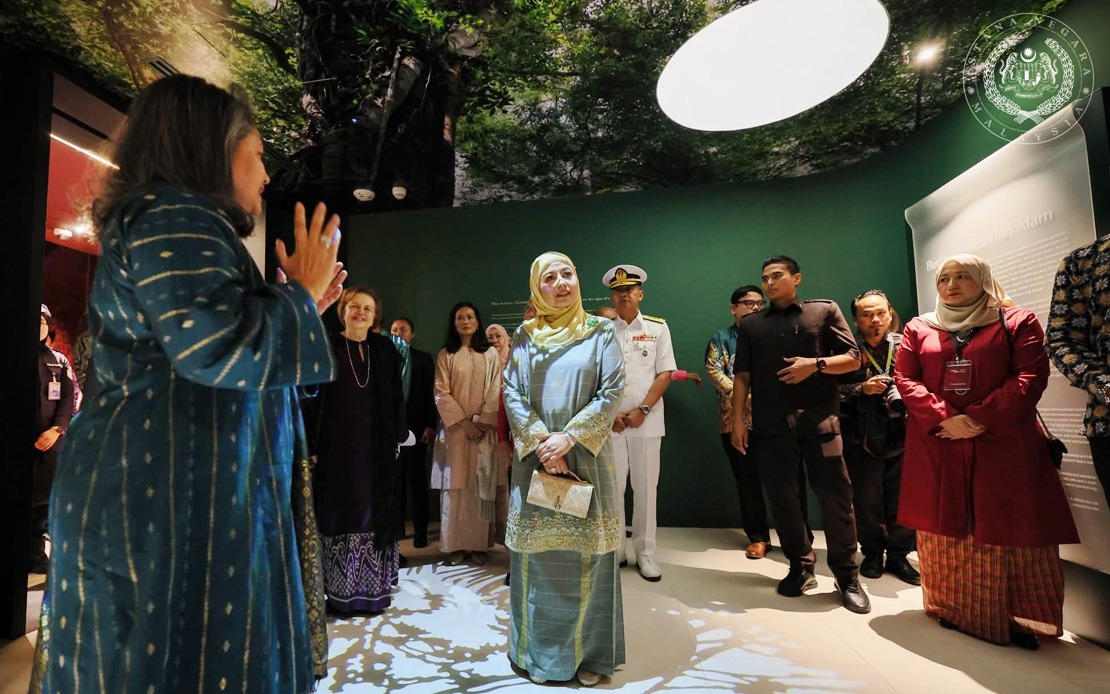
Her Majesty Raja Zarith Sofiah, Queen of Malaysia, officially inaugurated the Merdeka Textile Museum at the Menara Merdeka Maybank compound in Kuala Lumpur on August 21, marking a significant milestone in the country's efforts to safeguard its rich cultural patrimony for future generations.
The museum has been developed by PNB Merdeka Ventures Sdn Bhd, the wholly-owned subsidiary arm of Permodalan Nasional Berhad, with an explicit mandate to honour and showcase the textile traditions that define Malaysian and broader Malay-world identity. The institution represents a contemporary approach to heritage preservation, blending traditional craftsmanship narratives with immersive cultural programming designed to engage both domestic and international audiences.
During the opening ceremony, the Queen articulated a vision that transcends mere preservation, emphasising that every nation's heritage requires active stewardship and thoughtful transmission across generations. She positioned textiles not as static artefacts but as living expressions of societal values and communal identity, fundamentally shaped by the artistic choices and technical mastery of craftspeople across centuries.
The Queen further underscored the educational potential of the museum as a destination for knowledge development and cultural exploration, hoping it would inspire Malaysian women—both contemporary and future—to engage meaningfully with their ancestral traditions. Her remarks, shared via Sultan Ibrahim Sultan Iskandar's social media channels, also addressed concerns about cultural erosion, warning against the passive disappearance of heritage through neglect or indifference.
The museum's collection forms around the personal textile assemblage of the late Sharifah Azah Syed Mohammed Alsagoff, commonly known as Azah Aziz, whose distinguished family connections underscore the institution's cultural credentials. Azah Aziz, the wife of the late Prof Diraja Ungku Abdul Aziz Abdul Hamid and mother of Tan Sri Dr Ungku Zeti Akhtar Aziz, the former governor of Bank Negara Malaysia, curated a remarkable collection reflecting decades of engagement with Malaysia's textile traditions.
The donated collection encompasses 240 individually catalogued garments and 69 pieces of traditional jewellery, including intricately woven songket sarongs, elaborately embroidered Limar Baju Kurung, and ornate Tekat Emas pieces. These objects represent not merely fashion statements but embodiments of technical excellence, cultural symbolism, and the aesthetic preferences that characterised different periods of Malaysian social history. The concentration of high-quality exemplars within a single collection provides researchers and visitors with comparative material for understanding stylistic evolution and regional variations.
Architecturally and functionally, the Merdeka Textile Museum comprises eight distinct galleries designed to facilitate thematic exploration of Malaysia's textile landscape. The facility transcends conventional exhibition spaces through the incorporation of advanced conservation infrastructure, including a dedicated laboratory where specialists can undertake restoration and preservation work on vulnerable textiles.
The museum also incorporates a fabric library that permits scholars and enthusiasts to examine original materials directly, alongside a comprehensive textile knowledge centre serving as a research hub. This combination of public-facing galleries and specialist facilities positions the institution as both a cultural attraction and a serious research resource, capable of supporting academic investigations into textile history, conservation science, and material culture studies.
The inaugural event drew prominent government representatives, including Hannah Yeoh, the Minister in the Prime Minister's Department overseeing Federal Territories, and Tan Sri Shamsul Azri Abu Bakar, the Chief Secretary to the Government. Raja Tan Sri Arshad Raja Tun Uda, chairman of the PNB group, also attended, reflecting the institutional significance accorded to the museum's establishment within Malaysia's cultural infrastructure.
For Malaysian audiences and regional observers, the museum's opening represents a strategic investment in cultural tourism and educational capacity. As Southeast Asian nations increasingly recognise the economic and soft-power dimensions of heritage preservation, institutions like the Merdeka Textile Museum demonstrate commitment to maintaining distinctive cultural narratives in an era of globalisation.
The emphasis on women's engagement—both as practitioners and as audiences—addresses historical gaps in textile historiography, where female artisans' contributions frequently remain underdocumented. By centering Azah Aziz's legacy and encouraging young Malaysian women to explore textile traditions, the museum challenges conventional narratives and opens pathways for expanded scholarly and creative engagement with these crafts.
Looking forward, the institution's combination of rigorous conservation, interactive programming, and research facilities positions it to influence how Malaysia's textile heritage is understood domestically and perceived internationally. As tourism recovers and cultural institutions strengthen post-pandemic, the Merdeka Textile Museum offers visitors and researchers substantive engagement with the technical mastery, aesthetic sophistication, and cultural significance embedded within traditional Malaysian textiles.

