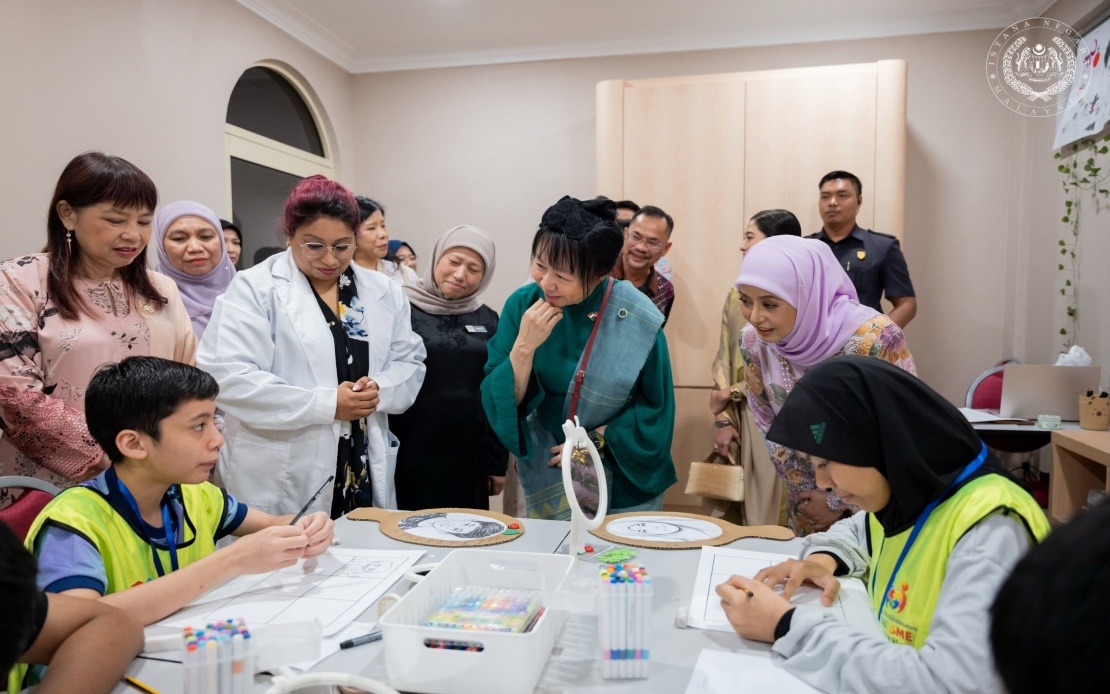
Her Majesty Raja Zarith Sofiah, Queen of Malaysia, joined Singapore First Lady Jane Ittogi Shanmugaratnam in visiting the Bangi Autism Service Centre near Kuala Lumpur, marking a significant moment of diplomatic engagement and social welfare cooperation between the two neighbouring nations. The visit took place as part of the ongoing state visit of Singapore President Tharman Shanmugaratnam to Malaysia, which commenced on July 13. The occasion brought together senior figures from both countries and Malaysian government representatives focused on social development and disability support.
The distinguished guests were warmly received at the centre by Her Majesty and Tunku Tun Aminah Sultan Ibrahim. Among those welcoming the Singapore First Lady were several senior Malaysian officials, including Datuk Seri Dr Wan Azizah Wan Ismail, wife of the Prime Minister; Women, Family and Community Development Minister Datuk Seri Nancy Shukri; Deputy Minister Lim Hui Ying; as well as senior bureaucrats from the relevant ministry and the Social Welfare Department. This high-level turnout reflected the significance Malaysia attaches to both the diplomatic visit and the broader agenda of advancing autism support infrastructure.
During their time at the facility, Her Majesty Raja Zarith Sofiah and Jane Ittogi conducted a comprehensive tour of the centre's operational spaces. They visited the Activities of Daily Living (ADL) Room, where individuals with autism receive training in essential self-care and independence skills, the Occupational Therapy Room where therapeutic interventions are conducted, and the gymnasium where physical activity and recreation programmes support holistic development. These visits allowed the dignitaries to observe firsthand how the centre integrates multiple therapeutic disciplines to provide comprehensive support tailored to the needs of persons with autism spectrum disorder.
Minister Nancy Shukri used the occasion to highlight the scale of autism in Malaysia's population. She revealed that 93,199 individuals with autism had been formally registered with the Social Welfare Department as of June of the previous year, underscoring the substantial size of the community requiring specialised services and support. This figure serves as a crucial metric for policymakers assessing resource allocation and programme development needs across the country.
The minister further noted that this registered figure is likely to grow significantly in the coming years as public consciousness around autism spectrum disorder increases and more individuals gain access to screening and diagnostic services. This projection reflects Malaysia's evolving approach to neurodevelopmental conditions, moving away from underdiagnosis and towards earlier identification and intervention. Enhanced awareness campaigns and improved integration of diagnostic services within the public health system should contribute to more accurate prevalence data, though this also places demands on service providers to expand capacity accordingly.
The Bangi Autism Service Centre itself represents a modern model of social service delivery in Malaysia, operating through an innovative partnership between government agencies and the non-governmental sector. The centre functions via strategic collaboration between the National Autism Society of Malaysia (NASOM) and the Damansara Damai Community-Based Rehabilitation Centre (PDK). This public-private partnership approach has become increasingly important in Malaysian social welfare, allowing scarce government resources to be stretched further while leveraging the specialist expertise and community connections that NGOs possess.
For Singapore, the visit provided an opportunity to engage with Malaysian disability support infrastructure and potentially exchange insights regarding service delivery models. Singapore's own approach to social welfare and disability services has evolved substantially over recent decades, and such diplomatic visits frequently facilitate knowledge transfer and best practice sharing between neighbouring countries. The presence of Jane Ittogi, as Singapore's First Lady, signals the high priority the city-state places on understanding Malaysia's social development programmes.
The timing of this visit during President Tharman Shanmugaratnam's state visit strengthens the bilateral relationship through engagement beyond traditional political and economic channels. While state visits typically focus on diplomatic protocols and trade discussions, the inclusion of social welfare facility tours demonstrates a commitment to understanding each nation's approaches to societal challenges. For Malaysia, showcasing its autism centre and discussing support infrastructure with Singapore's leadership helps position the country's efforts within the regional context and opens doors for potential collaboration on shared challenges in disability services and social inclusion.
The visit concluded around 11:30 am, though its implications extend beyond this brief timeframe. Such high-level attention to autism support services helps elevate the profile of persons with autism within national discourse and signals government commitment to disability inclusion. This visibility can have tangible benefits, including increased public understanding, potential resource mobilisation, and encouragement of private sector engagement in supporting services. For families managing autism in Malaysia, the symbolic importance of royal and ministerial involvement in visiting specialised centres cannot be understated, as it validates their concerns and reinforces the legitimacy of their advocacy efforts.

