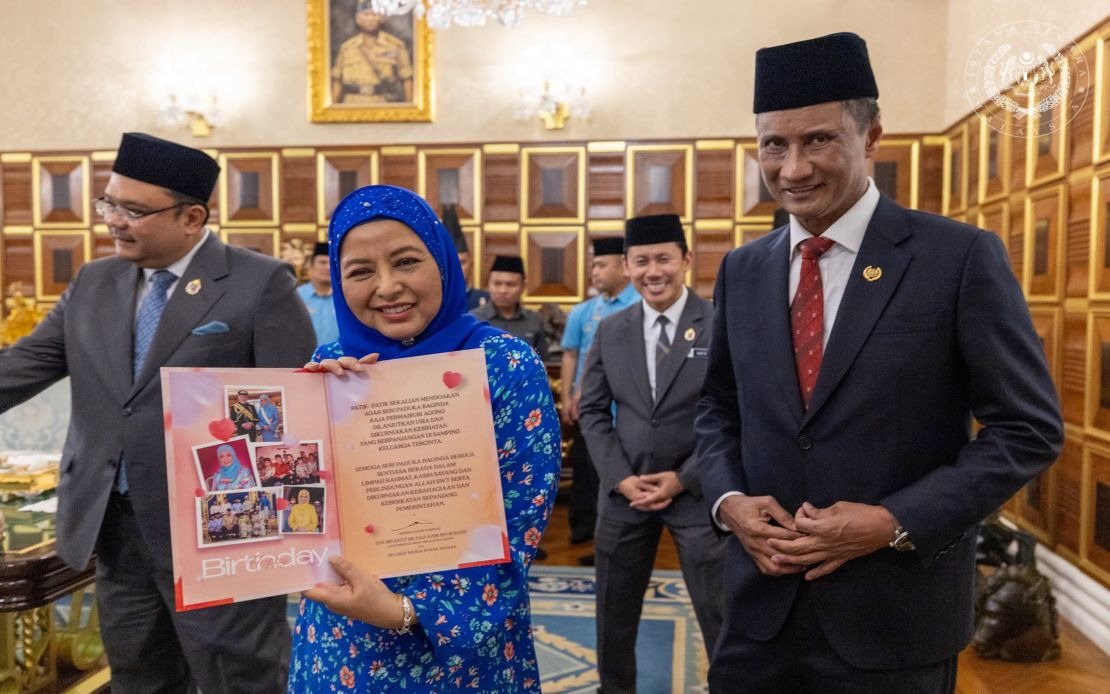
Her Majesty Raja Zarith Sofiah, Queen of Malaysia, was honoured with a courtesy visit from senior palace officials at Istana Bukit Serene in Johor on Wednesday in celebration of her birthday. The delegation, led by Istana Negara Comptroller of the Royal Household Tan Sri Dr Azmi Rohani and accompanied by Datuk Paduka Maharaja Lela (Grand Chamberlain) Datuk Azuan Effendy Zairakithnaini, delivered formal greetings and well-wishes on behalf of the palace administration and its entire workforce.
The visit was confirmed through an official statement posted on the Facebook page of Sultan Ibrahim Sultan Iskandar, reflecting the significant ceremonial protocols that characterise such royal engagements within Malaysia's constitutional monarchy framework. Such courtesy calls form an important part of the formal traditions at Istana Negara, reinforcing the hierarchical and ceremonial bonds between the palace administration and the institution of the monarchy. The presence of the Comptroller and Grand Chamberlain underscores the weight given to acknowledging important occasions in the royal calendar.
Also joining the delegation was Puan Sri Dr Noor Azizah Abdul Latif, the wife of Tan Sri Dr Azmi Rohani, further emphasising the formal and personal dimensions of the visit. The inclusion of family members in such official occasions reflects how palace protocol often intertwines ceremonial duty with familial respect, a characteristic feature of Malaysia's royal traditions. This balanced representation—combining official roles with personal presence—demonstrates the cultural nuances embedded within Istana Negara's institutional practices.
During the meeting, Her Majesty was presented with symbolic gifts marking the occasion, including a specially prepared cake and yellow glutinous rice, both items of cultural and ceremonial significance in Malaysian traditions. These offerings, prepared by the senior management and palace staff, carried collective well-wishes from the entire Istana Negara workforce. The presentation of food items, particularly yellow glutinous rice, carries deeper cultural resonance in Malaysian society, often associated with auspicious occasions and shared celebration across communities.
Tan Sri Dr Azmi Rohani formally conveyed collective prayers and heartfelt wishes from all levels of Istana Negara personnel, emphasising the Queen's continued good health, well-being, and happiness. Such articulated wishes represent more than mere courtesy; they signify the palace's institutional investment in the health and welfare of the royal family, which remains central to Malaysia's system of governance. The explicit mention of these sentiments in official records underscores their formal importance within palace administration.
The timing of this visit during Queen Raja Zarith Sofiah's birthday reflects the structured ceremonial calendar that governs interactions within Malaysia's royal institutions. These occasions provide opportunities for the palace bureaucracy to formally acknowledge and celebrate members of the royal household, reinforcing organisational cohesion and institutional loyalty. For a monarchy operating within a constitutional framework, such regularised ceremonies serve practical functions in maintaining administrative morale and demonstrating hierarchical respect.
Queen Raja Zarith Sofiah's position as consort to the Yang di-Pertuan Agong carries significant ceremonial and symbolic weight within Malaysian society. While the Yang di-Pertuan Agong holds executive and ceremonial authority under the Federal Constitution, the Queen plays a crucial representational role in state functions, charitable endeavours, and cultural promotion. Birthday observances at the palace thus carry implications beyond personal celebration, touching on broader questions of royal visibility and institutional continuity.
The location of this courtesy call at Istana Bukit Serene in Johor merits particular note, as Johor holds special historical and constitutional significance as the home state of the reigning monarchs. The palace in Johor serves not merely as a royal residence but as a seat of historical importance within Malaysia's federal system. Official visits and celebrations conducted at this venue carry added symbolic weight, connecting contemporary royal practices to Johor's longstanding role in the sultanate system.
From an institutional perspective, such coordinated courtesy calls reflect the organisational discipline and ceremonial precision that characterises modern royal administration in Malaysia. The documented participation of specific officials—identified by their formal titles and roles—demonstrates how palace protocols embed individual action within broader institutional frameworks. These records serve archival functions, documenting the rhythms of royal life and administrative practice for historical posterity.
The public announcement of this visit through official social media channels reflects contemporary adjustments to royal communication practices. While maintaining traditional ceremonial protocols, Malaysia's royal institutions have embraced digital platforms to share official information and strengthen public connection to the monarchy. This blend of traditional courtesy calls and modern communication strategies reveals how constitutional monarchies adapt institutional practices while preserving ceremonial substance.

