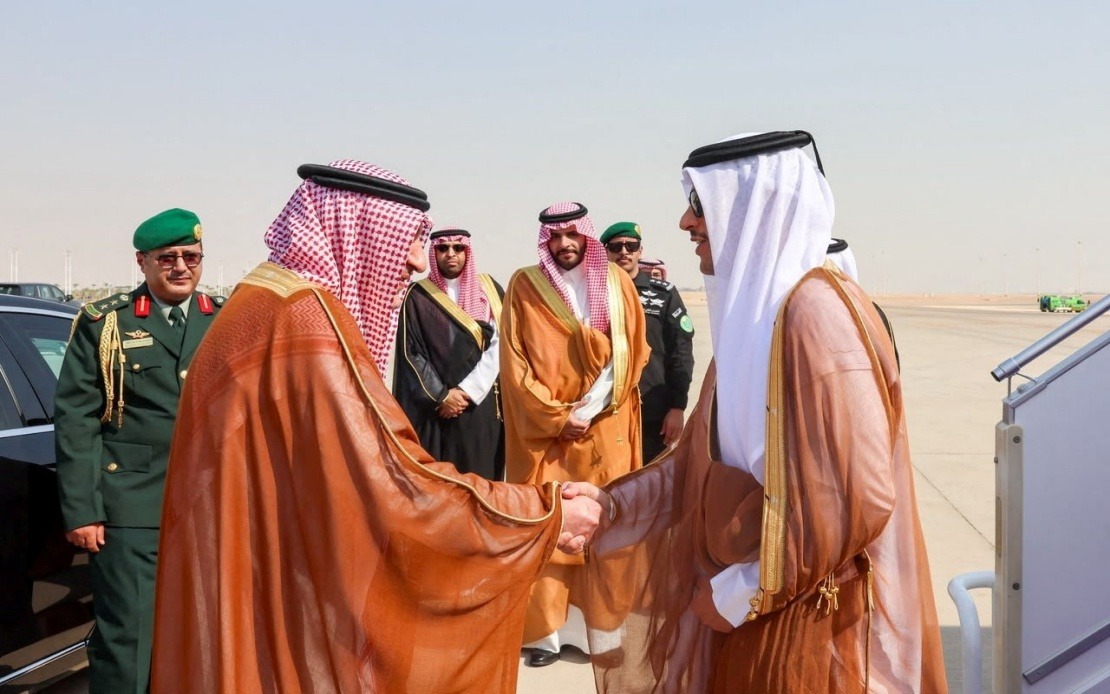
Qatar's Prime Minister and Foreign Minister Sheikh Mohammed bin Abdulrahman bin Jassim Al Thani travelled to Riyadh this week for high-level discussions centred on defusing escalating tensions across the Middle East and reinforcing bilateral cooperation between the two Gulf neighbours. The visit underscores renewed diplomatic momentum in a region grappling with complex geopolitical challenges that threaten stability and international commerce.
Upon arrival in the Saudi capital, Sheikh Mohammed was received by Saudi Deputy Foreign Minister Waleed bin Abdulkarim Al-Khereiji, signalling the formal nature of the engagement. His itinerary included substantive talks with Saudi Foreign Minister Faisal bin Farhan, during which both sides examined the trajectory of their bilateral relationship alongside broader developments affecting the Arabian Peninsula and surrounding waters. The discussions reflected a shared commitment to advancing peaceful resolution of disputes through established diplomatic frameworks rather than confrontational approaches.
Central to the agenda was a reaffirmation of both nations' dedication to settling disagreements via dialogue and negotiation. This messaging carries particular weight given the volatile environment created by escalating hostilities between Iran and the United States—a dynamic that directly influences Saudi Arabia's regional calculus and security posture. As a traditional American ally with extensive defence partnerships and economic interests, Saudi Arabia faces competing pressures to maintain stability while managing its relationship with neighbouring Iran and engaging with other regional actors.
The two foreign ministers emphasised the critical importance of coordinating approaches between regional powers and international stakeholders to create conditions favouring dialogue over escalation. This coordination framework reflects recognition that unilateral action by any single nation risks triggering broader conflict that would harm all parties involved. By aligning their diplomatic messages, Qatar and Saudi Arabia signal to other regional actors and international observers their preference for inclusive, negotiated solutions.
Maritime security emerged as a significant discussion point, with both officials stressing the necessity of protecting shipping lanes in the Arabian Gulf and Red Sea. These waterways serve as crucial conduits for global energy supplies and international trade, with disruptions affecting economies far beyond the Middle East—including Southeast Asia's heavy dependence on Gulf oil exports and Asian shipping routes. Ensuring unimpeded maritime passage therefore constitutes not merely a regional priority but a matter of genuine international concern, particularly for trade-dependent economies throughout Asia.
The focus on safeguarding commercial shipping reflects genuine vulnerabilities in contemporary Middle Eastern geopolitics. Previous incidents involving tanker attacks and naval confrontations have demonstrated how regional tensions can rapidly translate into threats to international commerce. For Malaysian policymakers and businesses with substantial exposure to Middle Eastern markets and energy supplies, such assurances carry tangible economic implications. Disruption to Gulf shipping would inevitably ripple through regional supply chains and energy pricing.
Qatar's diplomatic initiative through this visit also reflects its distinct position within Gulf diplomacy. Despite periodic tensions with neighbouring states, Qatar has maintained engagement channels with multiple regional powers and international actors, positioning itself as a potential mediator in various disputes. The Qatari premier's dual role as both head of government and foreign minister underscores the significance attached to these discussions within Doha's strategic calculations.
Saudi Arabia's receptiveness to this engagement, demonstrated through official welcome protocols and substantive ministerial discussions, suggests openness to collaborative approaches for managing regional crises. The kingdom's regional influence, bolstered by its position as the largest Arab economy and oil producer, gives considerable weight to its diplomatic positioning. When Riyadh signals commitment to dialogue-based solutions, it sends important signals throughout the region regarding preferred pathways for resolving disputes.
The absence of announced details regarding visit duration or specific agreements may indicate either ongoing negotiations or strategic ambiguity intended to avoid constraining future flexibility. In regional diplomacy, public announcements sometimes lag behind substantive progress, particularly when sensitive issues involving third parties remain under discussion. The emphasis on both sides' commitment to de-escalation suggests the discussions carried genuine substance rather than purely ceremonial value.
For Southeast Asian observers, this diplomatic engagement offers modest encouragement regarding regional stability. While the Middle East remains distant geographically, its strategic importance to Asian economies through energy supplies, maritime routes, and investment flows makes regional peace a legitimate Malaysian and ASEAN concern. Initiatives promoting dialogue and de-escalation, when genuine, contribute to the predictability and security that underpin international commerce and regional prosperity.
The visit also illustrates how smaller Gulf states like Qatar can exercise diplomatic influence disproportionate to their size through strategic positioning and maintaining relationships across competing regional alignments. This approach holds potential lessons for Southeast Asian diplomacy, particularly regarding how smaller nations navigate great power competition and regional tensions while advancing their own security and economic interests.

