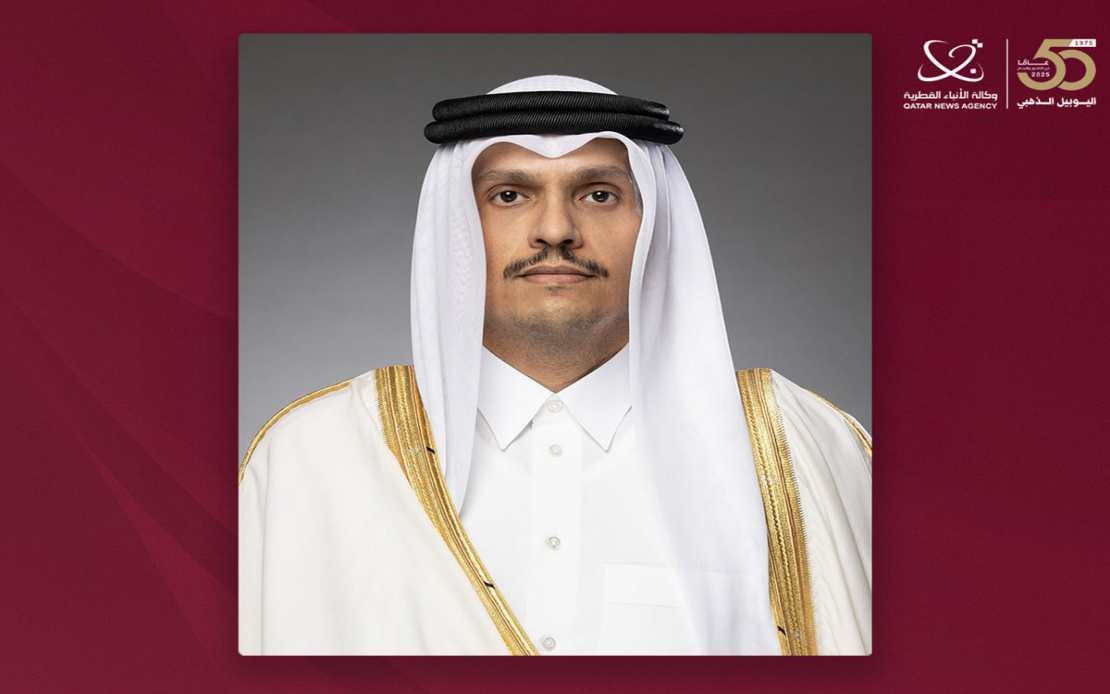
Qatar's top diplomat is stepping into the increasingly volatile standoff between Washington and Tehran, with Prime Minister and Foreign Minister Sheikh Mohammed bin Abdulrahman bin Jassim Al Thani scheduled to arrive in the Iranian capital on Thursday for high-level discussions aimed at defusing regional tensions. The visit underscores Doha's role as a critical intermediary in one of the Middle East's most fraught geopolitical relationships, even as the military posturing between the superpowers and their regional allies continues to escalate.
According to Qatar's Foreign Ministry spokesman Majed Al Ansari, Sheikh Mohammed will engage with multiple Iranian officials during the trip to explore pathways for reducing hostilities and establishing a framework conducive to meaningful negotiations. The timing of this mission is particularly significant, coming as the broader Middle Eastern security architecture faces unprecedented strain from successive waves of military confrontation that have shaken regional stability over recent months.
Central to the discussions will be the contentious issue of maritime passage through the Strait of Hormuz, one of the world's most critical energy chokepoints through which roughly one-third of global seaborne petroleum transits daily. Qatar's diplomatic team aims to secure Iranian commitment to restoring normal shipping conditions and freedom of navigation protocols to the baseline that prevailed before the crisis intensified on February 28. This objective reflects growing international concern about potential economic disruption should the strait face further restrictions or military interference.
The visit marks a notable milestone—it is Sheikh Mohammed's first journey to Iran since the acute phase of US-Iran hostilities erupted in late February with American and Israeli military strikes targeting Iranian positions. The intervening months have witnessed a dangerous cycle of escalation, with each side responding to the other's military actions, thereby raising the stakes and complicating any path toward resolution. The fact that Qatar's premier is now making this journey suggests a calculated effort to break the momentum of tit-for-tat military exchanges before they spiral further out of control.
Qatar and Pakistan have emerged as crucial mediators in this complex equation, roles they have exercised with varying degrees of success. In June, these countries helped facilitate a memorandum of understanding between Washington and Tehran, representing a rare moment of diplomatic progress in an otherwise confrontational relationship. However, the implementation of that agreement has stalled significantly, with disagreements over the Strait of Hormuz and other maritime issues creating obstacles to moving forward on more substantive arrangements.
For Malaysian and Southeast Asian observers, this diplomatic effort carries immediate relevance. Any military escalation in the Persian Gulf directly threatens the region's economic wellbeing, given Malaysia's substantial dependence on Middle Eastern oil imports and its significant maritime trade routes that depend on stable conditions throughout the Indian Ocean and beyond. Furthermore, instability in the Gulf affects global energy prices and supply chains that underpin the entire region's economic growth and development prospects.
The recent pattern of military escalation has proven alarming to regional powers and international stakeholders alike. In late August, the United States resumed military operations against Iranian targets, prompting Tehran to respond with strikes on American military installations located across several Arab states that maintain security partnerships with Washington. Each cycle of attack and counter-attack hardens positions and makes diplomatic off-ramps increasingly difficult to navigate, even for experienced mediators like Qatar.
Qatar's diplomatic positioning reflects both its geographic proximity to the conflict zone and its established relationships with all major parties involved. Doha has invested significant political capital in developing channels of communication with both Washington and Tehran, a balancing act that requires considerable sophistication and strategic patience. By sending its premier rather than a junior envoy, Qatar signals the seriousness with which it views the current crisis and its commitment to preventing further deterioration.
The challenge ahead for Sheikh Mohammed will be substantial. He must persuade Iranian leadership that a genuine commitment to de-escalation serves Tehran's strategic interests better than continued military posturing, while simultaneously demonstrating to American interlocutors that Iranian concerns about freedom of navigation and regional security merit substantive consideration. This delicate negotiating position requires threading a needle between two sides whose strategic objectives remain fundamentally at odds on multiple fronts.
Sector observers in Southeast Asia will be watching closely to see whether this renewed diplomatic push can gain traction where previous efforts have faltered. The window for preventing further military escalation may be narrowing, and the cost of failure—in terms of regional stability, energy security, and humanitarian consequences—grows by the day.

