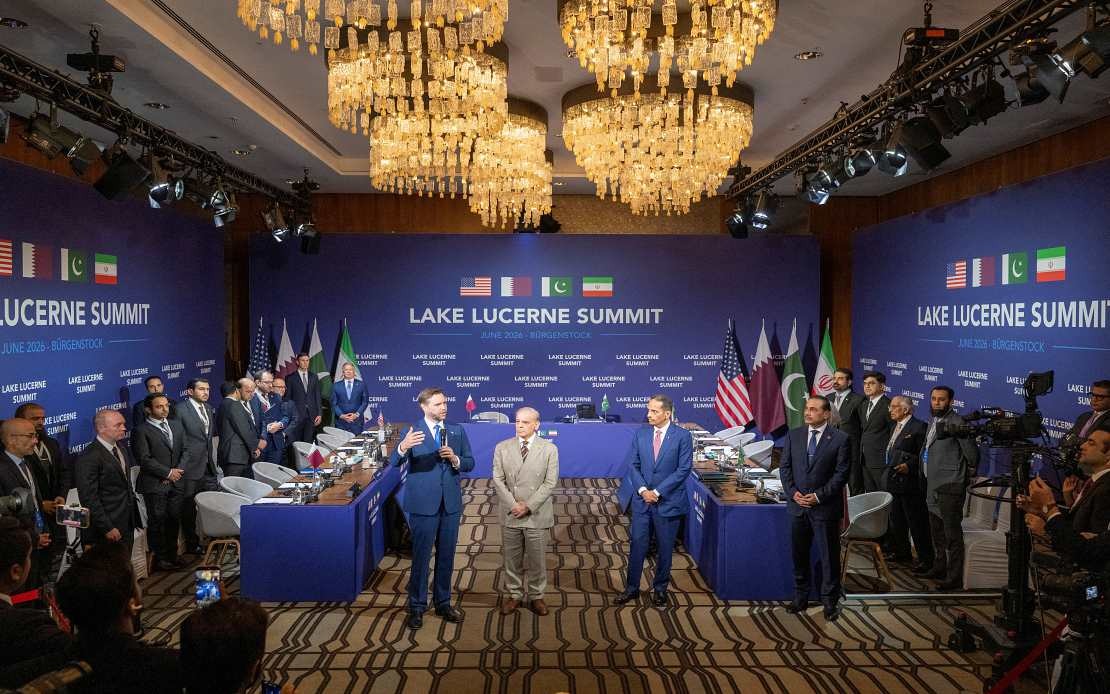
Diplomatic efforts to resolve tensions between the United States and Iran have entered a new phase following constructive discussions at the Lake Lucerne Summit in Switzerland, with Qatar and Pakistan announcing encouraging breakthroughs on Monday. The first round of high-level talks concluded with both parties agreeing to maintain momentum through newly established channels of communication and structured negotiating frameworks, signalling a shift toward sustained engagement on the nuclear programme and broader regional concerns.
The joint statement issued by the two mediating nations emphasised that the opening day of talks unfolded in a positive and constructive atmosphere, laying groundwork for continued technical negotiations. This tone reflects a deliberate effort to build confidence between Washington and Tehran after months of heightened tensions. The establishment of formal mechanisms to support technical discussions represents a concrete institutional achievement, moving beyond general statements of intent to create operational structures that can sustain dialogue even as political negotiations continue at higher levels.
Central to the emerging framework is a high-level supervisory committee tasked with overseeing the political dimensions of the entire mediation process. This committee will receive regular briefings from lead negotiators and monitor the work of specialised working groups focusing on distinct but interconnected issues: Iran's nuclear programme, the architecture and scope of sanctions relief, and mechanisms for resolving disputes that may arise during implementation. The compartmentalisation of these issues into dedicated working groups reflects lessons learned from previous negotiating efforts, allowing technical specialists to advance their respective agendas without allowing disagreements in one domain to derail progress elsewhere.
The negotiating parties have adopted a 60-day roadmap intended to culminate in a comprehensive final agreement. This timeframe represents a significant commitment, suggesting both sides perceive genuine opportunity for resolution within a defined period. The establishment of such a timeline creates internal pressure for decision-making and demonstrates that the talks are not merely exploratory but oriented toward binding outcomes. For regional observers, including Southeast Asian nations concerned about maritime security and stable energy markets, the prospect of concluded negotiations within two months offers hope for reduced tensions affecting global commerce and geopolitical stability.
A particularly consequential development involves the establishment of a dedicated communication channel between the United States and Iran for the duration specified in the Memorandum of Understanding signed the previous week. This channel has been created with explicit attention to preventing incidents and misunderstandings that could derail diplomatic progress or trigger unintended escalation. Given the Strait of Hormuz's critical importance as a conduit for approximately one-third of globally traded petroleum, the agreement to ensure safe passage for commercial vessels through this waterway carries implications far beyond bilateral US-Iran relations. For Malaysia and other trading nations dependent on uninterrupted energy supplies and maritime transit, such assurances directly affect economic stability and shipping costs.
The role of Qatar and Pakistan as mediators reflects the complex architecture of Middle Eastern diplomacy, where traditional rivalries coexist with shared interests in regional stability. Both nations have invested substantial political capital in bringing Washington and Tehran to the negotiating table, positioning themselves as credible interlocutors capable of understanding the concerns and constraints facing each side. Qatar's hosting of the talks at Lake Lucerne, and Pakistan's involvement in announcing outcomes, underscores the importance of trusted intermediaries in high-stakes negotiations where direct bilateral talks have historically proven contentious.
The nuclear programme emerges as a central focus of the working groups, reflecting decades of international concern about Iran's atomic capabilities and intentions. However, the parallel attention to sanctions and implementation mechanisms indicates recognition that successful resolution requires addressing not merely technical nuclear questions but the broader economic and political architecture surrounding those questions. Sanctions relief represents a powerful incentive for Iranian compliance, while robust implementation monitoring addresses Western concerns about verification and adherence to commitments.
For Malaysia's position within the broader Asian and international order, these developments carry several implications. A reduction in US-Iran tensions would diminish the risk of regional conflict that could disrupt supply chains, increase energy prices, or draw major powers into confrontation affecting Asian geopolitical stability. The emphasis on structured negotiating mechanisms and dispute resolution procedures demonstrates that even deeply antagonistic parties can construct frameworks enabling productive dialogue, a principle with relevance to multiple regional disputes across Asia.
The next phase will test whether the momentum established at Lake Lucerne can translate into substantive agreements on the most contentious issues. The 60-day timeline creates a natural checkpoint for assessing whether technical working groups are making genuine progress or simply marking time. Success will require compromises from both sides on matters of fundamental importance to their respective governments and constituencies, and the mediation role played by Qatar and Pakistan will likely intensify as negotiators approach difficult trade-offs involving nuclear capabilities, sanctions architecture, and verification protocols.

%22%2F%3E%3C%2Fpattern%3E%3C%2Fdefs%3E%3Crect%20width%3D%22100%25%22%20height%3D%22100%25%22%20fill%3D%22url(%23ph3sqpyg)%22%2F%3E%3Crect%20width%3D%22100%25%22%20height%3D%22100%25%22%20fill%3D%22url(%23ph3sqpyp)%22%2F%3E%3Ctext%20x%3D%2250%25%22%20y%3D%2250%25%22%20text-anchor%3D%22middle%22%20dominant-baseline%3D%22central%22%20fill%3D%22rgba(255%2C255%2C255%2C0.95)%22%20font-family%3D%22Georgia%2C%20'Times%20New%20Roman'%2C%20serif%22%20font-weight%3D%22700%22%20font-size%3D%22320%22%20letter-spacing%3D%22-0.02em%22%3EPM%3C%2Ftext%3E%3C%2Fsvg%3E)
%22%2F%3E%3C%2Fpattern%3E%3C%2Fdefs%3E%3Crect%20width%3D%22100%25%22%20height%3D%22100%25%22%20fill%3D%22url(%23ph3l4smg)%22%2F%3E%3Crect%20width%3D%22100%25%22%20height%3D%22100%25%22%20fill%3D%22url(%23ph3l4smp)%22%2F%3E%3Ctext%20x%3D%2250%25%22%20y%3D%2250%25%22%20text-anchor%3D%22middle%22%20dominant-baseline%3D%22central%22%20fill%3D%22rgba(255%2C255%2C255%2C0.95)%22%20font-family%3D%22Georgia%2C%20'Times%20New%20Roman'%2C%20serif%22%20font-weight%3D%22700%22%20font-size%3D%22194%22%20letter-spacing%3D%22-0.02em%22%3EBersatu%3C%2Ftext%3E%3C%2Fsvg%3E)