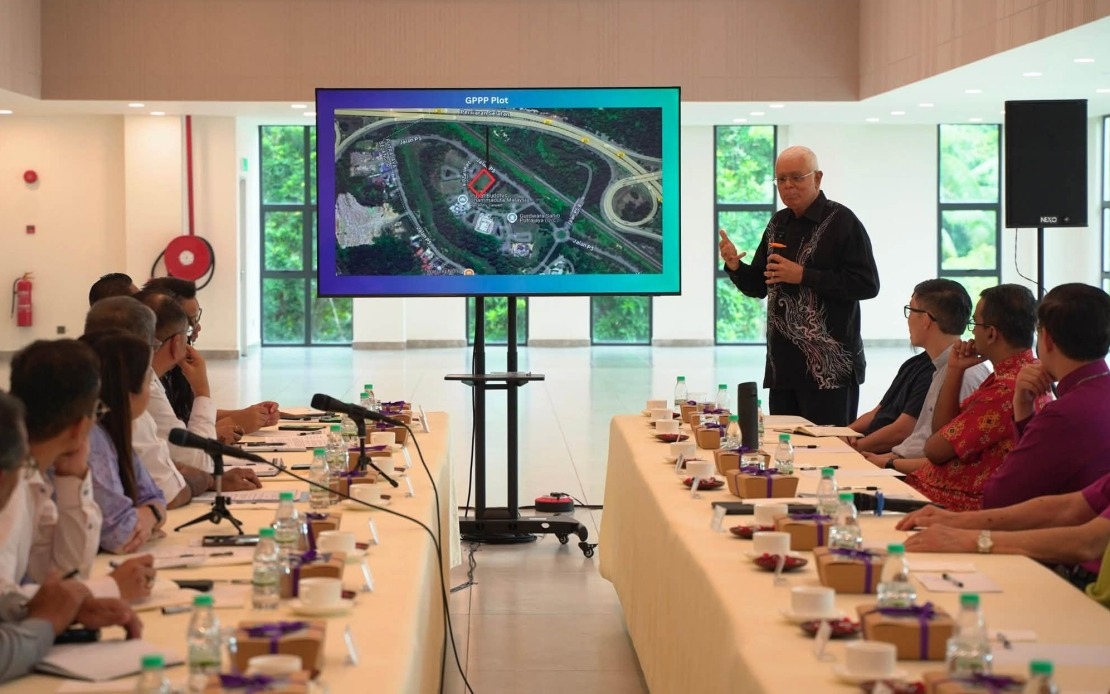
The federal government has long-term plans to transform Putrajaya's Precinct 20 into a dedicated interfaith community hub, with designated sites for various non-Muslim places of worship stretching back more than a decade. National Unity Minister Datuk Aaron Ago Dagang revealed that the strategic allocation of land parcels in this precinct commenced in 2013, demonstrating sustained governmental commitment to accommodating Malaysia's diverse religious communities within the capital's master-planned landscape.
This deliberate urban planning approach carries significant symbolic weight in Malaysia's ongoing efforts to nurture religious pluralism and social cohesion. By institutionalising space allocation across multiple faiths within a single, coherent precinct, federal planners have moved beyond ad hoc accommodation to structured, equitable provision. The initiative signals recognition that religious diversity forms a core dimension of national identity, meriting dedicated infrastructure and intentional design rather than reactive responses to community requests.
Aaron emphasised that the Precinct 20 development aligns with Policy 17 of the Putrajaya Structure Plan 2050, which specifically targets the creation of an inclusive and compassionate community. This policy framework elevates religious accommodation from peripheral concern to central urban development principle, embedding interfaith considerations into long-term governance architecture. The integration reflects growing consensus among Malaysian planners that harmonious pluralism requires proactive institutional design, not merely tolerance of diversity after fact.
The minister's statement also connected the initiative to the Harmoni MADANI framework, introduced by the National Unity Ministry in 2024. This contemporary initiative promotes an ethos of mutual understanding, respect, acceptance, and celebration among Malaysia's multireligious population. By explicitly linking Precinct 20 development to this broader national narrative, Aaron positioned the physical infrastructure as concrete expression of abstract principles, translating policy rhetoric into tangible urban form that communities can inhabit and experience daily.
Currently, Precinct 20 hosts the newly inaugurated Prince of Peace Church and the Dhammaduta Malaysia Buddhist Centre, which has operated since 2023. These operating facilities demonstrate that planning frameworks have translated into functioning worship spaces accessible to diverse faith communities. The Prince of Peace Church's establishment in this government-designated precinct marks a notable development in Malaysia's Christian communities, while the Buddhist centre's presence underscores the physical manifestation of long-term interfaith accommodation principles.
Beyond these established sites, several faith communities have projects in advanced development stages within Precinct 20. The Gurdwara Sahib Putrajaya, serving the Sikh community, represents continued expansion of the precinct's interfaith character. Similarly, construction of the Dewi Sri Lalithaambigai Alayam will serve Hindu worshippers, while the San Qing Taoist Temple addresses the spiritual needs of Malaysia's Taoist population. These concurrent developments suggest organic growth of the interfaith hub rather than mere ceremonial gestures, with multiple communities simultaneously investing in permanent structures.
The planned Roman Catholic church further diversifies Precinct 20's religious landscape, ensuring that Christian denominations beyond evangelical congregations maintain dedicated spaces for worship and community gathering. This multi-denominational Christian presence, alongside Buddhist, Sikh, Hindu, and Taoist facilities, creates unprecedented religious plurality within a single planned district of Malaysia's federal territory.
For Malaysian observers, Precinct 20's development carries broader implications for how the nation approaches religious pluralism and urban inclusion. The precinct functions as live laboratory demonstrating whether deliberately planned interfaith spaces can foster mutual understanding and reduce tensions compared to more haphazard approaches. Its success or challenges will likely inform future federal territory planning and potentially influence how other Malaysian jurisdictions approach religious facility allocation.
The initiative also reflects shifting perspectives within Malaysia's federal administration regarding religious diversity as national asset rather than challenge. Rather than viewing multiple faith communities as requiring separate, isolated accommodation, planners have conceived Precinct 20 as a place where shared proximity, interaction, and dialogue can strengthen social fabric. This approach recognises that interfaith familiarity and cooperation require infrastructure enabling regular contact and mutual exposure.
From a Southeast Asian perspective, Malaysia's deliberate interfaith planning in Putrajaya offers instructive model for neighbouring nations managing religious pluralism. While regional countries often struggle with communal tensions and inadequate institutional frameworks for religious coexistence, Malaysia's sustained commitment to designating and developing interfaith spaces demonstrates alternative possibilities. The Precinct 20 model suggests that inclusive urban design, coupled with coherent national policies around religious accommodation, can tangibly advance community harmony.
The involvement of multiple government ministries in Precinct 20's development underscores institutional commitment extending beyond rhetoric. National Unity Minister Aaron Ago Dagang's collaborative engagement with Minister Hannah Yeoh of the Prime Minister's Department (Federal Territories) indicates that religious accommodation has secured high-level political priority. Such ministerial engagement lends authority to interfaith initiatives and signals that religious harmony receives equivalent attention to economic development or infrastructure expansion.
Moving forward, Precinct 20's trajectory will partly depend on how successfully its diverse faith communities establish patterns of meaningful interaction beyond mere spatial proximity. While designated sites and functioning worship facilities establish necessary preconditions, sustained interfaith dialogue, cultural exchange programmes, and collaborative community projects will determine whether the precinct achieves its aspirational goal of becoming a beacon for Malaysian religious harmony and mutual understanding.

