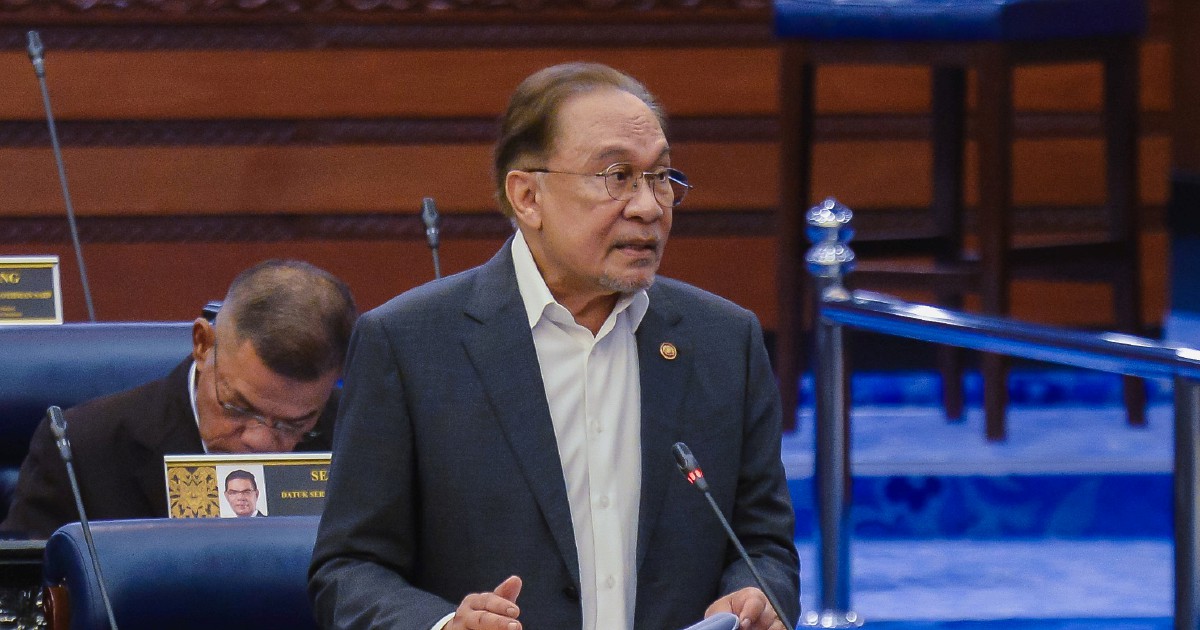
Prime Minister Datuk Seri Anwar Ibrahim has confirmed that the federal government is actively negotiating with Sarawak to elevate the state's special grant under the Malaysia Agreement 1963 (MA63), marking a significant development in the government's approach to addressing long-standing constitutional obligations to the East Malaysian state.
This announcement represents an important juncture in federal-state relations, particularly given the historical context of MA63 implementation debates that have periodically strained the relationship between Putrajaya and Sarawak. The Malaysia Agreement 1963 established the constitutional framework for Sarawak's entry into the Federation of Malaysia, and it contains specific provisions regarding financial allocations to the state. However, the interpretation and adequacy of these grants have been subjects of contention over the decades, with Sarawak frequently asserting that the federal government has not fully honoured its original commitments.
The timing of these negotiations suggests a deliberate effort by the current administration to strengthen ties with Sarawak, a state whose political alignment has proven crucial in maintaining federal government majorities in recent parliamentary sessions. By prioritising discussions on the MA63 special grant, Anwar's government appears to be positioning itself as more responsive to Sarawak's longstanding grievances compared to previous administrations. This approach acknowledges the state's dual role as both a constitutional partner in the Federation and a politically significant entity whose support influences the stability of the federal administration.
From a constitutional perspective, the MA63 negotiations underscore the evolving interpretation of Malaysia's foundational agreements. The Malaysia Agreement 1963 was not merely an administrative document but a solemn compact that enshrined specific rights and financial arrangements for Sarawak and Sabah. Over the years, debates have centred on whether the special grants adequately compensate these states for their contributions to national revenue, particularly given their natural resource wealth and geographic size. An increase in the MA63 special grant would represent federal recognition that contemporary economic realities and constitutional obligations warrant enhanced financial support.
For Sarawak, such an increase carries profound implications beyond mere budgetary matters. The state's political leadership has consistently advocated for greater fiscal autonomy and recognition of its special constitutional status. By engaging in substantive negotiations on this issue, the federal government is implicitly validating Sarawak's position that the current grant levels are insufficient. This could embolden other East Malaysian concerns regarding equitable resource distribution and federal-state fiscal relations.
The negotiations also reflect broader regional dynamics within Malaysia's political landscape. Sarawak's support has been instrumental in several recent parliamentary votes, and the state government has demonstrated its willingness to leverage this influence to secure concessions on matters it deems important. By initiating talks on the MA63 special grant, Putrajaya is attempting to preempt potential friction points and demonstrate good faith commitment to MA63's constitutional spirit. This proactive approach differs markedly from reactive postures adopted by previous governments.
Economically, an increased special grant could have significant implications for Sarawak's development trajectory. The state government could redirect additional resources toward infrastructure projects, education, healthcare, and economic diversification initiatives. Given Sarawak's ambitious development plans and its role as a regional economic hub, enhanced federal funding could accelerate progress on strategic projects that benefit not only the state but the broader East Malaysia region and Southeast Asian economic integration.
The negotiations also carry implications for Sabah and other states that maintain varying relationships with federal authorities. Any settlement regarding Sarawak's special grant could establish precedents influencing how Putrajaya handles similar arrangements with other states. This underscores the sensitive nature of these discussions and the broader constitutional questions they raise about federal-state financial equity and the principle of subsidiarity in Malaysia's federal system.
From a federal governance perspective, prioritising MA63 negotiations demonstrates administrative commitment to resolving constitutional ambiguities through dialogue rather than confrontation. This approach aligns with efforts to strengthen institutional cohesion and restore public confidence in federal-state relations. The successful conclusion of these talks could serve as a model for addressing other outstanding issues between the federal government and constituent states, fostering a more cooperative federalism.
The announcement also signals international recognition of Malaysia's constitutional complexity and the government's intention to manage these complexities transparently. For Malaysian-based investors and international observers, confirmation of negotiations on MA63 demonstrates institutional stability and commitment to honouring constitutional frameworks, potentially enhancing investor confidence in Malaysia's political and legal systems.
Moving forward, the outcome of these negotiations will likely influence Sarawak's political positioning and its relationship with the federal administration. Should negotiations yield meaningful increases to the special grant, it would validate the state's advocacy efforts and strengthen the current government's standing with Sarawak's leadership. Conversely, any protracted negotiations or unsatisfactory outcomes could reignite tensions and necessitate alternative approaches to federal-state relations.
The confirmation of these talks represents a substantive shift in how Putrajaya is addressing East Malaysian concerns, emphasising negotiation, recognition of constitutional obligations, and acknowledgment of Sarawak's unique political and economic position within the Federation. As discussions progress, their trajectory will merit close observation from political commentators, analysts, and stakeholders interested in the evolution of Malaysia's federal system and the strengthening of internal state relations.

