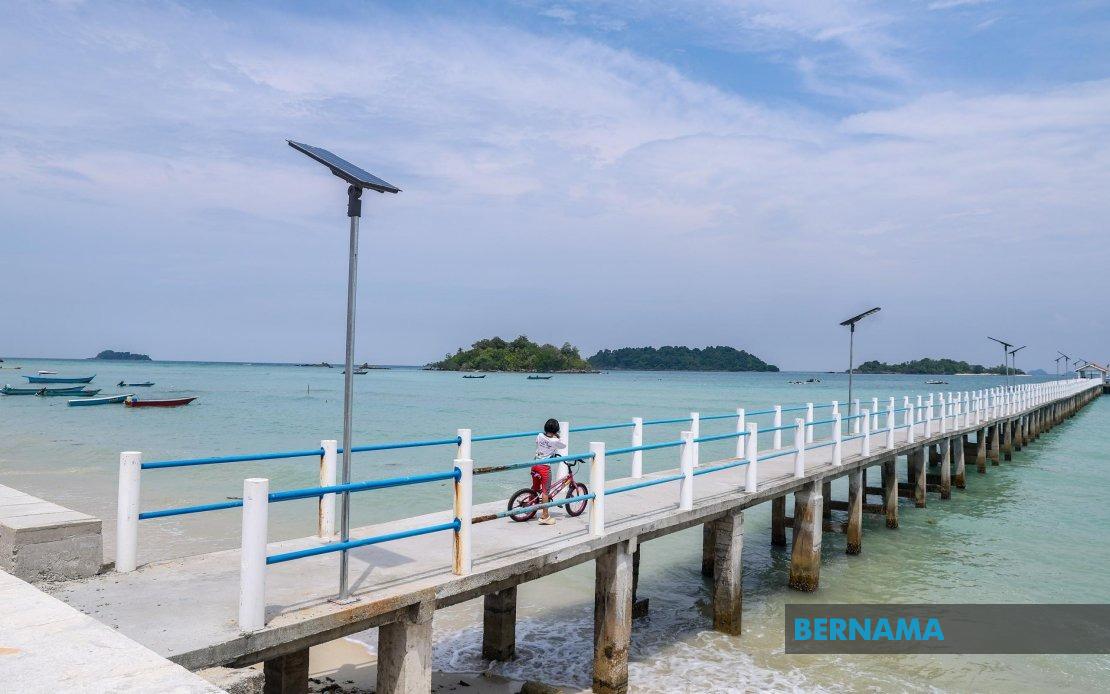
The small island community of Pulau Tinggi, located off the coast of Mersing in Johor, has placed infrastructure and social welfare at the centre of its expectations for the incoming state government. With approximately 150 residents divided between two villages—Kampung Pasir Panjang and Kampung Tanjung Balang—the islanders have identified two critical problems that require urgent governmental intervention: the deteriorating condition of a key jetty facility and inadequate housing support for low-income fishing families.
The jetty serving Kampung Pasir Panjang has deteriorated significantly since around 2017, creating safety hazards for both the fishing community and tourists who visit the island. Residents continue to use the facility despite its poor condition, prompting local authorities to urge caution while awaiting repairs. Kampung Pulau Tinggi chief Rossana Hussin, who assumed her position in 2024, has stressed the urgency of upgrading this infrastructure. The jetty upgrade application was formally submitted to the Mersing District Office in March and has received preliminary endorsement, yet implementation remains stalled. For an island economy heavily dependent on fishing and limited tourism, the jetty represents far more than a physical structure—it is the lifeline connecting residents to livelihood opportunities and the wider economy.
The housing situation compounds the challenges faced by islanders. Many residents in Kampung Tanjung Balang fall into the B40 category, Malaysia's bottom 40 percent income bracket, and struggle with inadequate or incomplete housing. Rossana Hussin has advocated strongly for the state government to prioritise housing repair assistance programmes, viewing such initiatives as essential to improving living standards and reducing financial strain on fishing families. The application for housing assistance, like that for the jetty, has been submitted but awaits concrete action from state authorities. Without intervention, families face the prospect of continuing to live in substandard conditions while their meagre incomes are stretched further by repair costs.
The plight of Pulau Tinggi also reflects a broader demographic crisis affecting remote island and rural communities throughout Malaysia. Mariam Mamat, an 85-year-old resident, highlighted how the island's population has dwindled as younger people have migrated to urban centres in search of employment opportunities. The departure of residents, some of whom have relocated to Federal Land Development Authority (Felda) schemes on the mainland, has eroded the island's economic vitality and sense of community. Without deliberate efforts to revitalise the local economy and create meaningful employment, further depopulation appears inevitable, threatening the viability of these established settlements.
Tourism potential represents one avenue through which Pulau Tinggi could generate sustainable economic opportunities and employment for younger residents. The island's natural attractions have historically drawn visitors, but this sector has remained underdeveloped compared to other tourism destinations in the region. Revitalising the tourism industry would require coordinated investment in infrastructure, marketing, and services—all of which demand state government support and coordination with relevant federal agencies. The islanders recognise that without concerted efforts to make the island an attractive destination, young people will continue departing in search of economic security elsewhere.
The timing of these concerns—raised directly ahead of the 16th Johor state election scheduled for Saturday—reflects residents' understanding that electoral periods offer critical moments to place demands on political representatives. With approximately 2.7 million eligible voters preparing to elect 56 state legislators, Pulau Tinggi's relatively small population may seem inconsequential in the broader political landscape. However, the issues raised by islanders resonate with broader challenges facing rural and maritime communities throughout Johor and Southeast Asia more widely: the need to balance development investment between urban and remote areas, the provision of adequate social safety nets for low-income workers, and the creation of sustainable livelihoods in communities traditionally dependent on fishing and agriculture.
The responsibility for addressing these issues falls with the elected representative for the Tenggaroh state constituency, which encompasses Pulau Tinggi. Residents have placed their faith in the incoming legislator to champion their cause and coordinate efforts across relevant government departments and agencies. This expectation reflects a common pattern in Malaysian politics, where constituents look to elected representatives not merely as lawmakers but as advocates who can navigate bureaucratic systems and unlock resources for their communities. The successful resolution of Pulau Tinggi's infrastructure and welfare challenges will depend significantly on the political will and influence of the elected representative.
The jetty and housing issues also highlight the importance of timely government action on submitted applications. That both the jetty upgrade and housing assistance applications received positive feedback in March yet remain unimplemented suggests administrative delays or resource constraints within the state system. For a community living on the margins of economic opportunity, such delays translate directly into prolonged hardship and deteriorating conditions. Expedited processing and adequate budget allocation could unlock relatively modest investments that would generate substantial improvements in residents' quality of life.
Looking forward, the outcome of Saturday's election will determine whether Pulau Tinggi receives the political attention and resource allocation its residents believe they deserve. The islanders have articulated their needs clearly and have exhausted conventional channels, submitting formal applications through established bureaucratic processes. What remains is for the incoming state government to demonstrate commitment to inclusive development that extends beyond urban centres to encompass the needs of small, isolated communities whose contributions to Malaysia's economy and social fabric, though modest in scale, merit recognition and support.

