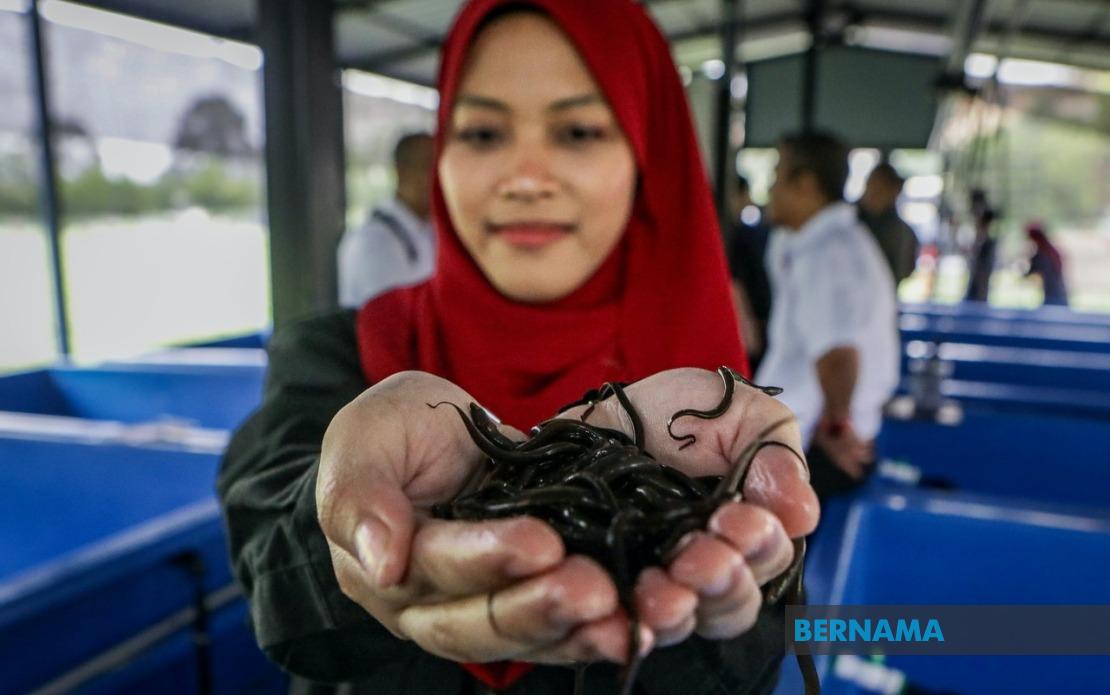
Politeknik Tuanku Syed Sirajuddin (PTSS) in Arau is positioning itself as a catalyst for rural economic transformation through its involvement in a commercial eel farming project that transcends the traditional confines of academic instruction. The Projek Penternakan Belut Komersial Geran Sejati MADANI represents a significant departure from conventional polytechnic operations, embedding technical vocational education into active community development work that bridges the gap between classroom learning and sustainable livelihood creation across five communities in Perlis.
The RM500,000 initiative, officially launched with the support of the Perlis Federal Development Office and Prime Minister's Department's Implementation Coordination Unit (ICU JPM), demonstrates how Malaysia's TVET ecosystem can function as a development engine beyond simply producing qualified graduates. Rather than confining knowledge within institutional walls, PTSS is deploying its aquaculture expertise directly into community settings, creating a model where students engage in experiential learning whilst simultaneously transferring practical skills to local residents seeking alternative income sources. This dual-benefit approach reflects growing recognition that technical institutions possess untapped potential to address rural economic challenges.
Director Khairul Anuar Ishak articulated the project's underlying philosophy during the launch, emphasizing that TVET institutions must evolve beyond their conventional educational mandate to actively empower communities through structured knowledge transfer. The project framework allocates six months for comprehensive implementation, during which PTSS assumes responsibility for the entire operational spectrum—from establishing farming infrastructure and procuring essential equipment through to sourcing eel seeds, conducting intensive training programmes, and establishing financial management systems. This hands-on stewardship ensures quality control whilst building local capacity to sustain operations independently after the initial implementation phase concludes.
The scale of the initiative targets each participating community with 15,000 eel seeds, establishing a foundation for significant productive capacity within a relatively compact geographic area. Projections suggest that following a natural growth cycle spanning five to six months, each community should generate approximately 5,000 kilogrammes of harvested eels ready for market distribution. These production timelines reflect realistic biological parameters for commercial-scale eel cultivation, avoiding overly optimistic forecasts that might undermine community confidence or create unsustainable expectations.
Market mechanisms integrated into the project design prove equally important as production targets. Rather than leaving communities to navigate unpredictable spot markets, the programme incorporates contract farming arrangements that guarantee purchase agreements and price stability. This contractual foundation substantially reduces the entrepreneurial risk that typically deters rural populations from adopting unfamiliar agricultural enterprises, particularly when substantial initial capital investment and learning curves are required. Such protections prove especially crucial in regions where established supply chains remain underdeveloped and marketing expertise concentrates among urban intermediaries.
The collaborative architecture underpinning this initiative reveals important shifts in how Malaysian policy-makers and institutions conceptualize rural development. By creating formal linkages between educational establishments, government development agencies, industry partners, and local communities, the project constructs a multi-stakeholder ecosystem where diverse institutional competencies reinforce one another. PTSS supplies technical expertise and training delivery capacity, government bodies provide funding and development infrastructure, whilst communities contribute labour, local knowledge, and entrepreneurial commitment. This interconnection strengthens broader economic development trajectories by institutionalizing pathways for knowledge flows that might otherwise remain localized or discontinuous.
For Malaysian readers evaluating vocational education's contemporary relevance, this Perlis initiative illustrates how TVET institutions increasingly position themselves as active development partners rather than passive knowledge repositories. The model gains particular resonance across Southeast Asia, where comparable demographic patterns—significant rural populations, limited traditional employment opportunities, and substantial untapped agricultural potential—create comparable contexts. Countries grappling with regional inequality and youth migration pressures might observe how structured institutional engagement in community enterprise development offers policy alternatives to purely supply-side approaches.
The financial sustainability dimension embedded in the project structure warrants particular attention. By establishing communities as autonomous operational entities after the initial six-month institutional stewardship period, the design anticipates long-term self-directed management and revenue reinvestment. This transition from dependency to autonomy recognizes that sustainable development requires local actors to internalize operational responsibilities rather than remaining perpetually reliant on external institutional support. Revenue generated from eel sales can fund ongoing operational costs, facility maintenance, and potentially finance expansion activities that amplify initial income streams.
The broader implications extend beyond individual community income supplementation toward rural economic diversification more comprehensively. Agricultural-dependent regions frequently experience vulnerability to commodity price fluctuations and weather-induced production disruptions. Aquaculture enterprises operating in controlled environments present differentiated income opportunities that complement rather than replace traditional farming, creating revenue portfolios that reduce vulnerability to sector-specific shocks. For Perlis particularly, the initiative positions aquaculture as an emerging economic pillar capable of absorbing labour previously concentrated in declining agricultural sectors.
Equally significant, the knowledge architecture underpinning the project creates educational spillovers extending beyond formally enrolled programme participants. Community members engaged in eel farming operations acquire practical skills—biological understanding, infrastructure management, financial record-keeping, and market engagement—that demonstrate vocational education's utility beyond credentialed pathways. These demonstrations prove particularly valuable in rural contexts where formal educational advancement remains constrained by geographic or economic barriers, offering tangible evidence that technical competencies generate genuine economic returns.
The project's success metrics ultimately transcend simple production statistics or revenue generation figures. Genuine impact assessment must evaluate whether participating communities internalize sufficient organizational capacity, technical knowledge, and entrepreneurial confidence to sustain and potentially expand operations independently. Equally important are secondary effects—whether participating communities develop governance structures capable of managing collective enterprises, whether younger residents observe sufficient income potential to remain in rural areas, and whether the model generates sufficient visibility to stimulate replication elsewhere. These qualitative dimensions often determine whether temporary projects catalyze lasting economic transformation or remain isolated interventions that dissipate once external institutional support concludes.

