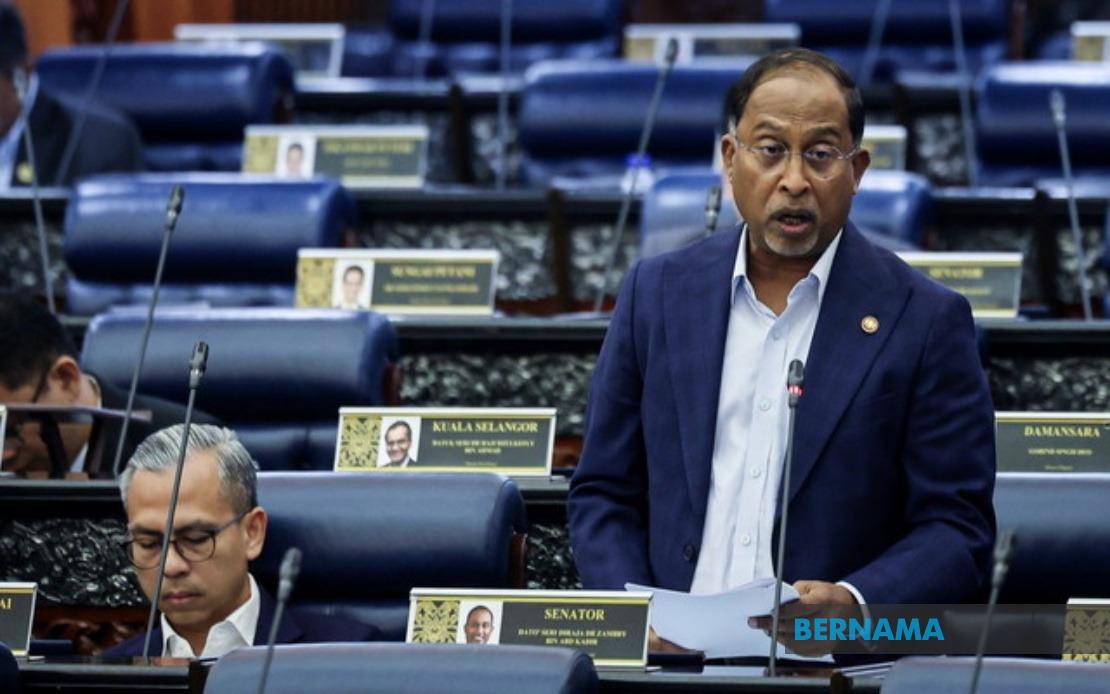
The National Higher Education Fund Corporation (PTPTN) has recovered RM197 million in outstanding loan repayments through its partnership with debt negotiation agencies (APH) during a 12-month period, according to Higher Education Minister Datuk Seri Dr Zambry Abdul Kadir. This performance represents a notable 6.4 per cent improvement compared to the equivalent period from the previous year, suggesting that the intervention strategy is yielding measurable results in the persistent challenge of student loan collection.
The minister emphasised that the appointment of these third-party agencies represents a targeted and deliberate collection mechanism rather than a punitive approach. According to the data disclosed in the Dewan Rakyat, only borrowers whose accounts have deteriorated significantly—specifically those with arrears exceeding 120 months or 10 years—are transferred to APH, and only after PTPTN's own collection efforts have proven unsuccessful. This threshold ensures that the more aggressive collection strategy is reserved for the most delinquent accounts that have exhausted the normal recovery channels.
As of May, the portfolio under APH management encompasses 103,418 borrower accounts with total arrears surpassing RM3 billion. This substantial figure underscores the gravity of PTPTN's long-standing collection challenge and illustrates why alternative mechanisms have become necessary. The concentration of such significant arrears among accounts with a decade or more of non-payment reflects a structural problem within Malaysia's higher education financing system that conventional collection methods have failed to resolve.
Dr Zambry's comments, delivered in response to a parliamentary question from Lim Lip Eng of Kepong, address broader concerns about fairness and flexibility in the collection process. The minister clarified that the transfer of an account to APH does not permanently close dialogue between borrower and lender. Rather, PTPTN maintains an open channel for negotiation, and borrowers may continue to appeal their status or request alternative payment arrangements based on their genuine financial capacity. This nuance is important, as it distinguishes the approach from simply abandoning difficult cases to external agents.
The minister further outlined that PTPTN maintains flexibility in assessing individual circumstances. Borrowers experiencing financial hardship retain the right to engage directly with PTPTN legal officers to negotiate solutions proportionate to their current income level and financial obligations. Each case is examined individually, taking into account the borrower's income trajectory, existing financial commitments, and broader socio-economic context. This individualised assessment framework aims to prevent vulnerable borrowers from being trapped in collection processes that exceed their genuine repayment capacity.
The underlying concern driving parliamentary scrutiny relates to the adequacy of oversight mechanisms governing APH operations and whether borrowers receive fair treatment within the debt negotiation process. The query raised by Kepong's representative sought clarity on the guidelines, controls, and monitoring arrangements for these agencies, reflecting anxiety among lawmakers about whether collection practices might inadvertently harm borrowers who are genuinely struggling. The government's response emphasises procedural safeguards and human judgment rather than purely algorithmic debt enforcement.
This collection effort occurs against a backdrop of persistent challenges in PTPTN's overall recovery performance. The education loan scheme has accumulated significant arrears since its inception, reflecting a combination of factors including graduate unemployment or underemployment, wage stagnation relative to loan burdens, and limited repayment incentives in Malaysia's informal economy. The 6.4 per cent year-on-year improvement, while encouraging, represents incremental progress against an enormous backlog.
The involvement of APH agencies reflects a pragmatic adaptation by PTPTN to resource constraints and collection difficulties. By outsourcing particularly difficult accounts to specialist agencies, PTPTN theoretically improves recovery rates while concentrating its internal resources on borrowers with less severe delinquency. The measurable improvement suggests that this division of labour may be producing results, though questions remain about the overall sustainability of the approach and whether it addresses root causes of non-repayment.
For Malaysian higher education policy, the PTPTN situation raises important questions about loan scheme design and borrower capacity. If arrears regularly exceed a decade and total RM3 billion across 100,000-plus accounts, this suggests either that loan burdens are misaligned with graduate earnings, that enforcement mechanisms have been historically weak, or that both factors contribute simultaneously. The government's emphasis on case-by-case fairness represents a necessary humanitarian safeguard, but does not resolve the structural mismatch between loan obligations and borrower capacity that drives delinquency in the first instance.
Regionally, Malaysia's PTPTN experience mirrors challenges faced by other Southeast Asian education financing systems. Countries across the region have struggled to balance competing objectives: maintaining sustainable loan schemes that fund higher education access, ensuring borrowers can repay without undue hardship, and recovering sufficient revenue to sustain the programs. The PTPTN experience suggests that without careful calibration of loan amounts, repayment terms, and income-contingent mechanisms, even well-intentioned schemes can accumulate problematic arrears.
Looking ahead, the 6.4 per cent improvement through APH collection suggests that more structured intervention can yield results, but cannot substitute for addressing fundamental design issues. Future PTPTN reform should examine whether loan amounts reflect realistic graduate earning potential, whether repayment schedules accommodate income volatility, and whether borrowers in economic distress receive adequate relief mechanisms. The current system's reliance on debt negotiation agencies and legal processes, while producing measurable collections, indicates that earlier intervention points have failed to prevent accounts from deteriorating to such critical levels.
The government's insistence on maintaining negotiation channels and considering individual circumstances reflects appropriate recognition that borrowers are not a homogeneous group. Some delinquency results from deliberate default, but substantial portions likely stem from genuine inability to pay. Distinguishing between these categories and responding appropriately is essential for maintaining both educational access and system sustainability. The challenge for policymakers lies in strengthening collection mechanisms while ensuring that the system remains fundamentally fair and responsive to borrower circumstances.

