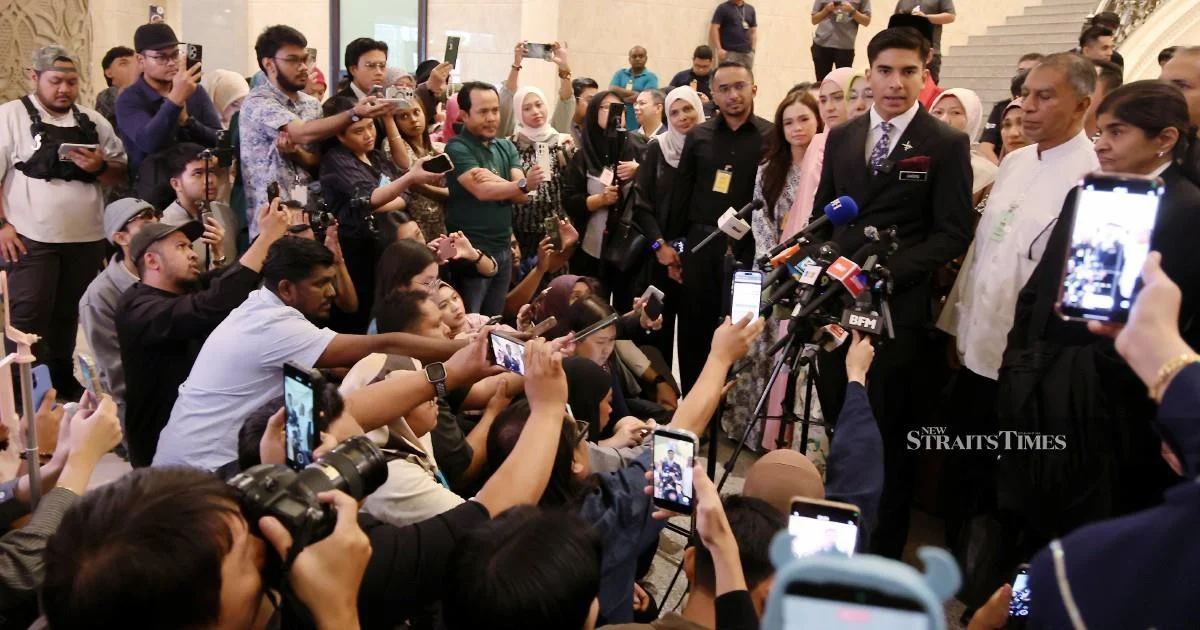
The prosecution has formally acknowledged the Federal Court's decision to uphold the acquittal and discharge of Muar member of parliament Syed Saddiq Syed Abdul Rahman in connection with corruption allegations, marking a significant conclusion to a case that has dominated Malaysian legal and political discourse for several years.
In a statement released from Putrajaya, prosecutorial authorities conveyed their acceptance of the apex court's ruling, indicating respect for the judicial process and the determination made by the nation's highest tribunal. This development represents the final chapter in legal proceedings that began with serious allegations against the prominent young politician, whose case had attracted considerable attention given his prominence in Malaysian politics.
Syed Saddiq, who represents the Muar constituency in Johor, had faced multiple charges relating to alleged financial impropriety and corruption during his tenure in various political positions. The case proceeded through Malaysia's multi-tiered court system, generating significant media coverage and public debate about standards of conduct expected from elected representatives and party officials.
The journey through Malaysia's courts reflected the thoroughness of the judicial process, with proceedings conducted at trial court level before matters progressed to appellate review. Each stage provided opportunities for examination of evidence and legal arguments, ultimately culminating in the Federal Court's determination. The progression itself underscores the significance placed by Malaysian legal institutions on scrutinizing allegations against high-profile political figures.
The Federal Court's decision to uphold the acquittal carries particular weight, as this represents the highest judicial authority's endorsement of the lower courts' findings. When Malaysia's apex court affirms such decisions, it provides finality and closure to protracted legal processes. The prosecution's acceptance of this verdict demonstrates institutional respect for judicial independence and the rule of law, principles fundamental to Malaysia's constitutional framework.
For Syed Saddiq, the ruling provides complete vindication after years navigating the legal system while managing parliamentary duties and political responsibilities. The acquittal and discharge mean he faces no conviction record related to these allegations, allowing him to resume his career without the stigma that would accompany a guilty verdict. His political future remains unburdened by formal judicial findings of wrongdoing.
The case's resolution also carries implications for broader governance discourse within Malaysian politics. High-profile prosecution outcomes influence public perceptions of the justice system's impartiality and the consistency of enforcement against political figures. Observers of Malaysian affairs have closely monitored how courts handle corruption allegations involving prominent politicians, viewing such cases as tests of institutional independence and equitable application of law.
The dismissal of charges against Syed Saddiq follows a pattern seen in other recent high-profile cases where prosecutions of prominent political figures have not resulted in convictions, leading some analysts to question prosecutorial strategy, evidence gathering, or judicial interpretation. Each acquittal contributes to ongoing conversations about accountability mechanisms and whether Malaysia's legal institutions adequately deter corruption among public officials.
From an institutional perspective, the prosecution's measured response demonstrates the maturity of Malaysia's prosecutorial service. Rather than contesting outcomes or making inflammatory statements, accepting adverse judicial decisions reflects confidence in established legal processes. This institutional restraint supports broader rule-of-law principles and maintains public confidence in prosecutorial integrity.
The Syed Saddiq case had intersected with Malaysia's complex political landscape, marked by frequent coalitional realignments and shifting factional allegiances. His political fortunes and legal battles occurred against a backdrop of internal party dynamics and broader transitions in the national political landscape. The case thus represented not merely an individual legal matter but also reflected deeper currents within Malaysian politics.
For the state of Johor and Muar specifically, the verdict closes a chapter that had cast attention on local representation at the national level. Constituent concerns about conduct standards among their elected representatives can now focus on forward-looking governance issues rather than ongoing litigation. The clarity provided by the Federal Court's decision allows political relationships to realign without the complication of unresolved legal processes.
Moving forward, the acceptance of this verdict by prosecutorial authorities and the judicial system's handling of the entire matter will likely inform discussions about standards, procedures, and expectations governing the investigation and prosecution of corruption allegations involving political figures in Malaysia. The experience accumulated through cases like Syed Saddiq's contributes to evolving institutional practices and public understanding of how the system addresses such sensitive matters involving prominent office holders.

